Library
Browse and search books
4 novels found
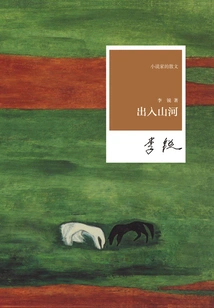
出入山河
Li Rui
Writer Li Rui has been ill and resting for the past five or six years, and few novels have been published, but he has not stopped writing prose. This book is Li Rui's latest self-selected collection of essays, with a total of 35 essays divided into 3 series. It includes in-depth interpretations of Lu Xun, Shen Congwen, Zhao Shuli, Wang Zengqi, Shi Tiesheng, Tolstoy, Faulkner, Camus and other writers, as well as sober reflections on the current impetuous literature; it not only broadens the horizons of many foreign trips and extensive exchanges, but also has a keen understanding of the things around us. Compared with the writer's earlier prose works, this collection of essays expresses a writer's warmth and compassion.
Writer Li Rui has been ill and resting for the past five or six years, and few novels have been published, but he has not stopped writing prose. This book is Li Rui's latest self-selected collection of essays, with a total of 35 essays divided into 3 series. It includes in-depth interpretations of Lu Xun, Shen Congwen, Zhao Shuli, Wang Zengqi, Shi Tiesheng, Tolstoy, Faulkner, Camus and other writers, as well as sober reflections on the current impetuous literature; it not only broadens the horizons of many foreign trips and extensive exchanges, but also has a keen understanding of the things around us. Compared with the writer's earlier prose works, this collection of essays expresses a writer's warmth and compassion.
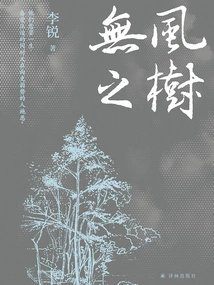
Windless Tree (work by Li Rui)
General Fiction无风之树(李锐作品)
Li Rui
The Sixth Patriarch Huineng pointed to the flag fluttering in the wind at Faxing Temple and explained the world to the monks: "It is not the wind that moves, nor the flags that move, but the hearts of benevolent people." When Gua Laowu summed up the world at the end of his life, he only used two words. These two words were actually just a sound made by him. The small stool he had been sitting on for many years made a slight sound when it fell down - "click". "The original 'prototype' of "The Windless Tree" was a short story "Funeral" in the "Thick Soil" series. This short story only has more than 4,000 words, from 4,000 words to 110,000 words. This is not only a quantitative change, but more importantly, a qualitative change, which is a different perspective and expression. A re-telling of the story will give you a completely different world." "The carnage of class struggle before our eyes, The wars and massacres in the past, poverty, labor, death, human numbness, alienation, inability to communicate, the mutual deprivation between man and nature, the entanglement of good and evil, etc., Etc., All these constituted the miserable situation that the dwarves of Dwarf Ping could not escape. "In the 1970s, Dwarf Ping under the high loess slopes was barren and isolated from the world, and the villagers had their own rules and stories. Nuan Yu, a woman who fled to Dwarenping due to hunger, became the fantasy of all the single men in Dwarenping; director Liu Changsheng came to the village to start work and would stay in Nuanyu's kiln every time; Ku Gen'er, a martyr orphan, honed his extraordinary perseverance in his faith and tried to survive It took one person twenty-four years to manage all the ditches in Dwarenping; the production captain Cao Tianzhu struggled to balance the folk customs and political requirements; the uncle Cao Yongfu was criticized and tortured because he was a rich farmer, and finally hanged himself... The people of Dwarenping are naturally crooked. They have lived a miserable life, being oppressed and at the same time doing evil to the more vulnerable people. "This is a story about me. This is a story about Chinese people. Finally, and most importantly, this is a story about people."
The Sixth Patriarch Huineng pointed to the flag fluttering in the wind at Faxing Temple and explained the world to the monks: "It is not the wind that moves, nor the flags that move, but the hearts of benevolent people." When Gua Laowu summed up the world at the end of his life, he only used two words. These two words were actually just a sound made by him. The small stool he had been sitting on for many years made a slight sound when it fell down - "click". "The original 'prototype' of "The Windless Tree" was a short story "Funeral" in the "Thick Soil" series. This short story only has more than 4,000 words, from 4,000 words to 110,000 words. This is not only a quantitative change, but more importantly, a qualitative change, which is a different perspective and expression. A re-telling of the story will give you a completely different world." "The carnage of class struggle before our eyes, The wars and massacres in the past, poverty, labor, death, human numbness, alienation, inability to communicate, the mutual deprivation between man and nature, the entanglement of good and evil, etc., Etc., All these constituted the miserable situation that the dwarves of Dwarf Ping could not escape. "In the 1970s, Dwarf Ping under the high loess slopes was barren and isolated from the world, and the villagers had their own rules and stories. Nuan Yu, a woman who fled to Dwarenping due to hunger, became the fantasy of all the single men in Dwarenping; director Liu Changsheng came to the village to start work and would stay in Nuanyu's kiln every time; Ku Gen'er, a martyr orphan, honed his extraordinary perseverance in his faith and tried to survive It took one person twenty-four years to manage all the ditches in Dwarenping; the production captain Cao Tianzhu struggled to balance the folk customs and political requirements; the uncle Cao Yongfu was criticized and tortured because he was a rich farmer, and finally hanged himself... The people of Dwarenping are naturally crooked. They have lived a miserable life, being oppressed and at the same time doing evil to the more vulnerable people. "This is a story about me. This is a story about Chinese people. Finally, and most importantly, this is a story about people."
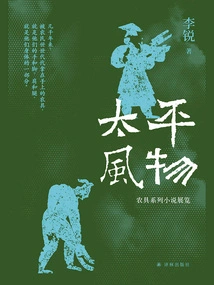
太平风物:农具系列小说展览(李锐作品)
Li Rui
"For thousands of years, the farm tools that farmers have held in their hands for generations are their hands and feet, shoulders and legs, which are part of their bodies." The title of "Taiping Fengwu" comes from "Wang Zhen's Book of Agriculture". Seven hundred years ago, a man named Wang Zhen saw a kind of farm tool being used and a pleasant pastoral scenery. He expressed heartfelt praise: "Every time I see it copied into a picture or chanted into a poem, it reflects the peaceful scenery of ancient and modern times." Seven hundred years later, Li Rui The farm tools series novels are also out of a deep move, a shock to knowledge and history. Things such as rural areas, farmers, native land, farm tools, etc. That have not changed for thousands of years have undergone earth-shaking changes under the wave of modernization and globalization. This book contains a total of fourteen short stories, each of which is about a farm tool, such as a shovel, a shovel, a hoe, a sickle, an axe, a shoulder pole, etc. Li Rui displays the pathos and rebirth of the millennium of agricultural civilization history in this "agricultural tool exhibition hall" on paper, hoping to convey his shock and indescribable emotions to possible readers. The reason why this novel is called "Exhibition" is that it not only needs to be read, but first of all, it needs to be seen.
"For thousands of years, the farm tools that farmers have held in their hands for generations are their hands and feet, shoulders and legs, which are part of their bodies." The title of "Taiping Fengwu" comes from "Wang Zhen's Book of Agriculture". Seven hundred years ago, a man named Wang Zhen saw a kind of farm tool being used and a pleasant pastoral scenery. He expressed heartfelt praise: "Every time I see it copied into a picture or chanted into a poem, it reflects the peaceful scenery of ancient and modern times." Seven hundred years later, Li Rui The farm tools series novels are also out of a deep move, a shock to knowledge and history. Things such as rural areas, farmers, native land, farm tools, etc. That have not changed for thousands of years have undergone earth-shaking changes under the wave of modernization and globalization. This book contains a total of fourteen short stories, each of which is about a farm tool, such as a shovel, a shovel, a hoe, a sickle, an axe, a shoulder pole, etc. Li Rui displays the pathos and rebirth of the millennium of agricultural civilization history in this "agricultural tool exhibition hall" on paper, hoping to convey his shock and indescribable emotions to possible readers. The reason why this novel is called "Exhibition" is that it not only needs to be read, but first of all, it needs to be seen.
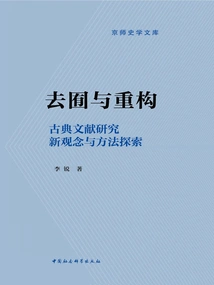
去囿与重构:古典文献研究新观念与方法探索
Li Rui
This book focuses on some basic concepts and methods involved in studying the history of academic thought on classic documents and pre-Qin history, with both reflection and exploration. It advocates using hundreds of schools to examine schools, using scholars to examine scholars during their official careers, and using "main parts" and "thematic ideas" to examine the formation of ancient books. At the same time, it proposes the theory of homology, origin of family, theory of public and private meaning, diachronic research method, rules of double evidence method, rhyming method, etc. Some of them are not the author's invention, but are just expanded discussions and special names on the basis of previous sages and philosophers to highlight their importance and promote them, such as the investigation of the scholars' travels during their official career, the theory of the same text and the same origin, etc.
This book focuses on some basic concepts and methods involved in studying the history of academic thought on classic documents and pre-Qin history, with both reflection and exploration. It advocates using hundreds of schools to examine schools, using scholars to examine scholars during their official careers, and using "main parts" and "thematic ideas" to examine the formation of ancient books. At the same time, it proposes the theory of homology, origin of family, theory of public and private meaning, diachronic research method, rules of double evidence method, rhyming method, etc. Some of them are not the author's invention, but are just expanded discussions and special names on the basis of previous sages and philosophers to highlight their importance and promote them, such as the investigation of the scholars' travels during their official career, the theory of the same text and the same origin, etc.