Library
Browse and search books
17 novels found
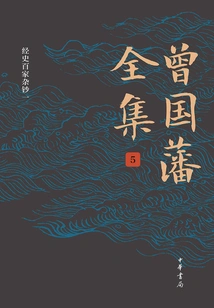
曾国藩全集(第五卷·经史百家杂钞一)
Zeng Guofan
This volume of "Miscellaneous Notes on Classics and History" is a collection of ancient Chinese classics compiled by Zeng Guofan. It is divided into eleven categories: treatises, poems, prefaces and postscripts, edicts, memorials, writings, memorials, biographies, narratives, classics, and miscellaneous notes. Compared with the "Gu Wen Guan Zhi" compiled by Wu Chucai and Wu Tiaohou's uncle and nephew, this anthology better reflects the academic opinions of the editors; compared with "Ancient Wen Ci Lei Tu" edited by Yao Nai, this anthology better reflects Zeng Guofan's emphasis on classical and historical articles. "Miscellaneous Notes on Classics and History" became popular throughout the country during the late Qing Dynasty and the Republic of China and had a great influence. It was called "the best introductory book on Chinese studies" by Mao Zedong.
This volume of "Miscellaneous Notes on Classics and History" is a collection of ancient Chinese classics compiled by Zeng Guofan. It is divided into eleven categories: treatises, poems, prefaces and postscripts, edicts, memorials, writings, memorials, biographies, narratives, classics, and miscellaneous notes. Compared with the "Gu Wen Guan Zhi" compiled by Wu Chucai and Wu Tiaohou's uncle and nephew, this anthology better reflects the academic opinions of the editors; compared with "Ancient Wen Ci Lei Tu" edited by Yao Nai, this anthology better reflects Zeng Guofan's emphasis on classical and historical articles. "Miscellaneous Notes on Classics and History" became popular throughout the country during the late Qing Dynasty and the Republic of China and had a great influence. It was called "the best introductory book on Chinese studies" by Mao Zedong.
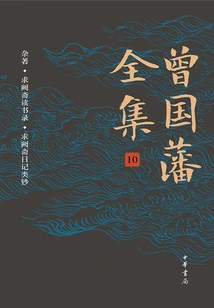
曾国藩全集(第十卷·杂著、求阙斋读书录、求阙斋日记类钞)
Zeng Guofan
The "Qiuquezhai Reading Record" in this volume is Zeng Guofan's reading notes over the years. "Qiuque Zhai" is the name of his study. The word "Qiuque" originated from his insights from reading the "Book of Changes". He realized the natural principle of "yin and yang coexistence, one loses and the other gains", and then realized the nature of "things are born with desires, and they are eager to gain and forget Que". At that time His "fame gradually became apparent, and his family in Chongqing was at its peak". "Every time he took it as a warning, he named his library 'Qiuque Zhai'." The Book of Readings is divided into four parts: Jing, Shi, Zi, and Ji. It records his study experience, textual research, and collation, many of which contain original and penetrating insights. "Qiuquezhai Diary Notes" collects Zeng Guofan's diary from the eighth year of Xianfeng to the time of his death in February of the eleventh year of Tongzhi. It was classified and edited by Zeng Guofan's fellow countryman Wang Qiyuan. It is mainly divided into ten categories: learning, provincial discipline, governance, military strategy, ethics, literature and art, appreciation, maintenance, algae tasting, and sightseeing. It is "the outline of self-cultivation, management of people, and the Tao". The lines contain rich philosophy of life and are of high historical value.
The "Qiuquezhai Reading Record" in this volume is Zeng Guofan's reading notes over the years. "Qiuque Zhai" is the name of his study. The word "Qiuque" originated from his insights from reading the "Book of Changes". He realized the natural principle of "yin and yang coexistence, one loses and the other gains", and then realized the nature of "things are born with desires, and they are eager to gain and forget Que". At that time His "fame gradually became apparent, and his family in Chongqing was at its peak". "Every time he took it as a warning, he named his library 'Qiuque Zhai'." The Book of Readings is divided into four parts: Jing, Shi, Zi, and Ji. It records his study experience, textual research, and collation, many of which contain original and penetrating insights. "Qiuquezhai Diary Notes" collects Zeng Guofan's diary from the eighth year of Xianfeng to the time of his death in February of the eleventh year of Tongzhi. It was classified and edited by Zeng Guofan's fellow countryman Wang Qiyuan. It is mainly divided into ten categories: learning, provincial discipline, governance, military strategy, ethics, literature and art, appreciation, maintenance, algae tasting, and sightseeing. It is "the outline of self-cultivation, management of people, and the Tao". The lines contain rich philosophy of life and are of high historical value.
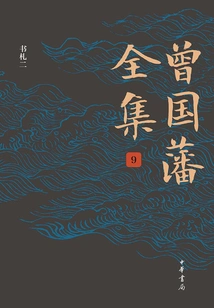
曾国藩全集(第九卷·书札二)
Zeng Guofan
The "Books" in this volume are personal letters written by Zeng Guofan to his superiors, colleagues and friends. In "Books and Notes" we see a more realistic Zeng Guofan, who would often complain and talk about his difficulties with his friends. "Shu Zha" writes in many places about the critical nature of the war situation, "every day is in the midst of turbulent waves", and also says that "the military is constantly changing, and every day when dangers, doubts and shocks arise, we must be clear-minded and determined, and not act too suddenly."
The "Books" in this volume are personal letters written by Zeng Guofan to his superiors, colleagues and friends. In "Books and Notes" we see a more realistic Zeng Guofan, who would often complain and talk about his difficulties with his friends. "Shu Zha" writes in many places about the critical nature of the war situation, "every day is in the midst of turbulent waves", and also says that "the military is constantly changing, and every day when dangers, doubts and shocks arise, we must be clear-minded and determined, and not act too suddenly."
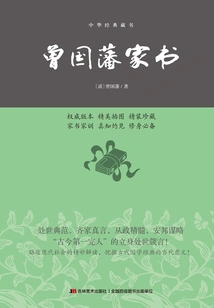
Zeng Guofan's Family Letters (hardcover)
Literature曾国藩家书(精装)
Zeng Guofan
In terms of style, Zeng Guofan's family letters are divided into chapters on self-cultivation, admonition to study, family management, financial management, making friends, government, employment, health care, and military affairs. During the selection process, multiple versions were compared, and chapters that were representative and of great reference value to contemporary people were selected. Sort by time, decide the title, annotate and comment. "Zeng Guofan's Family Letters (Collected Edition)" is different in content and has its own emphasis, as described below: The family letters selected in the Self-cultivation chapter are intended to reflect Zeng Guofan's inner cultivation in aspects such as self-preservation, moral cultivation, patience, perseverance, prudence, and self-reliance. The family letters selected for the chapter on encouraging students include teaching their brothers to write and cultivate their minds, advising their brothers to be diligent in their studies, explaining how to study, and teaching their brothers to pay attention to reading and to have perseverance in reading. They reflect Zeng Guofan's academic thoughts of "reading, being determined, and persevering".
In terms of style, Zeng Guofan's family letters are divided into chapters on self-cultivation, admonition to study, family management, financial management, making friends, government, employment, health care, and military affairs. During the selection process, multiple versions were compared, and chapters that were representative and of great reference value to contemporary people were selected. Sort by time, decide the title, annotate and comment. "Zeng Guofan's Family Letters (Collected Edition)" is different in content and has its own emphasis, as described below: The family letters selected in the Self-cultivation chapter are intended to reflect Zeng Guofan's inner cultivation in aspects such as self-preservation, moral cultivation, patience, perseverance, prudence, and self-reliance. The family letters selected for the chapter on encouraging students include teaching their brothers to write and cultivate their minds, advising their brothers to be diligent in their studies, explaining how to study, and teaching their brothers to pay attention to reading and to have perseverance in reading. They reflect Zeng Guofan's academic thoughts of "reading, being determined, and persevering".
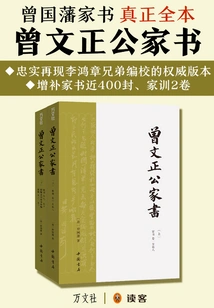
Zeng Wenzhenggong's Family Letter
Literature曾文正公家书
Zeng Guofan
1,300 letters and two volumes of "Family Instructions" are included, explaining the basic methods of "cultivating one's moral character, managing one's family, and governing the country"! It faithfully reproduces the Chuanzhong Bookstore edition edited and edited by brothers Li Hongzhang, and adds nearly 400 family letters and 2 volumes of family mottos, making it the true complete version of Zeng Guofan's family letters! 1,300 Letters convey the teachings of Zeng Wenzhenggong and explain the basic methods of "reading, making friends, cultivating oneself, and running a household"! "The prosperity of a family depends entirely on having virtuous children." Qian Mu, a "great master" in academia, said: In the "Family Letters of Mr. Zeng Wenzheng", there are many methods to give guidance. Although they are humble and indifferent, they are very kind. As Zeng said: Scholarship requires perseverance, and a book must be read from beginning to end. Zeng Guofan was the first minister of the Zhongxing in the late Qing Dynasty. He purified political styles, promoted Western learning, and initiated the Tongzhi Zhongxing, which allowed the Qing Dynasty to continue for more than 60 years after it was about to collapse. "Letter from the Family of Mr. Zeng Wenzheng" is a mirror that truly reflects the political changes in the late Qing Dynasty, Zeng Guofan's complex inner world, and the arduous journey behind his successful career. "Zeng Wenzhenggong Family Letters" is based on the first authoritative collection of Zeng Guofan's letters edited by the Li Hongzhang brothers. On this basis, it adds nearly 400 supplements of family letters that were not included in the old edition, as well as more than 120 "Zeng Wenzhenggong Family Instructions" edited and edited by the Li brothers, striving to fully present Zeng Guofan's thoughts and practices on self-cultivation, family order, and country governance.
1,300 letters and two volumes of "Family Instructions" are included, explaining the basic methods of "cultivating one's moral character, managing one's family, and governing the country"! It faithfully reproduces the Chuanzhong Bookstore edition edited and edited by brothers Li Hongzhang, and adds nearly 400 family letters and 2 volumes of family mottos, making it the true complete version of Zeng Guofan's family letters! 1,300 Letters convey the teachings of Zeng Wenzhenggong and explain the basic methods of "reading, making friends, cultivating oneself, and running a household"! "The prosperity of a family depends entirely on having virtuous children." Qian Mu, a "great master" in academia, said: In the "Family Letters of Mr. Zeng Wenzheng", there are many methods to give guidance. Although they are humble and indifferent, they are very kind. As Zeng said: Scholarship requires perseverance, and a book must be read from beginning to end. Zeng Guofan was the first minister of the Zhongxing in the late Qing Dynasty. He purified political styles, promoted Western learning, and initiated the Tongzhi Zhongxing, which allowed the Qing Dynasty to continue for more than 60 years after it was about to collapse. "Letter from the Family of Mr. Zeng Wenzheng" is a mirror that truly reflects the political changes in the late Qing Dynasty, Zeng Guofan's complex inner world, and the arduous journey behind his successful career. "Zeng Wenzhenggong Family Letters" is based on the first authoritative collection of Zeng Guofan's letters edited by the Li Hongzhang brothers. On this basis, it adds nearly 400 supplements of family letters that were not included in the old edition, as well as more than 120 "Zeng Wenzhenggong Family Instructions" edited and edited by the Li brothers, striving to fully present Zeng Guofan's thoughts and practices on self-cultivation, family order, and country governance.
曾国藩全集(第六卷·经史百家杂钞二、经史百家简编)
Zeng Guofan
The "Compendium of One Hundred Schools of Classics and History" in this volume is a simplified version of the "Miscellaneous Notes of One Hundred Schools of Classics and History". Zeng Guofan said in the preface: "In the tenth year of Xianfeng, I selected hundreds of classics and historical texts into one volume, and selected forty-eight of them as simplified versions to commemorate Yuanfu." He also said: "I have selected only forty-eight poems from the simplified version, so that I can recite them day and night, and the appointment is easy to keep." This is a text selected by Zeng Guofan for the convenience of himself and his younger brothers to read and recite. The whole book continues to follow the classification method of "Hundred Classics and History", in which Han Yu's articles account for a quarter of the whole book, which shows that Zeng Guofan admired Han Yu's articles and "studied the poor scriptures, especially the articles of Han in Changli".
The "Compendium of One Hundred Schools of Classics and History" in this volume is a simplified version of the "Miscellaneous Notes of One Hundred Schools of Classics and History". Zeng Guofan said in the preface: "In the tenth year of Xianfeng, I selected hundreds of classics and historical texts into one volume, and selected forty-eight of them as simplified versions to commemorate Yuanfu." He also said: "I have selected only forty-eight poems from the simplified version, so that I can recite them day and night, and the appointment is easy to keep." This is a text selected by Zeng Guofan for the convenience of himself and his younger brothers to read and recite. The whole book continues to follow the classification method of "Hundred Classics and History", in which Han Yu's articles account for a quarter of the whole book, which shows that Zeng Guofan admired Han Yu's articles and "studied the poor scriptures, especially the articles of Han in Changli".
曾国藩全集(第八卷·书札一)
Zeng Guofan
The "Books" in this volume are personal letters written by Zeng Guofan to his superiors, colleagues and friends. In "Books and Notes" we see a more realistic Zeng Guofan, who would often complain and talk about his difficulties with his friends. "Shu Zha" writes in many places about the critical nature of the war situation, "every day is in the midst of turbulent waves", and also says that "the military is constantly changing, and every day when dangers, doubts and shocks arise, we must be clear-minded and determined, and not act too suddenly."
The "Books" in this volume are personal letters written by Zeng Guofan to his superiors, colleagues and friends. In "Books and Notes" we see a more realistic Zeng Guofan, who would often complain and talk about his difficulties with his friends. "Shu Zha" writes in many places about the critical nature of the war situation, "every day is in the midst of turbulent waves", and also says that "the military is constantly changing, and every day when dangers, doubts and shocks arise, we must be clear-minded and determined, and not act too suddenly."
曾国藩全集(第十一卷·家书、家训)
Zeng Guofan
The "Family Letters" in this volume are based on the "Family Letters of Zeng Wenzhenggong" edited by Li Hanzhang and Li Hongzhang in the fifth year of Guangxu's reign and engraved by Chuanzhong Bookstore. It contains the letters Zeng Guofan wrote to his grandparents, parents, brothers and nephews from around the 20th year of Daoguang to the 10th year of Tongzhi. The content is extensive and the writing is natural and smooth. In his letters at home, Zeng Guofan not only taught his younger brothers how to read and write, how to cultivate themselves and make friends, etc., But also often talked about running the army and politics, and how to take imperial examinations. Family letters condense the essence of Zeng Guofan's wisdom in life and are also important documents for studying Zeng Guofan's life and modern Chinese history. They have extremely high literary and historical value. Modern people also regard it as a model for tutoring; "Family Instructions" mainly contains letters written by Zeng Guofan to his two sons, Zeng Jize and Zeng Jihong. In his family motto, Zeng Guofan was concerned about his children's daily lives, words and deeds, reading and writing, and he was like a loving and generous father. He often asked his children whether they adhered to the ancestral family tradition of "rising at dawn": "Mortal people hope that their descendants will become high officials. I hope that they will be gentlemen who are educated and sensible. They are thrifty, self-sustained, hardworking, able to enjoy themselves, and can make appointments. This is a gentleman." Under the diligent and thrifty family tradition and Zeng Guofan's words and deeds, his son Zeng Jize became a famous diplomat in the history of the late Qing Dynasty. He conducted diplomatic negotiations with Russia and single-handedly recovered the nine cities of Ili, Xinjiang, and Chinese territory.
The "Family Letters" in this volume are based on the "Family Letters of Zeng Wenzhenggong" edited by Li Hanzhang and Li Hongzhang in the fifth year of Guangxu's reign and engraved by Chuanzhong Bookstore. It contains the letters Zeng Guofan wrote to his grandparents, parents, brothers and nephews from around the 20th year of Daoguang to the 10th year of Tongzhi. The content is extensive and the writing is natural and smooth. In his letters at home, Zeng Guofan not only taught his younger brothers how to read and write, how to cultivate themselves and make friends, etc., But also often talked about running the army and politics, and how to take imperial examinations. Family letters condense the essence of Zeng Guofan's wisdom in life and are also important documents for studying Zeng Guofan's life and modern Chinese history. They have extremely high literary and historical value. Modern people also regard it as a model for tutoring; "Family Instructions" mainly contains letters written by Zeng Guofan to his two sons, Zeng Jize and Zeng Jihong. In his family motto, Zeng Guofan was concerned about his children's daily lives, words and deeds, reading and writing, and he was like a loving and generous father. He often asked his children whether they adhered to the ancestral family tradition of "rising at dawn": "Mortal people hope that their descendants will become high officials. I hope that they will be gentlemen who are educated and sensible. They are thrifty, self-sustained, hardworking, able to enjoy themselves, and can make appointments. This is a gentleman." Under the diligent and thrifty family tradition and Zeng Guofan's words and deeds, his son Zeng Jize became a famous diplomat in the history of the late Qing Dynasty. He conducted diplomatic negotiations with Russia and single-handedly recovered the nine cities of Ili, Xinjiang, and Chinese territory.
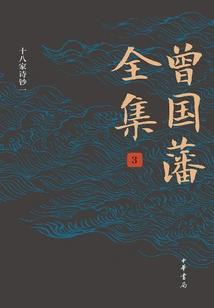
曾国藩全集(第三卷·十八家诗钞一)
Zeng Guofan
The "Eighteen Poems" in this volume is an anthology of ancient poems edited by Zeng Guofan. Select Cao Zhi, Ruan Ji, Tao Yuanming, Xie Lingyun, Bao Zhao, and Xie Tiao from the Wei, Jin, Southern and Northern Dynasties, and Wang Wei, Meng Haoran, Li Bai, Du Fu, Han Yu, Bai Juyi, Li Shangyin, and Du Mu from the Tang Dynasty. Eight schools, including Su Shi, Huang Tingjian and Lu You in the Song Dynasty, and Yuan Haowen in the Jin Dynasty, a total of eighteen schools, collected 6,599 ancient and modern poems, and made punctuation annotations on some poems.
The "Eighteen Poems" in this volume is an anthology of ancient poems edited by Zeng Guofan. Select Cao Zhi, Ruan Ji, Tao Yuanming, Xie Lingyun, Bao Zhao, and Xie Tiao from the Wei, Jin, Southern and Northern Dynasties, and Wang Wei, Meng Haoran, Li Bai, Du Fu, Han Yu, Bai Juyi, Li Shangyin, and Du Mu from the Tang Dynasty. Eight schools, including Su Shi, Huang Tingjian and Lu You in the Song Dynasty, and Yuan Haowen in the Jin Dynasty, a total of eighteen schools, collected 6,599 ancient and modern poems, and made punctuation annotations on some poems.
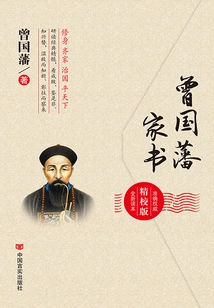
Zeng Guofan's Family Letters
Literature曾国藩家书
Zeng Guofan
Zeng Guofan was an important minister in the late Qing Dynasty. After the Taiping Rebellion, the Qing Dynasty benefited from Zeng Guofan's assistance and was able to last for half a century. Zeng Guofan's family letters record his Hanyuan and martial arts career for thirty years from the 30th year of Daoguang to the 10th year of Tongzhi in the Qing Dynasty. There are nearly 1,500 letters. After Zeng Guofan's death, brothers Li Hanzhang and Li Hongzhang selected hundreds of letters from Zeng Guofan's family and compiled them into a book. After its publication, it was widely praised and became a classic that people at the time were eager to read. This reprint of "Zeng Guofan's Family Letters" is based on the version compiled by the two Li brothers, and has been reworked and added with new content that is more suitable for modern people's reading habits.
Zeng Guofan was an important minister in the late Qing Dynasty. After the Taiping Rebellion, the Qing Dynasty benefited from Zeng Guofan's assistance and was able to last for half a century. Zeng Guofan's family letters record his Hanyuan and martial arts career for thirty years from the 30th year of Daoguang to the 10th year of Tongzhi in the Qing Dynasty. There are nearly 1,500 letters. After Zeng Guofan's death, brothers Li Hanzhang and Li Hongzhang selected hundreds of letters from Zeng Guofan's family and compiled them into a book. After its publication, it was widely praised and became a classic that people at the time were eager to read. This reprint of "Zeng Guofan's Family Letters" is based on the version compiled by the two Li brothers, and has been reworked and added with new content that is more suitable for modern people's reading habits.
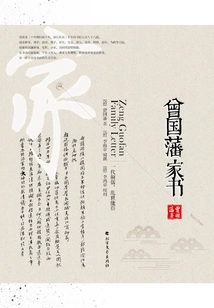
Zeng Guofan's Family Letters
Literature曾国藩家书
Zeng Guofan
"Family Letters" contains a total of 786 letters written by Zeng Guofan to his grandparents, parents, uncles, brothers, wives and children over a period of 30 years from the 20th year of Daoguang in the Qing Dynasty to the 10th year of Tongzhi. It shows the full picture of Zeng's life. The contents range from the elucidation of the way to manage the country, help the world and save the people, as well as the way to improve morality, study and study. It provides legal guidance, down to experience and advice on dealing with interpersonal trivial matters and family economic livelihood, covering all aspects of self-cultivation, education, family management, teaching children, health care, making friends, employing people, dealing with the world, managing finances, running the army, and politics.
"Family Letters" contains a total of 786 letters written by Zeng Guofan to his grandparents, parents, uncles, brothers, wives and children over a period of 30 years from the 20th year of Daoguang in the Qing Dynasty to the 10th year of Tongzhi. It shows the full picture of Zeng's life. The contents range from the elucidation of the way to manage the country, help the world and save the people, as well as the way to improve morality, study and study. It provides legal guidance, down to experience and advice on dealing with interpersonal trivial matters and family economic livelihood, covering all aspects of self-cultivation, education, family management, teaching children, health care, making friends, employing people, dealing with the world, managing finances, running the army, and politics.
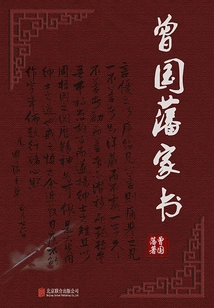
曾国藩家书(有间文库)
Zeng Guofan
"Zeng Guofan's Family Letter" records Zeng Guofan's various practices and thoughts on self-cultivation, family management, country governance, and world peace. The family letters written successively to grandparents, parents, uncles, brothers, wives and children cover everything from family livelihood to running the country and leading soldiers, covering all aspects of self-cultivation, officialdom, conduct, teaching children, and health care. The essence of these thoughts is also of great benefit to people's lives, work, and study today.
"Zeng Guofan's Family Letter" records Zeng Guofan's various practices and thoughts on self-cultivation, family management, country governance, and world peace. The family letters written successively to grandparents, parents, uncles, brothers, wives and children cover everything from family livelihood to running the country and leading soldiers, covering all aspects of self-cultivation, officialdom, conduct, teaching children, and health care. The essence of these thoughts is also of great benefit to people's lives, work, and study today.
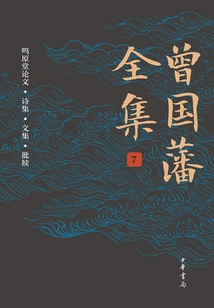
曾国藩全集(第七卷·鸣原堂论文、诗集、文集、批牍)
Zeng Guofan
The "Mingyuantang Essay" in this volume is a collection of memorials by famous officials since the Han and Tang Dynasties compiled by Zeng Guofan, with a total of seventeen articles. Zeng Guofan felt that he had been "stranded among the soldiers for a long time", and his younger brothers came to help him in times of need, all because of "emergency." This kind of brotherly love is deep, especially like the situation when a wagtail bird strays from the flock and the rest sing. Therefore, the purpose of the two poems "Chang Di" and "Xiao Wan" in the "Book of Songs" is "wagtail", and the hall is named "Mingyuan Hall" to express the fraternal love of "fighting brothers", and the title of the memorial collection was drafted. Zeng Guofan gave "detailed criticism" and "discussing the meaning and method" of the selected memorials, hoping that his two brothers, Zeng Guohua and Zeng Guoquan, could understand and master the gist of writing the memorials. ; "Collected Poems" is Zeng Guofan's own collection of poems. It is divided into four volumes, and the beginning and end of the poetry creation are marked before each volume. Most of Zeng Guofan's poems are ancient style poems and rhythmic poems, with very few quatrains. The language is natural and simple, focusing on narrative. For example: "Lotus flowers are like the sea in summer, and thousands of willows are hanging down in spring." "There are few fallen sounds and broad books, and suspicious post messengers."; "Collected Works" is mainly the birthday preface or epitaph written by Zeng Guofan to his colleagues. Either the emotions are sincere or the writing is simple, there are many things that are worth mentioning.
The "Mingyuantang Essay" in this volume is a collection of memorials by famous officials since the Han and Tang Dynasties compiled by Zeng Guofan, with a total of seventeen articles. Zeng Guofan felt that he had been "stranded among the soldiers for a long time", and his younger brothers came to help him in times of need, all because of "emergency." This kind of brotherly love is deep, especially like the situation when a wagtail bird strays from the flock and the rest sing. Therefore, the purpose of the two poems "Chang Di" and "Xiao Wan" in the "Book of Songs" is "wagtail", and the hall is named "Mingyuan Hall" to express the fraternal love of "fighting brothers", and the title of the memorial collection was drafted. Zeng Guofan gave "detailed criticism" and "discussing the meaning and method" of the selected memorials, hoping that his two brothers, Zeng Guohua and Zeng Guoquan, could understand and master the gist of writing the memorials. ; "Collected Poems" is Zeng Guofan's own collection of poems. It is divided into four volumes, and the beginning and end of the poetry creation are marked before each volume. Most of Zeng Guofan's poems are ancient style poems and rhythmic poems, with very few quatrains. The language is natural and simple, focusing on narrative. For example: "Lotus flowers are like the sea in summer, and thousands of willows are hanging down in spring." "There are few fallen sounds and broad books, and suspicious post messengers."; "Collected Works" is mainly the birthday preface or epitaph written by Zeng Guofan to his colleagues. Either the emotions are sincere or the writing is simple, there are many things that are worth mentioning.
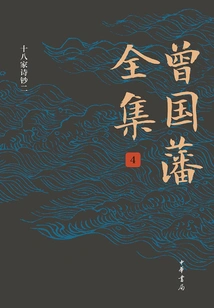
曾国藩全集(第四卷·十八家诗钞二)
Zeng Guofan
This volume of "Eighteen Poetry Notes" is the first part of an anthology of ancient poetry edited by Zeng Guofan. Select Cao Zhi, Ruan Ji, Tao Yuanming, Xie Lingyun, Bao Zhao, and Xie Tiao from the Wei, Jin, Southern and Northern Dynasties, and Wang Wei, Meng Haoran, Li Bai, Du Fu, Han Yu, Bai Juyi, Li Shangyin, and Du Mu from the Tang Dynasty. Eight schools, including Su Shi, Huang Tingjian and Lu You in the Song Dynasty, and Yuan Haowen in the Jin Dynasty, a total of eighteen schools, collected 6,599 ancient and modern poems, and made punctuation annotations on some poems.
This volume of "Eighteen Poetry Notes" is the first part of an anthology of ancient poetry edited by Zeng Guofan. Select Cao Zhi, Ruan Ji, Tao Yuanming, Xie Lingyun, Bao Zhao, and Xie Tiao from the Wei, Jin, Southern and Northern Dynasties, and Wang Wei, Meng Haoran, Li Bai, Du Fu, Han Yu, Bai Juyi, Li Shangyin, and Du Mu from the Tang Dynasty. Eight schools, including Su Shi, Huang Tingjian and Lu You in the Song Dynasty, and Yuan Haowen in the Jin Dynasty, a total of eighteen schools, collected 6,599 ancient and modern poems, and made punctuation annotations on some poems.
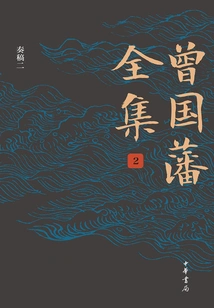
曾国藩全集(第二卷·奏稿二)
Zeng Guofan
The "Report" in this volume is an excerpt of Zeng Guofan's presentation to the emperor. Starting from the "Zunyi Dali Shu" in the first month of the 30th year of Daoguang (AD 1850) to the "Chu'an Salt Diversion and Huaichuan Boundary Marketing" in the first month of the 11th year of Tongzhi (AD 1872), the content covers the formation of the Hunan Army, the pacification of the Taiping Heavenly Kingdom, the northward campaign to suppress the Ninth Army, the handling of the Tianjin religious case incident, and various charter memorials, etc. The narrative presented in the memorial is detailed, the details are touching, and it has a sense of picture. "His best works are spread among the people, and many scholars and officials can cite his words."
The "Report" in this volume is an excerpt of Zeng Guofan's presentation to the emperor. Starting from the "Zunyi Dali Shu" in the first month of the 30th year of Daoguang (AD 1850) to the "Chu'an Salt Diversion and Huaichuan Boundary Marketing" in the first month of the 11th year of Tongzhi (AD 1872), the content covers the formation of the Hunan Army, the pacification of the Taiping Heavenly Kingdom, the northward campaign to suppress the Ninth Army, the handling of the Tianjin religious case incident, and various charter memorials, etc. The narrative presented in the memorial is detailed, the details are touching, and it has a sense of picture. "His best works are spread among the people, and many scholars and officials can cite his words."
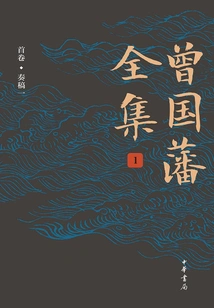
曾国藩全集(首卷·奏稿一)
Zeng Guofan
This volume includes the "Edict", "Edict and Sacrifice", "Imperial Inscription", "National History Biography", "Shinto Stele", "Epitaph", etc. In the "Edict", the Qing court concluded the coffin and commented that Zeng Guofan had "pure knowledge, profound knowledge, loyal character, and upright conduct." "The Biography of National History" details Zeng Guofan's achievements from his time as a Jinshi in Beijing in the 18th year of Daoguang (1838) to his death as governor of Liangjiang in the 11th year of Tongzhi (1872). It believes that he was "excellent in his knowledge of people and dedicated his life to serving the country" and "loyal and effective, and his merits are among the people." "The Complete Works of Zeng Wenzhenggong" includes one volume of "First Volume", thirty volumes of "Manuscripts", twenty-eight volumes of "Eighteen Schools of Poetry", twenty-six volumes of "Miscellaneous Notes of One Hundred Schools of Classics and History", two volumes of "Compendium of One Hundred Schools of Classics and History", and two volumes of "Mingyuantang Papers" There are four volumes of "Collected Poems", four volumes of "Collected Works", thirty-three volumes of "Books", six volumes of "Approvals", four volumes of "Miscellaneous Works", ten volumes of "Qiuquezhai Reading Record", two volumes of "Qiuquezhai Diary Notes", and twelve volumes of "Chronology".
This volume includes the "Edict", "Edict and Sacrifice", "Imperial Inscription", "National History Biography", "Shinto Stele", "Epitaph", etc. In the "Edict", the Qing court concluded the coffin and commented that Zeng Guofan had "pure knowledge, profound knowledge, loyal character, and upright conduct." "The Biography of National History" details Zeng Guofan's achievements from his time as a Jinshi in Beijing in the 18th year of Daoguang (1838) to his death as governor of Liangjiang in the 11th year of Tongzhi (1872). It believes that he was "excellent in his knowledge of people and dedicated his life to serving the country" and "loyal and effective, and his merits are among the people." "The Complete Works of Zeng Wenzhenggong" includes one volume of "First Volume", thirty volumes of "Manuscripts", twenty-eight volumes of "Eighteen Schools of Poetry", twenty-six volumes of "Miscellaneous Notes of One Hundred Schools of Classics and History", two volumes of "Compendium of One Hundred Schools of Classics and History", and two volumes of "Mingyuantang Papers" There are four volumes of "Collected Poems", four volumes of "Collected Works", thirty-three volumes of "Books", six volumes of "Approvals", four volumes of "Miscellaneous Works", ten volumes of "Qiuquezhai Reading Record", two volumes of "Qiuquezhai Diary Notes", and twelve volumes of "Chronology".
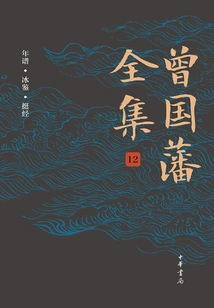
曾国藩全集(第十二卷·年谱、冰鉴、挺经)
Zeng Guofan
The "Chronology" in this volume was compiled and compiled by Li Shuchang, a student of Zeng Guofan. "In modern times, the collection of ancient sages must be published as a chronicle to examine the succession of poems and essays written by them. It is based on the Mencius, which means reciting poems and reading, and discussing the world and knowing people." The language of "Chronology" is concise and clear, the materials described are credible and the evaluation is appropriate, providing valuable first-hand materials for future generations to study Zeng Guofan.
The "Chronology" in this volume was compiled and compiled by Li Shuchang, a student of Zeng Guofan. "In modern times, the collection of ancient sages must be published as a chronicle to examine the succession of poems and essays written by them. It is based on the Mencius, which means reciting poems and reading, and discussing the world and knowing people." The language of "Chronology" is concise and clear, the materials described are credible and the evaluation is appropriate, providing valuable first-hand materials for future generations to study Zeng Guofan.