Library
Browse and search novels
1 novel found
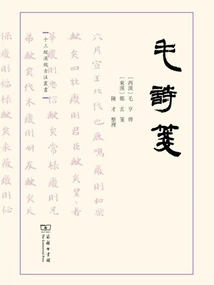
Mao Shi Jian
Literature毛诗笺
(western Han Dynasty) Mao Heng
"Mao's Poems and Notes", a biography of Mao Heng in the Western Han Dynasty, Zheng Xuan's notes in the Eastern Han Dynasty, compiled by Chen Cai. The Book of Songs, also known as "The Book of Songs" and "Three Hundred Poems", is my country's first collection of poems. It collects poems from the early Western Zhou Dynasty to the middle of the Spring and Autumn Period (11th century BC to 6th century BC), with a total of 311 poems, 6 of which are Sheng poems. It is said that Confucius deleted the "Book of Songs" and Zixia was known as "Literature" and was good at writing "The Book of Songs". It was later passed down to Mao Heng by Xun Kuang. During the reign of Emperor Wu of the Han Dynasty, "The Book of Songs" was listed as an official school, among which four schools of thought were Qi, Lu, Han, and Mao. Mao was Mao Heng. Mao Heng wrote "The Biography of Mao's Poems" to teach Mao Chang. Zheng Xuan's "Mao Shi Jian" in the Eastern Han Dynasty is generally called Zheng's "Jian", "Mao Shi Jian" or "Mao Shi Zhuan Jian". This book is based on the Song Dynasty box version of "Mao's Poems: Zhengyi", the Goshan edition of "Mao's Poems: Zhengyi", the Qing Dynasty's imitation Xiangtai Five Classics version of "Mao's Poems", the Qing Dynasty Wuyingdian's version of "Mao's Poems Annotations" and the Qing Dynasty's Nanchang Prefecture edition of "The Thirteen Classics Annotations" of "Mao's Poems" edited by Ruan Yuan. As for the texts of classics and biographies, Tongxiao used Duan Yucai's "The Final Edition of Mao's Poetry's Ancient Teachings" and Zhutian Guanghong's "Mao's Poetry Meeting Notes". The collation of this book has appropriately absorbed some of the results of Ruan Yuan's "Correction Notes". For the punctuation of this book, appropriate reference is made to the "Complete Book of Two Han Dynasties" and "Exegetical Biography of Mao's Poems" published by Shandong University Press, the traditional punctuation version of "Mao's Poems of Justice" published by Peking University Press, and "Annotations and Commentary on Mao's Poems" published by Shanghai Ancient Books Publishing House.
"Mao's Poems and Notes", a biography of Mao Heng in the Western Han Dynasty, Zheng Xuan's notes in the Eastern Han Dynasty, compiled by Chen Cai. The Book of Songs, also known as "The Book of Songs" and "Three Hundred Poems", is my country's first collection of poems. It collects poems from the early Western Zhou Dynasty to the middle of the Spring and Autumn Period (11th century BC to 6th century BC), with a total of 311 poems, 6 of which are Sheng poems. It is said that Confucius deleted the "Book of Songs" and Zixia was known as "Literature" and was good at writing "The Book of Songs". It was later passed down to Mao Heng by Xun Kuang. During the reign of Emperor Wu of the Han Dynasty, "The Book of Songs" was listed as an official school, among which four schools of thought were Qi, Lu, Han, and Mao. Mao was Mao Heng. Mao Heng wrote "The Biography of Mao's Poems" to teach Mao Chang. Zheng Xuan's "Mao Shi Jian" in the Eastern Han Dynasty is generally called Zheng's "Jian", "Mao Shi Jian" or "Mao Shi Zhuan Jian". This book is based on the Song Dynasty box version of "Mao's Poems: Zhengyi", the Goshan edition of "Mao's Poems: Zhengyi", the Qing Dynasty's imitation Xiangtai Five Classics version of "Mao's Poems", the Qing Dynasty Wuyingdian's version of "Mao's Poems Annotations" and the Qing Dynasty's Nanchang Prefecture edition of "The Thirteen Classics Annotations" of "Mao's Poems" edited by Ruan Yuan. As for the texts of classics and biographies, Tongxiao used Duan Yucai's "The Final Edition of Mao's Poetry's Ancient Teachings" and Zhutian Guanghong's "Mao's Poetry Meeting Notes". The collation of this book has appropriately absorbed some of the results of Ruan Yuan's "Correction Notes". For the punctuation of this book, appropriate reference is made to the "Complete Book of Two Han Dynasties" and "Exegetical Biography of Mao's Poems" published by Shandong University Press, the traditional punctuation version of "Mao's Poems of Justice" published by Peking University Press, and "Annotations and Commentary on Mao's Poems" published by Shanghai Ancient Books Publishing House.