Library
Browse and search books
7 novels found
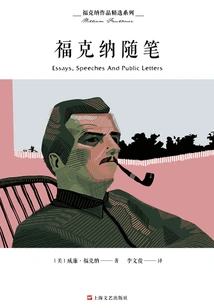
Faulkner's Selected Works Series: Faulkner's Essays
General Fiction福克纳作品精选系列:福克纳随笔
(us) William Faulkner
"Faulkner's Essays" collects Faulkner's more mature non-fiction articles from various periods, including speeches, book reviews, prefaces and open letters intended to be published, etc. It is an important part of Faulkner's entire works and an indispensable material for understanding a true, comprehensive and even secret Faulkner. Most of the chapters are the product of his later period of creation, and many of them reflect his increased sense of responsibility as a public figure after he won the Nobel Prize for Literature. While these essays reveal what this intensely passionate, complex, and private writer was willing to reveal to the public during the last four decades of his career, they also allow us to learn more about him as a person and his work.
"Faulkner's Essays" collects Faulkner's more mature non-fiction articles from various periods, including speeches, book reviews, prefaces and open letters intended to be published, etc. It is an important part of Faulkner's entire works and an indispensable material for understanding a true, comprehensive and even secret Faulkner. Most of the chapters are the product of his later period of creation, and many of them reflect his increased sense of responsibility as a public figure after he won the Nobel Prize for Literature. While these essays reveal what this intensely passionate, complex, and private writer was willing to reveal to the public during the last four decades of his career, they also allow us to learn more about him as a person and his work.

Faulkner Collection: the Sound and the Fury
General Fiction福克纳作品精选系列:喧哗与骚动
(us) William Faulkner
"The Sound and the Fury" was written in 1929 and is one of Faulkner's most representative works. It is also the writer's favorite novel and the one he spent the most time on. It tells the story of the family tragedy of the Compson family, a declining landowner in the South. Old Compson was idle, addicted to alcohol and drink, and his wife was selfish, cruel, and resentful. The eldest son, Quentin, desperately clung to the so-called old traditions of the South. He felt so guilty that his sister Katie's dissolute life had insulted her status as a southern lady, and even committed suicide by drowning. The second son, Jason, was cold, greedy and selfish; This book revolves around Katie's fall, and through the inner monologues of the three sons, it reflects the impact of this event on different people's hearts and the changes in their hearts that resulted. Finally, the "limited perspective" of the first three parts is supplemented by the black maid Dilsey, who summarizes the whole book. The novel makes extensive use of multi-perspective narrative writing methods and stream-of-consciousness expression techniques, making it a representative work of stream-of-consciousness novels and even modern novels as a whole.
"The Sound and the Fury" was written in 1929 and is one of Faulkner's most representative works. It is also the writer's favorite novel and the one he spent the most time on. It tells the story of the family tragedy of the Compson family, a declining landowner in the South. Old Compson was idle, addicted to alcohol and drink, and his wife was selfish, cruel, and resentful. The eldest son, Quentin, desperately clung to the so-called old traditions of the South. He felt so guilty that his sister Katie's dissolute life had insulted her status as a southern lady, and even committed suicide by drowning. The second son, Jason, was cold, greedy and selfish; This book revolves around Katie's fall, and through the inner monologues of the three sons, it reflects the impact of this event on different people's hearts and the changes in their hearts that resulted. Finally, the "limited perspective" of the first three parts is supplemented by the black maid Dilsey, who summarizes the whole book. The novel makes extensive use of multi-perspective narrative writing methods and stream-of-consciousness expression techniques, making it a representative work of stream-of-consciousness novels and even modern novels as a whole.
Sound and Fury
Literature喧哗与骚动
(us) William Faulkner
"The Sound and the Fury" is the most outstanding masterpiece of American Nobel Prize winner and 20th century literary master William Faulkner. It was published in 1929. This novel describes the decline of the Compson family, a prominent family in the town of Jefferson in the south of the United States from the late 19th century to the 1920s, as well as the experiences and mental states of each family member. The book is divided into four parts, each part has a character narrating the story.
"The Sound and the Fury" is the most outstanding masterpiece of American Nobel Prize winner and 20th century literary master William Faulkner. It was published in 1929. This novel describes the decline of the Compson family, a prominent family in the town of Jefferson in the south of the United States from the late 19th century to the 1920s, as well as the experiences and mental states of each family member. The book is divided into four parts, each part has a character narrating the story.

As I'm Dying
General Fiction我弥留之际
(us) William Faulkner
"As I Lay Dying" is the representative work of the American writer Faulkner published in 1930 and one of the important novels of the "Yoknapatawpha Lineage". It tells the story of Bundren, a farmer in the southern United States, who led his family to transport his wife's body back to his hometown for burial in order to keep his promise to his wife. The novel is completely composed of fifty-nine inner monologues of the Bundren family, neighbors and related personnel. The story is told from multiple perspectives. It is another masterpiece of the author's use of multi-perspective narrative methods and stream-of-consciousness methods.
"As I Lay Dying" is the representative work of the American writer Faulkner published in 1930 and one of the important novels of the "Yoknapatawpha Lineage". It tells the story of Bundren, a farmer in the southern United States, who led his family to transport his wife's body back to his hometown for burial in order to keep his promise to his wife. The novel is completely composed of fifty-nine inner monologues of the Bundren family, neighbors and related personnel. The story is told from multiple perspectives. It is another masterpiece of the author's use of multi-perspective narrative methods and stream-of-consciousness methods.
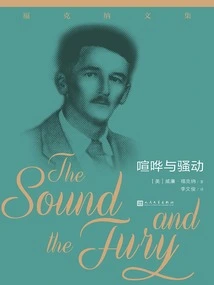
Sound and Fury
General Fiction喧哗与骚动
(us) William Faulkner
"The Sound and the Fury" is the most outstanding masterpiece of American Nobel Prize winner and 20th century literary master William Faulkner. It was published in 1929. This novel describes the decline of the Compson family, a prominent family in the town of Jefferson in the south of the United States from the late 19th century to the 1920s, as well as the experiences and mental states of each family member. The book is divided into four parts, each part has a character narrating the story.
"The Sound and the Fury" is the most outstanding masterpiece of American Nobel Prize winner and 20th century literary master William Faulkner. It was published in 1929. This novel describes the decline of the Compson family, a prominent family in the town of Jefferson in the south of the United States from the late 19th century to the 1920s, as well as the experiences and mental states of each family member. The book is divided into four parts, each part has a character narrating the story.

As I'm Dying
General Fiction我弥留之际
(us) William Faulkner
"As I Lay Dying" is one of the important novels of Faulkner's "Yoknapatawpha Lineage", which made Faulkner famous in one fell swoop. The novel consists of fifty-nine stanzas of inner monologues. It tells from multiple perspectives the "suffering journey" of Bundren, a farmer in the southern United States, who led his family to transport his wife's body back to his hometown for burial in order to keep his promise to his wife. It is known as "the most outstanding beginning of an American novel in the 20th century."
"As I Lay Dying" is one of the important novels of Faulkner's "Yoknapatawpha Lineage", which made Faulkner famous in one fell swoop. The novel consists of fifty-nine stanzas of inner monologues. It tells from multiple perspectives the "suffering journey" of Bundren, a farmer in the southern United States, who led his family to transport his wife's body back to his hometown for burial in order to keep his promise to his wife. It is known as "the most outstanding beginning of an American novel in the 20th century."

As I'm Dying
General Fiction我弥留之际
(us) William Faulkner
This version of "As I Lay Dying" is designated and recommended by four well-known writers, Mai Jia, Su Tong, Alai, and Ma Jiahui, with an in-depth interpretation of the preface by writer Su Tong, winner of the Mao Dun Literary Award. "As I Lay Dying" is a famous work by Nobel Prize winner Faulkner. The novel is composed of fifty-nine stanzas of inner monologues. It tells the story from multiple perspectives of the "suffering journey" of Bundren, a farmer in the southern United States, who in order to keep his promise to his wife, led his family to transport his wife's body back to his hometown for burial. Despite all the stupidity, selfishness, and barbaric behavior of the family, in order to respect the feelings of their relatives, they overcame huge difficulties and obstacles and fulfilled their promise. The novel demonstrates Faulkner's superb creative skills and brings him international reputation. It is known as "the most outstanding beginning of an American novel in the 20th century."
This version of "As I Lay Dying" is designated and recommended by four well-known writers, Mai Jia, Su Tong, Alai, and Ma Jiahui, with an in-depth interpretation of the preface by writer Su Tong, winner of the Mao Dun Literary Award. "As I Lay Dying" is a famous work by Nobel Prize winner Faulkner. The novel is composed of fifty-nine stanzas of inner monologues. It tells the story from multiple perspectives of the "suffering journey" of Bundren, a farmer in the southern United States, who in order to keep his promise to his wife, led his family to transport his wife's body back to his hometown for burial. Despite all the stupidity, selfishness, and barbaric behavior of the family, in order to respect the feelings of their relatives, they overcame huge difficulties and obstacles and fulfilled their promise. The novel demonstrates Faulkner's superb creative skills and brings him international reputation. It is known as "the most outstanding beginning of an American novel in the 20th century."