Library
Browse and search books
12 novels found

纳博科夫文集第二辑(套装共12册)
(us) Vladimir Nabokov
A collection of classic works by Nabokov, recognized as an outstanding novelist and stylist in the 20th century and the author of "Lolita". Each of the twelve works has its own characteristics, showing the unique aspects of Nabokov's creation, and together they form the magnificent and extraordinary creative spectrum of the novel master. The set contains "Lolita: The Screenplay", "The Complete Collection of Nabokov's Short Stories", the ultra-difficult experimental text "Paint Fire", the pinnacle work of his later years "Ada or Eros", the most autobiographical and humorous classic "Pnin", the memoir "Speak, Memory", the interview "Speaking of Myself", the last manuscript "The Prototype of Laura", as well as "Transparent", "The Magician" and "Look, those clowns!" "Nikolai Gogol".
A collection of classic works by Nabokov, recognized as an outstanding novelist and stylist in the 20th century and the author of "Lolita". Each of the twelve works has its own characteristics, showing the unique aspects of Nabokov's creation, and together they form the magnificent and extraordinary creative spectrum of the novel master. The set contains "Lolita: The Screenplay", "The Complete Collection of Nabokov's Short Stories", the ultra-difficult experimental text "Paint Fire", the pinnacle work of his later years "Ada or Eros", the most autobiographical and humorous classic "Pnin", the memoir "Speak, Memory", the interview "Speaking of Myself", the last manuscript "The Prototype of Laura", as well as "Transparent", "The Magician" and "Look, those clowns!" "Nikolai Gogol".
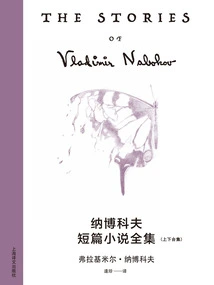
纳博科夫短篇小说全集(纳博科夫精选集V)
(us) Vladimir Nabokov
A complete collection of Nabokov's short stories, the "magician of words" - "these short stories are miracles of English literature". 68 Short stories in different styles, edited by Nabokov's son Dmitry in chronological order. The man at the desk at night is disturbed by an uninvited guest, who turns out to be a wood elf from his hometown; the long-lost son reunites with his mother, but appears at an extremely embarrassing moment; the exiled barber named "Razor" shaves the man who once persecuted him; the groom has to report the bride's death to his father-in-law after the honeymoon; A shy dreamer makes a soul-deal with the devil... In these dark and magical stories, Nabokov perfectly demonstrates dazzling novel techniques, wild imagination and intellectual games, and fascinating insights into the unavoidable ambiguity and loss in life. They are called "the miracle of English literature".
A complete collection of Nabokov's short stories, the "magician of words" - "these short stories are miracles of English literature". 68 Short stories in different styles, edited by Nabokov's son Dmitry in chronological order. The man at the desk at night is disturbed by an uninvited guest, who turns out to be a wood elf from his hometown; the long-lost son reunites with his mother, but appears at an extremely embarrassing moment; the exiled barber named "Razor" shaves the man who once persecuted him; the groom has to report the bride's death to his father-in-law after the honeymoon; A shy dreamer makes a soul-deal with the devil... In these dark and magical stories, Nabokov perfectly demonstrates dazzling novel techniques, wild imagination and intellectual games, and fascinating insights into the unavoidable ambiguity and loss in life. They are called "the miracle of English literature".
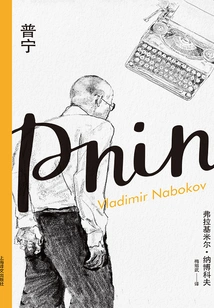
Puning
General Fiction普宁
(us) Vladimir Nabokov
"Pnin" is Nabokov's humorous and autobiographical classic. The first four chapters were published in The New Yorker magazine. It was Nabokov's first novel that attracted widespread attention and popularity among American readers. It describes the life of an exiled old Russian professor teaching in an American university. He has a kind-hearted but eccentric personality, and is out of tune with his surroundings. He is often ridiculed by his colleagues, and his wife also abandoned him. He was alone, so he had no choice but to indulge in old papers and study ancient Russian culture and classical literature to comfort himself; recalling the past all the time, he showed a strong sense of nostalgia. Nabokov skillfully blended Russian culture and modern American civilization, and humorously and intelligently portrayed a distressed man who had lost his homeland, cut off his connection with his motherland's culture, and lost his love.
"Pnin" is Nabokov's humorous and autobiographical classic. The first four chapters were published in The New Yorker magazine. It was Nabokov's first novel that attracted widespread attention and popularity among American readers. It describes the life of an exiled old Russian professor teaching in an American university. He has a kind-hearted but eccentric personality, and is out of tune with his surroundings. He is often ridiculed by his colleagues, and his wife also abandoned him. He was alone, so he had no choice but to indulge in old papers and study ancient Russian culture and classical literature to comfort himself; recalling the past all the time, he showed a strong sense of nostalgia. Nabokov skillfully blended Russian culture and modern American civilization, and humorously and intelligently portrayed a distressed man who had lost his homeland, cut off his connection with his motherland's culture, and lost his love.
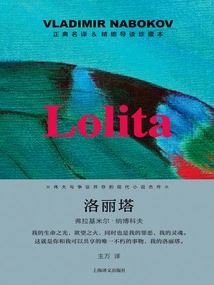
Lolita: a Collector's Edition
General Fiction洛丽塔:导读珍藏本
(us) Vladimir Nabokov
The novel "Lolita" is the famous work of Russian-American writer Vladimir Nabokov and a landmark work of world literature. It has become a modern literary classic because of its complexity and artistry. The introduction collector's edition adds a long introduction before the text of the novel. It is written by Alfred Appel Jr., Nabokov's student at Cornell University and a recognized Nabokov research expert and cultural historian. It guides the reader from the three major aspects of "puppetry", "background" and "ingenious techniques", taking readers to appreciate the large number of word games, literary allusions and social customs that Nabokov carefully woven into "Lolita". This introduction also records the conversation between Appel and Nabokov himself, from which we can get a glimpse of the writer's writing motivation, theme, purpose, etc. In addition, anecdotes of film adaptations, the hobby of catching butterflies, long-term and passionate devotion, and various stubborn reading interests are also involved. The introduction records that Nabokov is both concerned about serious propositions and obsessed with trivial things. This contradictory expression obviously also remains in "Lolita".
The novel "Lolita" is the famous work of Russian-American writer Vladimir Nabokov and a landmark work of world literature. It has become a modern literary classic because of its complexity and artistry. The introduction collector's edition adds a long introduction before the text of the novel. It is written by Alfred Appel Jr., Nabokov's student at Cornell University and a recognized Nabokov research expert and cultural historian. It guides the reader from the three major aspects of "puppetry", "background" and "ingenious techniques", taking readers to appreciate the large number of word games, literary allusions and social customs that Nabokov carefully woven into "Lolita". This introduction also records the conversation between Appel and Nabokov himself, from which we can get a glimpse of the writer's writing motivation, theme, purpose, etc. In addition, anecdotes of film adaptations, the hobby of catching butterflies, long-term and passionate devotion, and various stubborn reading interests are also involved. The introduction records that Nabokov is both concerned about serious propositions and obsessed with trivial things. This contradictory expression obviously also remains in "Lolita".

The Complete Collection of Nabokov's Short Stories
General Fiction纳博科夫短篇小说全集
(us) Vladimir Nabokov
"The Complete Collection of Nabokov's Short Stories" is the first complete collection of the literary master Nabokov's short stories in the country. 68 Short stories in different styles, edited by Nabokov's son Dmitry in chronological order. The man at the desk at night is disturbed by an uninvited guest, who turns out to be a wood elf from his hometown; the long-lost son reunites with his mother, but appears at an extremely embarrassing moment; the exiled barber named "Razor" shaves the man who once persecuted him; the groom has to report the bride's death to his father-in-law after the honeymoon; A shy dreamer makes a soul-deal with the devil... In these dark and magical stories, Nabokov perfectly demonstrates dazzling novel techniques, wild imagination and intellectual games, and fascinating insights into the unavoidable ambiguity and loss in life. They are called "the miracle of English literature".
"The Complete Collection of Nabokov's Short Stories" is the first complete collection of the literary master Nabokov's short stories in the country. 68 Short stories in different styles, edited by Nabokov's son Dmitry in chronological order. The man at the desk at night is disturbed by an uninvited guest, who turns out to be a wood elf from his hometown; the long-lost son reunites with his mother, but appears at an extremely embarrassing moment; the exiled barber named "Razor" shaves the man who once persecuted him; the groom has to report the bride's death to his father-in-law after the honeymoon; A shy dreamer makes a soul-deal with the devil... In these dark and magical stories, Nabokov perfectly demonstrates dazzling novel techniques, wild imagination and intellectual games, and fascinating insights into the unavoidable ambiguity and loss in life. They are called "the miracle of English literature".
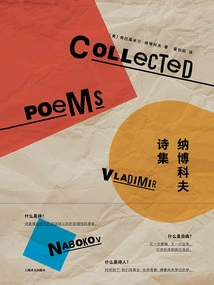
Nabokov's Poems (nabokov's Works Series)
Literature纳博科夫诗集(纳博科夫作品系列)
(us) Vladimir Nabokov
The poetic works of Nabokov, the great stylist of the 20th century, are presented for the first time in the Chinese world, with 90 representative poems covering a 59-year poetry journey. Like Joyce, Nabokov was first and foremost a poet. His obsession with writing poetry began in the summer when he was fifteen, and over the next ten years he wrote thousands of poems. When his first novel, Mary, was published in 1926, Nabokov became one of the great modernists who revolutionized the novel and imbued it with poetry. At the same time, he was still writing poetry, and although the volume was not as good as in his early days, his interest and personality more than made up for it. These poems share the same ideas and themes as his novels and complement each other. "The Collected Poems of Nabokov" contains nearly one hundred poems by Vladimir Nabokov, spanning his fifty-nine years of poetry creation, including Nabokov's earliest surviving work "Music", the long poem "The University Psalms" with a capacity comparable to a short story, and a new translation translated by his son Dmitry for the first time.
The poetic works of Nabokov, the great stylist of the 20th century, are presented for the first time in the Chinese world, with 90 representative poems covering a 59-year poetry journey. Like Joyce, Nabokov was first and foremost a poet. His obsession with writing poetry began in the summer when he was fifteen, and over the next ten years he wrote thousands of poems. When his first novel, Mary, was published in 1926, Nabokov became one of the great modernists who revolutionized the novel and imbued it with poetry. At the same time, he was still writing poetry, and although the volume was not as good as in his early days, his interest and personality more than made up for it. These poems share the same ideas and themes as his novels and complement each other. "The Collected Poems of Nabokov" contains nearly one hundred poems by Vladimir Nabokov, spanning his fifty-nine years of poetry creation, including Nabokov's earliest surviving work "Music", the long poem "The University Psalms" with a capacity comparable to a short story, and a new translation translated by his son Dmitry for the first time.
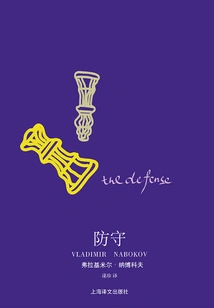
Defense
General Fiction防守
(us) Vladimir Nabokov
This book is Nabokov's third novel. It tells the story of a chess genius who gradually became insane due to his long-term addiction to the game. The protagonist Luzhin was an unattractive, withdrawn and melancholic child when he was a child. He was like a mystery to his parents and the object of ridicule by his classmates. Real life always made him anxious, so he used chess as a refuge from real life. It turned out that he was a chess genius and became a chess master. However, he also paid a price for this: the game of chess gradually replaced his real life. In one game, his carefully designed defensive strategy became worthless due to the opponent's unexpected move. This reality made his mental world finally collapse.
This book is Nabokov's third novel. It tells the story of a chess genius who gradually became insane due to his long-term addiction to the game. The protagonist Luzhin was an unattractive, withdrawn and melancholic child when he was a child. He was like a mystery to his parents and the object of ridicule by his classmates. Real life always made him anxious, so he used chess as a refuge from real life. It turned out that he was a chess genius and became a chess master. However, he also paid a price for this: the game of chess gradually replaced his real life. In one game, his carefully designed defensive strategy became worthless due to the opponent's unexpected move. This reality made his mental world finally collapse.
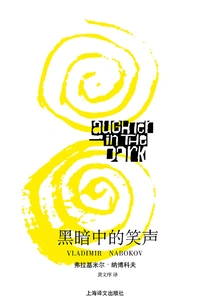
Laughter in the Dark
General Fiction黑暗中的笑声
(us) Vladimir Nabokov
"Laughter in the Dark" was written in Berlin in 1932 under the title "Camera Obscura". It was published in Paris and Berlin. It was translated into English by Way Loy in 1936 and published in London under its original name. In 1938, it was significantly revised and re-translated by Nabokov himself and published in New York under the name "Laughter in the Dark". The novel imitates the kind of cheap love triangle stories popular in movies in the 1920s and 1930s. It uses the movie as its title at the beginning to introduce the relationship between the main characters. The actor Obinus wants to use the new technique of animation to "animate" the paintings of ancient masters, and proposes to cooperate with the caricature painter Rex. Obinas fell in love with the theater usher Margot at first sight. Margot, who was "obsessed with watching movies," dreamed of becoming a movie star. When she was convinced that he belonged to a class that could "provide the conditions for her to be on stage and screen," she decided to associate with him. The banquet hosted by Obinas to entertain the stars creates an opportunity for Margot to reunite with her former lover Rex, thus forming a triangle relationship until the novel ends in tragedy.
"Laughter in the Dark" was written in Berlin in 1932 under the title "Camera Obscura". It was published in Paris and Berlin. It was translated into English by Way Loy in 1936 and published in London under its original name. In 1938, it was significantly revised and re-translated by Nabokov himself and published in New York under the name "Laughter in the Dark". The novel imitates the kind of cheap love triangle stories popular in movies in the 1920s and 1930s. It uses the movie as its title at the beginning to introduce the relationship between the main characters. The actor Obinus wants to use the new technique of animation to "animate" the paintings of ancient masters, and proposes to cooperate with the caricature painter Rex. Obinas fell in love with the theater usher Margot at first sight. Margot, who was "obsessed with watching movies," dreamed of becoming a movie star. When she was convinced that he belonged to a class that could "provide the conditions for her to be on stage and screen," she decided to associate with him. The banquet hosted by Obinas to entertain the stars creates an opportunity for Margot to reunite with her former lover Rex, thus forming a triangle relationship until the novel ends in tragedy.
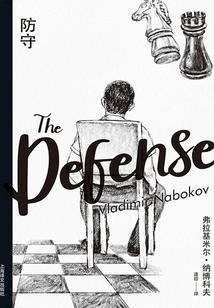
Defense (Nabokov Collection Ii)
General Fiction防守(纳博科夫精选集Ⅱ)
(us) Vladimir Nabokov
"This kind of love is destined to be destructive." The author of "Lolita" and the novel master Nabokov's masterpiece, the passion, intoxication, madness and fall of a chess genius, using scalpel-like precision to write about the hidden corners behind the genius boy. "Defense" is a masterpiece of Nabokov's novels recognized by the 20th century novel master. It tells the story of a genius boy who gradually becomes insane due to his long-term addiction to chess games. Passion, intoxication, madness and decline are the themes throughout the novel. The protagonist Luzhin was an unattractive, withdrawn and melancholic child when he was a child. Real life always made him feel anxious, so he used chess as a refuge to escape from real life. It turned out that he was a chess genius and became a chess master. However, he also paid a price for this: the chess game gradually replaced his real life, and his real life became a dream. Nabokov devoted great enthusiasm to this early work, outlining the hidden corners behind the aura of genius with anatomical precision.
"This kind of love is destined to be destructive." The author of "Lolita" and the novel master Nabokov's masterpiece, the passion, intoxication, madness and fall of a chess genius, using scalpel-like precision to write about the hidden corners behind the genius boy. "Defense" is a masterpiece of Nabokov's novels recognized by the 20th century novel master. It tells the story of a genius boy who gradually becomes insane due to his long-term addiction to chess games. Passion, intoxication, madness and decline are the themes throughout the novel. The protagonist Luzhin was an unattractive, withdrawn and melancholic child when he was a child. Real life always made him feel anxious, so he used chess as a refuge to escape from real life. It turned out that he was a chess genius and became a chess master. However, he also paid a price for this: the chess game gradually replaced his real life, and his real life became a dream. Nabokov devoted great enthusiasm to this early work, outlining the hidden corners behind the aura of genius with anatomical precision.
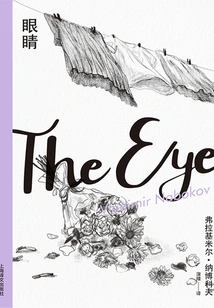
Eyes (Nabokov Collection Ii)
General Fiction眼睛(纳博科夫精选集Ⅱ)
(us) Vladimir Nabokov
"The only happiness in the world is to observe, spy, monitor, and examine oneself and others." Nabokov, the master of novels, plays with his techniques in this short novel. It is a short, bizarre and humorous detective story in the style of an allegory. It is a world in the eyes of a "multi-faceted man". "The Eye" is a long masterpiece by Nabokov, a recognized master of novels in the 20th century. It parodies the style of detective novels and tells the life of the protagonist Smurov. Smurov enjoys observing, spying, and examining himself and others. Due to his special identity, he only sees himself and others through the eyes of others, and protects his identity from being discovered. And his existence always depends on the reflection in other people's minds: a liar, a cruel officer, a sensitive young man, a decent gentleman, or a poor man who cannot love. The author weaves wonderful multiple worlds with coded text as crystal clear as raindrops, leading readers into a narrative maze, tracking Smurov's true identity, analyzing the intentions of the mysterious narrator behind it, and experiencing the pleasure of solving a mystery - "doing nothing else, just making a big, slightly glass-colored, slightly bloodshot, unblinking eye."
"The only happiness in the world is to observe, spy, monitor, and examine oneself and others." Nabokov, the master of novels, plays with his techniques in this short novel. It is a short, bizarre and humorous detective story in the style of an allegory. It is a world in the eyes of a "multi-faceted man". "The Eye" is a long masterpiece by Nabokov, a recognized master of novels in the 20th century. It parodies the style of detective novels and tells the life of the protagonist Smurov. Smurov enjoys observing, spying, and examining himself and others. Due to his special identity, he only sees himself and others through the eyes of others, and protects his identity from being discovered. And his existence always depends on the reflection in other people's minds: a liar, a cruel officer, a sensitive young man, a decent gentleman, or a poor man who cannot love. The author weaves wonderful multiple worlds with coded text as crystal clear as raindrops, leading readers into a narrative maze, tracking Smurov's true identity, analyzing the intentions of the mysterious narrator behind it, and experiencing the pleasure of solving a mystery - "doing nothing else, just making a big, slightly glass-colored, slightly bloodshot, unblinking eye."
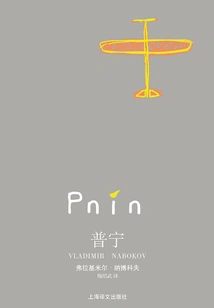
Puning
General Fiction普宁
(us) Vladimir Nabokov
Nabokov's most autobiographical and witty classic. Originally serialized in four chapters intermittently in The New Yorker magazine from 1953 to 1957, it was Nabokov's first novel to attract widespread attention and popularity among American readers. Describes the life of an exiled old Russian professor teaching in an American university. Nabokov cleverly blended Russian culture and modern American civilization, and humorously and intelligently portrayed a distressed man who had lost his homeland, severed ties with his motherland's culture, and lost his love.
Nabokov's most autobiographical and witty classic. Originally serialized in four chapters intermittently in The New Yorker magazine from 1953 to 1957, it was Nabokov's first novel to attract widespread attention and popularity among American readers. Describes the life of an exiled old Russian professor teaching in an American university. Nabokov cleverly blended Russian culture and modern American civilization, and humorously and intelligently portrayed a distressed man who had lost his homeland, severed ties with his motherland's culture, and lost his love.
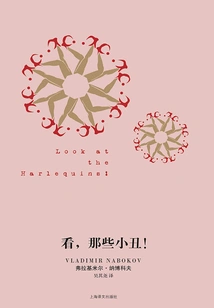
Look, Those Clowns!
General Fiction看,那些小丑!
(us) Vladimir Nabokov
"Cheer up!" She shouted, "Look at those clowns!" "What clowns? Where are they?" "Oh, they are everywhere. All around you. Plants and trees are clowns, words are clowns. Scenes and numbers are clowns. Put two things together, one joke, one image, and you have a three-part clown. Come on! Play! Fictional world! Fictional reality!" I really did. Oh my gosh, I really did. To commemorate those first daydreams, I invented this great-aunt, and now she is walking tremblingly along the marble steps of the front porch of memory, sideways, sideways, poor lame lady, touching the edge of each step with the rubber tip of her black cane.
"Cheer up!" She shouted, "Look at those clowns!" "What clowns? Where are they?" "Oh, they are everywhere. All around you. Plants and trees are clowns, words are clowns. Scenes and numbers are clowns. Put two things together, one joke, one image, and you have a three-part clown. Come on! Play! Fictional world! Fictional reality!" I really did. Oh my gosh, I really did. To commemorate those first daydreams, I invented this great-aunt, and now she is walking tremblingly along the marble steps of the front porch of memory, sideways, sideways, poor lame lady, touching the edge of each step with the rubber tip of her black cane.