Library
Browse and search books
5 novels found
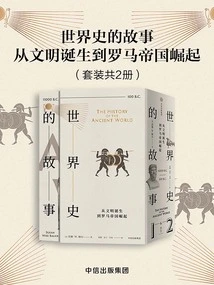
世界史的故事·从文明诞生到罗马帝国崛起
(us) Susan Wise Ball
"The Story of World History: From the Birth of Civilization to the Rise of the Roman Empire" includes the first two volumes of the "The Story of World History" series, telling the history of early civilization before BC and the classical era. 01 Royal power descended from the sky (the beginning of civilization - the 7th century BC). Human civilization gradually emerged in the chaos of history. In the Mesopotamia, the earliest countries were formed. Later, the early countries of Assyria, Hittite, Egypt, India, China, Phoenicia, and Greece were born, and the earliest writing, religion, emperors, and cities appeared. Early civilizations experienced several rises and falls. 02 Civilization of the Axial Age (7th century BC - 1st century BC) Ancient civilization has gradually reached its peak after thousands of years of accumulation. The Macedonian Empire, the Persian Empire, the Qin Empire, and the Roman Empire reached an unprecedentedly vast territory. The founders of great traditions such as Zoroaster, Confucius, Laozi, Buddha, Plato, Aristotle, and Jesus also appeared at this time.
"The Story of World History: From the Birth of Civilization to the Rise of the Roman Empire" includes the first two volumes of the "The Story of World History" series, telling the history of early civilization before BC and the classical era. 01 Royal power descended from the sky (the beginning of civilization - the 7th century BC). Human civilization gradually emerged in the chaos of history. In the Mesopotamia, the earliest countries were formed. Later, the early countries of Assyria, Hittite, Egypt, India, China, Phoenicia, and Greece were born, and the earliest writing, religion, emperors, and cities appeared. Early civilizations experienced several rises and falls. 02 Civilization of the Axial Age (7th century BC - 1st century BC) Ancient civilization has gradually reached its peak after thousands of years of accumulation. The Macedonian Empire, the Persian Empire, the Qin Empire, and the Roman Empire reached an unprecedentedly vast territory. The founders of great traditions such as Zoroaster, Confucius, Laozi, Buddha, Plato, Aristotle, and Jesus also appeared at this time.
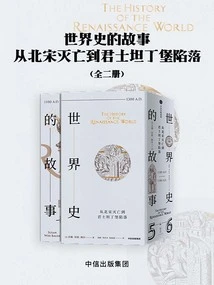
世界史的故事·从北宋灭亡到君士坦丁堡陷落(全二册)
(us) Susan Wise Ball
"The Story of World History" consists of three series (including 6 volumes), and this book is the third one: Volume 5 (11th century to 13th century) Religious conflicts finally triggered the Crusades, and the fierce confrontation between the East and the West led to both losses; at the same time, Westerners rediscovered the wisdom of ancient Greece from the classics collected in the East, and the dawn of the Renaissance began. The Arab and Byzantine empires declined, and the Mongols conquered nearly all of Eurasia. Book 6 (14th to 15th century) Famines, plagues and wars continued in Europe, and the power of emperors and popes fell away. The Song Dynasty was eventually destroyed by the Mongol Empire, Timur ruled the vast land of Central Asia, and the Byzantine Empire was destroyed by the Ottoman Empire. Amid the turmoil and destruction of the old world, a new world is about to be born.
"The Story of World History" consists of three series (including 6 volumes), and this book is the third one: Volume 5 (11th century to 13th century) Religious conflicts finally triggered the Crusades, and the fierce confrontation between the East and the West led to both losses; at the same time, Westerners rediscovered the wisdom of ancient Greece from the classics collected in the East, and the dawn of the Renaissance began. The Arab and Byzantine empires declined, and the Mongols conquered nearly all of Eurasia. Book 6 (14th to 15th century) Famines, plagues and wars continued in Europe, and the power of emperors and popes fell away. The Song Dynasty was eventually destroyed by the Mongol Empire, Timur ruled the vast land of Central Asia, and the Byzantine Empire was destroyed by the Ottoman Empire. Amid the turmoil and destruction of the old world, a new world is about to be born.

世界史的故事(套装共6册)
(us) Susan Wise Ball
"The Story of World History" consists of three volumes (including 6 volumes): "The Story of World History - From the Birth of Civilization to the Rise of the Roman Empire", "The Story of World History - From the Three Kingdoms to the Norman Conquest", and "The Story of World History - From the Fall of the Northern Song Dynasty to the Fall of Constantinople".
"The Story of World History" consists of three volumes (including 6 volumes): "The Story of World History - From the Birth of Civilization to the Rise of the Roman Empire", "The Story of World History - From the Three Kingdoms to the Norman Conquest", and "The Story of World History - From the Fall of the Northern Song Dynasty to the Fall of Constantinople".

极简科学史
(us) Susan Wise Ball
"A Minimalist History of Science: 2,500 Years of Human Exploration of the World and Self" is a new overview of 2,500 years of human exploration of the world and self. Where do we come from? What is the world made of? What else is beyond the earth? We look up at the stars and relentlessly explore, discover, question, and unravel a series of mysteries about nature and ourselves. We originate from nature, but we transcend nature. On this dangerous planet, compared to other species, human beings can develop and grow in an orderly manner, and the most important thing is because we have mastered the power of science. But to truly understand science, we must understand its past. "Minimalist History of Science" is also a "history of science that is very different from tradition." From the early scientific exploration of mankind to the proposal of the Big Bang theory in the 20th century, from the origin of science in the ancient Greek era to the birth of modern science in the 16th and 17th centuries, from the rise of earth science, the prosperity of life science to the exploration of the universe... This book returns to those scientific classics that changed the way we view the world, the universe and ourselves, and fascinatingly tells the great process of the change of scientific concepts and the development of ideas. From Hippocrates, Plato and Aristotle to Einstein, Schrödinger and Dawkins, these great minds who expanded the boundaries of human knowledge not only changed the trajectory of scientific development, but also contributed to revolutions in human vision and ways of thinking. This book reminds us that science is not an absolutely reliable guide to the truth, but our understanding of the world, a way of understanding the world, and a purely human pursuit. The greatest value of human beings is the never-ending exploration of the unknown world. The story of science is one of the most interesting stories in human history. Everyone who has ever been curious about the world should read this book to understand this extraordinary history.
"A Minimalist History of Science: 2,500 Years of Human Exploration of the World and Self" is a new overview of 2,500 years of human exploration of the world and self. Where do we come from? What is the world made of? What else is beyond the earth? We look up at the stars and relentlessly explore, discover, question, and unravel a series of mysteries about nature and ourselves. We originate from nature, but we transcend nature. On this dangerous planet, compared to other species, human beings can develop and grow in an orderly manner, and the most important thing is because we have mastered the power of science. But to truly understand science, we must understand its past. "Minimalist History of Science" is also a "history of science that is very different from tradition." From the early scientific exploration of mankind to the proposal of the Big Bang theory in the 20th century, from the origin of science in the ancient Greek era to the birth of modern science in the 16th and 17th centuries, from the rise of earth science, the prosperity of life science to the exploration of the universe... This book returns to those scientific classics that changed the way we view the world, the universe and ourselves, and fascinatingly tells the great process of the change of scientific concepts and the development of ideas. From Hippocrates, Plato and Aristotle to Einstein, Schrödinger and Dawkins, these great minds who expanded the boundaries of human knowledge not only changed the trajectory of scientific development, but also contributed to revolutions in human vision and ways of thinking. This book reminds us that science is not an absolutely reliable guide to the truth, but our understanding of the world, a way of understanding the world, and a purely human pursuit. The greatest value of human beings is the never-ending exploration of the unknown world. The story of science is one of the most interesting stories in human history. Everyone who has ever been curious about the world should read this book to understand this extraordinary history.

世界史的故事·从三国鼎立到诺曼征服
(us) Susan Wise Ball
"The Story of World History: From the Three Kingdoms to the Norman Conquest" includes the third and fourth volumes of the "Story of World History" series, telling the history from the late classical era to the early Middle Ages. 03 The Rise and Fall of Great Empires (1st century BC to 6th century BC) Christianity and Buddhism flourished rapidly, while empires such as the Roman Empire, the Han Empire, and the Gupta Dynasty became increasingly decadent. They fell apart due to internal rebellions and the invasion of the Huns, Xianbei, Goths, and Gida tribes across the grasslands. The world entered a period of continuous turmoil. 04The arrival of the Middle Ages (6th century to 11th century) The turbulent situation gradually ended and a series of new countries were established. In Europe and the Middle East, religion became a very powerful force and brought constant strife. The Holy Roman Empire was established, but the Christian Church eventually split. The theocratic state established by the Arabs expanded its territory, and China experienced the prosperous times of the Tang and Song Dynasties.
"The Story of World History: From the Three Kingdoms to the Norman Conquest" includes the third and fourth volumes of the "Story of World History" series, telling the history from the late classical era to the early Middle Ages. 03 The Rise and Fall of Great Empires (1st century BC to 6th century BC) Christianity and Buddhism flourished rapidly, while empires such as the Roman Empire, the Han Empire, and the Gupta Dynasty became increasingly decadent. They fell apart due to internal rebellions and the invasion of the Huns, Xianbei, Goths, and Gida tribes across the grasslands. The world entered a period of continuous turmoil. 04The arrival of the Middle Ages (6th century to 11th century) The turbulent situation gradually ended and a series of new countries were established. In Europe and the Middle East, religion became a very powerful force and brought constant strife. The Holy Roman Empire was established, but the Christian Church eventually split. The theocratic state established by the Arabs expanded its territory, and China experienced the prosperous times of the Tang and Song Dynasties.