Library
Browse and search books
1 novel found
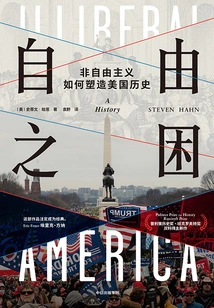
自由之困:非自由主义如何塑造美国历史
(us) Steven Hahn
In this book, author Steven Hahn tells us that illiberalism has never been a heresy in the United States, but a dark thread that runs through and even shapes American history. From the colonial period to the issuance of the Declaration of Independence, buying and selling black slaves, expelling indigenous people, exploiting indentured servants, and suppressing different beliefs were commonplace. Hierarchy, exploitation, and exclusivity were institutional arrangements of the country, making liberation and oppression always go hand in hand. From the Revolutionary War to the Reconstruction era, although the flag of freedom was held high, racial hierarchy was still tolerated and continued in order to maintain the union. Freedom existed in name only because of the compromise of the federal government and the violence of white supremacy in the South. From the Progressive Era to after World War II, reforms and progress in all fields of politics, economy, and society seemed to be in full swing, but the introduction of the Chinese Exclusion Act, the violent suppression of labor unions, and even the political purges of the McCarthy era all demonstrated the suppression of diversity and dissent by the state apparatus; even after the unprecedented achievements of the civil rights movement, racism continued in a new form, and old inequalities were not fundamentally eliminated until the outbreak of the "Black Lives Matter" movement. This is not simply a retelling of history, but a call for reflection. Hahn uses rich history and affectionate writing to remind readers: The entanglement and struggle between freedom and illiberalism is the main thread of the 250-year history of the United States.
In this book, author Steven Hahn tells us that illiberalism has never been a heresy in the United States, but a dark thread that runs through and even shapes American history. From the colonial period to the issuance of the Declaration of Independence, buying and selling black slaves, expelling indigenous people, exploiting indentured servants, and suppressing different beliefs were commonplace. Hierarchy, exploitation, and exclusivity were institutional arrangements of the country, making liberation and oppression always go hand in hand. From the Revolutionary War to the Reconstruction era, although the flag of freedom was held high, racial hierarchy was still tolerated and continued in order to maintain the union. Freedom existed in name only because of the compromise of the federal government and the violence of white supremacy in the South. From the Progressive Era to after World War II, reforms and progress in all fields of politics, economy, and society seemed to be in full swing, but the introduction of the Chinese Exclusion Act, the violent suppression of labor unions, and even the political purges of the McCarthy era all demonstrated the suppression of diversity and dissent by the state apparatus; even after the unprecedented achievements of the civil rights movement, racism continued in a new form, and old inequalities were not fundamentally eliminated until the outbreak of the "Black Lives Matter" movement. This is not simply a retelling of history, but a call for reflection. Hahn uses rich history and affectionate writing to remind readers: The entanglement and struggle between freedom and illiberalism is the main thread of the 250-year history of the United States.