Library
Browse and search books
4 novels found
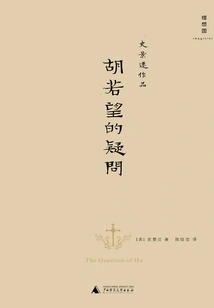
Hu Ruowang's Question
History胡若望的疑问
(us) Shi Jingqian
This book records the miraculous life experience of a Chinese Catholic named Hu Ruowang in France in the 18th century in the form of a diary, and supplements this early history of cultural and religious exchanges between China and foreign countries. The huge differences between Eastern and Western cultures made this Chinese man's journey to France full of hardships and twists and turns, and his soul suffered so much that he ended up in a mental hospital. This book reproduces Hu Ruowang's adventures more than 200 years ago and attempts to provide historical and cultural explanations for his doubts.
This book records the miraculous life experience of a Chinese Catholic named Hu Ruowang in France in the 18th century in the form of a diary, and supplements this early history of cultural and religious exchanges between China and foreign countries. The huge differences between Eastern and Western cultures made this Chinese man's journey to France full of hardships and twists and turns, and his soul suffered so much that he ended up in a mental hospital. This book reproduces Hu Ruowang's adventures more than 200 years ago and attempts to provide historical and cultural explanations for his doubts.
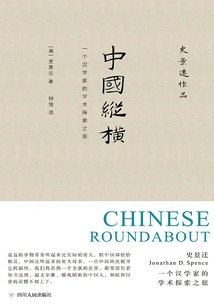
中国纵横
(us) Shi Jingqian
This book contains Shi Jingqian's most representative papers, reflecting his efforts to think about China as accurately, fairly and thoroughly as possible. The content is divided into five parts: cultural exchanges between China and the West, Confucian theory and state power, Chinese social history, revolutionary China, and the introduction of my mentor. The title of the book is "China Zongheng", which partly comes from the author's respect for the poet Wallace Stevens, because he likes the word "Zongheng", which means twists and turns without losing purpose, and also implies the efforts to clarify the context of "convergence and advancement" with some kind of logic.
This book contains Shi Jingqian's most representative papers, reflecting his efforts to think about China as accurately, fairly and thoroughly as possible. The content is divided into five parts: cultural exchanges between China and the West, Confucian theory and state power, Chinese social history, revolutionary China, and the introduction of my mentor. The title of the book is "China Zongheng", which partly comes from the author's respect for the poet Wallace Stevens, because he likes the word "Zongheng", which means twists and turns without losing purpose, and also implies the efforts to clarify the context of "convergence and advancement" with some kind of logic.
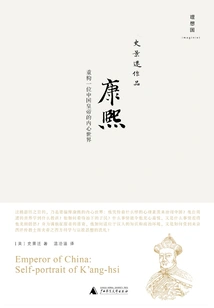
康熙:重构一位中国皇帝的内心世界
(us) Shi Jingqian
Kangxi was the Chinese emperor who reigned from 1661 to 1722 AD. What kind of psychological quality does he rely on to govern China? What lessons has he learned from the world around him? How does he view the people under his rule? What could make his dragon heart happy, and what could make his dragon face angry? As a Miao descendant of the Manchu conquerors, how did he adapt to the intellectual and political environment of the Han people, and how was he baptized by the Western scientific and religious ideas carried by the Western missionaries who came to Beijing? In this book, Shi Jingqian breaks the linear sense of time that he is accustomed to and wanders among the piles of old papers. He attempts to describe the various joys, fears, suspicions, regrets, helplessness, and even memories and dreams of Kangxi's inner world through Kangxi's own mouth, so as to deeply understand Kangxi's personality traits and mental thoughts.
Kangxi was the Chinese emperor who reigned from 1661 to 1722 AD. What kind of psychological quality does he rely on to govern China? What lessons has he learned from the world around him? How does he view the people under his rule? What could make his dragon heart happy, and what could make his dragon face angry? As a Miao descendant of the Manchu conquerors, how did he adapt to the intellectual and political environment of the Han people, and how was he baptized by the Western scientific and religious ideas carried by the Western missionaries who came to Beijing? In this book, Shi Jingqian breaks the linear sense of time that he is accustomed to and wanders among the piles of old papers. He attempts to describe the various joys, fears, suspicions, regrets, helplessness, and even memories and dreams of Kangxi's inner world through Kangxi's own mouth, so as to deeply understand Kangxi's personality traits and mental thoughts.
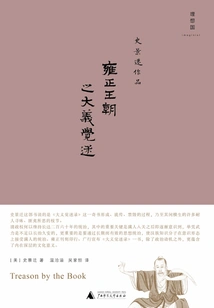
雍正王朝之大义觉迷
(us) Shi Jingqian
The key to why the Manchu Qing regime maintained its rule for 260 years was that the Manchus gradually realized after entering the country that force alone was not enough to maintain long-term peace and stability. More importantly, long-term and effective ideological rule was needed to make the Han intellectuals ideologically accept the rule of the Manchus. The book "Dayi Jue Mi Lu" published by Yongzheng, in addition to political motivations, also contains inner and deep cultural significance. This book tells the detailed process of the formation, circulation, and banning of the strange book "Dayi Jue Mi Lu". It contains many intriguing and incredible details, thus reflecting the relationship between ancient Chinese monarchy and intellectuals and the fate of the old literati.
The key to why the Manchu Qing regime maintained its rule for 260 years was that the Manchus gradually realized after entering the country that force alone was not enough to maintain long-term peace and stability. More importantly, long-term and effective ideological rule was needed to make the Han intellectuals ideologically accept the rule of the Manchus. The book "Dayi Jue Mi Lu" published by Yongzheng, in addition to political motivations, also contains inner and deep cultural significance. This book tells the detailed process of the formation, circulation, and banning of the strange book "Dayi Jue Mi Lu". It contains many intriguing and incredible details, thus reflecting the relationship between ancient Chinese monarchy and intellectuals and the fate of the old literati.