Library
Browse and search books
4 novels found
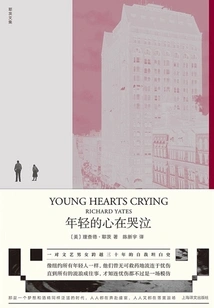
Young Heart is Crying
General Fiction年轻的心在哭泣
(us) Richard Yates
The representative work of Richard Yates, "the writer among writers", "the great writer in the age of anxiety" and the author of "Revolutionary Road". Michael Davenport was a young man who retired from the European battlefields of World War II. He was ambitious and dreamed of becoming a poet and playwright. He is aloof, lives for art, and does not want to get involved with his wife's money, but he still has to write articles for a business magazine to maintain his hobby of writing poetry. His wife Lucy is extremely rich, but she never knows what she wants. She just feels that others seem to be happier than her. As time went by, the couple's anxiety grew as they watched others achieve success while they themselves remained unknown. Their once happy lives are being swallowed up by adultery and isolation, and the monotony they thought they had escaped lingers like a nightmare. In this novel, Yates once again chose the broken American dream, which he is best at, as his theme. He used the heavy hammer of reality to smash the innocence of the dream, bringing an incomparable dull pain, making people feel the sentimentality of the times and personal difficulties when reading.
The representative work of Richard Yates, "the writer among writers", "the great writer in the age of anxiety" and the author of "Revolutionary Road". Michael Davenport was a young man who retired from the European battlefields of World War II. He was ambitious and dreamed of becoming a poet and playwright. He is aloof, lives for art, and does not want to get involved with his wife's money, but he still has to write articles for a business magazine to maintain his hobby of writing poetry. His wife Lucy is extremely rich, but she never knows what she wants. She just feels that others seem to be happier than her. As time went by, the couple's anxiety grew as they watched others achieve success while they themselves remained unknown. Their once happy lives are being swallowed up by adultery and isolation, and the monotony they thought they had escaped lingers like a nightmare. In this novel, Yates once again chose the broken American dream, which he is best at, as his theme. He used the heavy hammer of reality to smash the innocence of the dream, bringing an incomparable dull pain, making people feel the sentimentality of the times and personal difficulties when reading.

Liar in Love (richard Yates Series)
General Fiction恋爱中的骗子(理查德·耶茨作品系列)
(us) Richard Yates
"The Love Liar" is Richard Yates's second collection of short stories after "Eleven Kinds of Loneliness", which includes seven short stories in total. It perfectly demonstrates Yates's superior powers of insight and description. With this book, Yates once again proves the power of the short story. Yates, who is obviously more interested in describing "failed life", relies on his keen mind and unique perspective of observation, like a collage art, to present the "little people" and their life fragments in the United States three-dimensionally before our eyes: failed artists, single mothers with difficult lives, alienated family relationships, estranged marriages, rebellious daughters, fleeting love affairs, unreliable dreams...
"The Love Liar" is Richard Yates's second collection of short stories after "Eleven Kinds of Loneliness", which includes seven short stories in total. It perfectly demonstrates Yates's superior powers of insight and description. With this book, Yates once again proves the power of the short story. Yates, who is obviously more interested in describing "failed life", relies on his keen mind and unique perspective of observation, like a collage art, to present the "little people" and their life fragments in the United States three-dimensionally before our eyes: failed artists, single mothers with difficult lives, alienated family relationships, estranged marriages, rebellious daughters, fleeting love affairs, unreliable dreams...
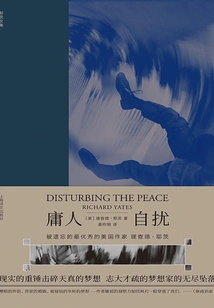
Mediocre People (collected Works of Richard Yates)
General Fiction庸人自扰(理查德·耶茨文集)
(us) Richard Yates
The representative work of Richard Yates, a faithful recorder of mainstream American life in the mid-20th century and the "writer's writer"; Richard Yates is on par with Chekhov, Fitzgerald, and John Cheever in literary attainments, and is deeply loved by Kurt Vonnege. Gut, Andre Du Bois, Nick Hornby, David Hare, Raymond Carver, Joan Didion and Richard Ford and other famous writers fans; "Yates, Fitzgerald and Hemingway can be regarded as the three indisputable American figures in the twentieth century. The greatest compliment I can give Yates is that he writes more like a playwright than a novelist: he wants you to see what he describes." - David Hare (The Hours and The Reading) The protagonist of the novel, John Wilder, is a real visionary. Over the age of 35, he is a boring but slightly successful salesman in the countryside. He has a lovely wife and a 10-year-old son, who is plain but warm. However, life is always full of twists and turns: his family no longer regards him as the glory of the family, because he abandoned and betrayed his marriage, his former family collapsed, he had nowhere to go, and eventually became addicted to alcohol. Overwhelmed, Wilder left home, resigned, and came to Hollywood, where he believed his dream would eventually become a reality. It seems that bad luck has never let go of this sinner who has made mistakes. His lover abandoned him and the producer ruthlessly rejected him. All kinds of misfortunes deepened his dependence on alcohol and dragged him into an increasingly bottomless hell.
The representative work of Richard Yates, a faithful recorder of mainstream American life in the mid-20th century and the "writer's writer"; Richard Yates is on par with Chekhov, Fitzgerald, and John Cheever in literary attainments, and is deeply loved by Kurt Vonnege. Gut, Andre Du Bois, Nick Hornby, David Hare, Raymond Carver, Joan Didion and Richard Ford and other famous writers fans; "Yates, Fitzgerald and Hemingway can be regarded as the three indisputable American figures in the twentieth century. The greatest compliment I can give Yates is that he writes more like a playwright than a novelist: he wants you to see what he describes." - David Hare (The Hours and The Reading) The protagonist of the novel, John Wilder, is a real visionary. Over the age of 35, he is a boring but slightly successful salesman in the countryside. He has a lovely wife and a 10-year-old son, who is plain but warm. However, life is always full of twists and turns: his family no longer regards him as the glory of the family, because he abandoned and betrayed his marriage, his former family collapsed, he had nowhere to go, and eventually became addicted to alcohol. Overwhelmed, Wilder left home, resigned, and came to Hollywood, where he believed his dream would eventually become a reality. It seems that bad luck has never let go of this sinner who has made mistakes. His lover abandoned him and the producer ruthlessly rejected him. All kinds of misfortunes deepened his dependence on alcohol and dragged him into an increasingly bottomless hell.
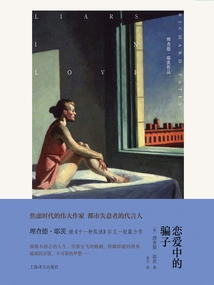
Liar in Love
General Fiction恋爱中的骗子
(us) Richard Yates
"Liars in Love" is Richard Yates's second collection of short stories after "Eleven Kinds of Loneliness", which includes seven short stories in total. It perfectly demonstrates Yates's superior powers of insight and description. With this book, Yates once again proves the power of the short story. Yates, who is obviously more interested in describing "failed life", relies on his keen mind and unique perspective of observation, like a collage art, to present the "little people" and their life fragments in the United States three-dimensionally before our eyes: failed artists, single mothers with difficult lives, alienated family relationships, estranged marriages, rebellious daughters, fleeting love affairs, unreliable dreams...
"Liars in Love" is Richard Yates's second collection of short stories after "Eleven Kinds of Loneliness", which includes seven short stories in total. It perfectly demonstrates Yates's superior powers of insight and description. With this book, Yates once again proves the power of the short story. Yates, who is obviously more interested in describing "failed life", relies on his keen mind and unique perspective of observation, like a collage art, to present the "little people" and their life fragments in the United States three-dimensionally before our eyes: failed artists, single mothers with difficult lives, alienated family relationships, estranged marriages, rebellious daughters, fleeting love affairs, unreliable dreams...