Library
Browse and search books
2 novels found
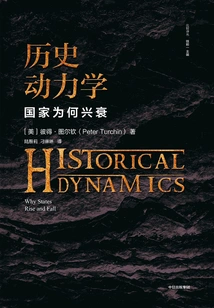
历史动力学:国家为何兴衰
(us) Peter Turchin
Why can some countries successfully initiate territorial expansion plans and become empires? Why do empires fall sooner or later? This is a long-standing and controversial issue in historical research. Peter Turchin applies modeling and quantitative methods to the study of the rise and fall of states. Starting from the interaction between geopolitics, sense of community, national assimilation and religious conversion, as well as population dynamics and social stability, he constructs different quantitative models to explain the expansion and decline of empires. This book provides a unique and new perspective for us to understand the rise and fall of countries and the dynamic changes of human history.
Why can some countries successfully initiate territorial expansion plans and become empires? Why do empires fall sooner or later? This is a long-standing and controversial issue in historical research. Peter Turchin applies modeling and quantitative methods to the study of the rise and fall of states. Starting from the interaction between geopolitics, sense of community, national assimilation and religious conversion, as well as population dynamics and social stability, he constructs different quantitative models to explain the expansion and decline of empires. This book provides a unique and new perspective for us to understand the rise and fall of countries and the dynamic changes of human history.

危局:精英、反精英与政治解体之路
(us) Peter Turchin
What are the common patterns of revolutions and crises experienced by human society over the past thousands of years? Are there traces of every regime disintegration and collapse? Why did the United States suddenly experience a peak of unrest in the 2020s, and when will the next political crisis come? In order to uncover the historical cycles, Peter Turchin, the founder of historical dynamics, uses data science methods and modeling methods based on compiled historical records to track the intricate and interactive networks between different "moving parts" in complex social systems, trying to find the root cause of the periodic alternation of peace and conflict. In the book, Turchin first looks back at the past and introduces the two major factors of people's impoverishment and elite overproduction to explain the formation of social unrest. In order to avoid the narrative falling into abstraction, the second part combines the real experience of beauty to outline individual cases to present the situation and demands of all parties to the conflict, including those facing despair. The author focuses on the consequences of the crisis and the way out for the future. When comparing the response strategies and game choices of many countries (such as Ukraine, the United Kingdom, etc.), The author discusses how to take the right measures to survive the current chaotic period. For readers who want to understand the historical dynamics approach, three excellent appendices are also not to be missed.
What are the common patterns of revolutions and crises experienced by human society over the past thousands of years? Are there traces of every regime disintegration and collapse? Why did the United States suddenly experience a peak of unrest in the 2020s, and when will the next political crisis come? In order to uncover the historical cycles, Peter Turchin, the founder of historical dynamics, uses data science methods and modeling methods based on compiled historical records to track the intricate and interactive networks between different "moving parts" in complex social systems, trying to find the root cause of the periodic alternation of peace and conflict. In the book, Turchin first looks back at the past and introduces the two major factors of people's impoverishment and elite overproduction to explain the formation of social unrest. In order to avoid the narrative falling into abstraction, the second part combines the real experience of beauty to outline individual cases to present the situation and demands of all parties to the conflict, including those facing despair. The author focuses on the consequences of the crisis and the way out for the future. When comparing the response strategies and game choices of many countries (such as Ukraine, the United Kingdom, etc.), The author discusses how to take the right measures to survive the current chaotic period. For readers who want to understand the historical dynamics approach, three excellent appendices are also not to be missed.