Library
Browse and search books
1 novel found
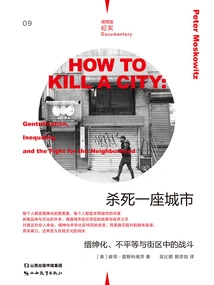
杀死一座城市:缙绅化、不平等与街区中的战斗
(us) Peter Moskowitz
Rents are rising, chain brands are settling in, there are fewer and fewer familiar faces, and local culture is gradually disappearing - this is gentrification: after the reconstruction of old communities, land prices and rents rise, attracting high-income people to move in, and the original low-income people have to move to areas with relatively poor conditions and lower living costs. As the process of gentrification continues to deepen, it is still an open question whether the future city can truly become a vibrant, fair and reasonable space. By reviewing and analyzing the major changes in four American metropolises (New Orleans, Detroit, San Francisco, and New York), this book points out that so-called gentrification is a process in which, supported by capital's pursuit of profits and policy tilt, it drives out the poor in the city, gathers more elite rich, and polarizes the rich and the poor. The massive inflow of capital has forced the native communities to compromise with their culture. Under the expulsion of groups, the city has transformed from a former residence full of memories into an exquisite and huge hollow. Who is in charge of the city? How can people fight for their due rights? Peter Moskowitz's lens is meticulous, taking us one by one to visit those struggling families who cannot afford housing, and understand how destructive housing policies are formulated under the alliance of politics and business, revealing the huge interlocking forces behind the promotion of gentrification in metropolitan areas.
Rents are rising, chain brands are settling in, there are fewer and fewer familiar faces, and local culture is gradually disappearing - this is gentrification: after the reconstruction of old communities, land prices and rents rise, attracting high-income people to move in, and the original low-income people have to move to areas with relatively poor conditions and lower living costs. As the process of gentrification continues to deepen, it is still an open question whether the future city can truly become a vibrant, fair and reasonable space. By reviewing and analyzing the major changes in four American metropolises (New Orleans, Detroit, San Francisco, and New York), this book points out that so-called gentrification is a process in which, supported by capital's pursuit of profits and policy tilt, it drives out the poor in the city, gathers more elite rich, and polarizes the rich and the poor. The massive inflow of capital has forced the native communities to compromise with their culture. Under the expulsion of groups, the city has transformed from a former residence full of memories into an exquisite and huge hollow. Who is in charge of the city? How can people fight for their due rights? Peter Moskowitz's lens is meticulous, taking us one by one to visit those struggling families who cannot afford housing, and understand how destructive housing policies are formulated under the alliance of politics and business, revealing the huge interlocking forces behind the promotion of gentrification in metropolitan areas.