Library
Browse and search books
1 novel found
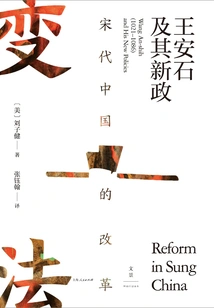
宋代中国的改革:王安石及其新政
(us) Liu Zijian
Based on existing research results, this book re-explains the key points of Wang Anshi's reform and the reasons for its failure. The book takes Wang Anshi's reform as the main line, divides the history of the middle and late Northern Song Dynasty into three stages: reform, counter-reform and post-reform, and completely describes the evolution of the overall political situation of the scholar-bureaucrats in the late Northern Song Dynasty. Wang Anshi's ideal was to realize a Confucian moral society. In this regard, Wang Anshi was no different from his opponents. The problem is that Wang Anshi hopes to realize this ideal by transforming and establishing a new bureaucracy. The author focuses on analyzing Wang Anshi's bureaucratic system reform, focusing on the sub-bureaucracy system, examining the government operations of the New Deal, and using the recruitment law, the core system of the New Deal, as a case study to summarize the characteristics of the New Deal. The focus of this book is not only on Wang Anshi's reform itself, but also on the contradictions and entanglements between the Confucian moral idealism represented by Wang Anshi and the real political power structure.
Based on existing research results, this book re-explains the key points of Wang Anshi's reform and the reasons for its failure. The book takes Wang Anshi's reform as the main line, divides the history of the middle and late Northern Song Dynasty into three stages: reform, counter-reform and post-reform, and completely describes the evolution of the overall political situation of the scholar-bureaucrats in the late Northern Song Dynasty. Wang Anshi's ideal was to realize a Confucian moral society. In this regard, Wang Anshi was no different from his opponents. The problem is that Wang Anshi hopes to realize this ideal by transforming and establishing a new bureaucracy. The author focuses on analyzing Wang Anshi's bureaucratic system reform, focusing on the sub-bureaucracy system, examining the government operations of the New Deal, and using the recruitment law, the core system of the New Deal, as a case study to summarize the characteristics of the New Deal. The focus of this book is not only on Wang Anshi's reform itself, but also on the contradictions and entanglements between the Confucian moral idealism represented by Wang Anshi and the real political power structure.