Library
Browse and search novels
4 novels found

Pigeon Feather
General Fiction鸽羽
(us) John Updike
"Dove Feather" is a representative work of Updike's early short stories. There are 19 short stories in total, all written by the author around the age of 30. Many of the themes are the twists and turns of his adolescent experience, and are filled with a unique charm of youthfulness. "Dove Feather" is a collection of short stories by the author, which reflects that the author is not only a master of novels, but also a master of short stories. "Dove Feather" was written in 1962 and is the representative work of the author's early short stories. The work mainly describes how the protagonist often feels uneasy and depressed about being unable to control his own destiny in today's highly technologically advanced American society. It depicts the spiritual emptiness of the American middle class and truly and meticulously reflects their hesitation and confusion after the collapse of their old spiritual pillars.

Couples
General Fiction夫妇们
(us) John Updike
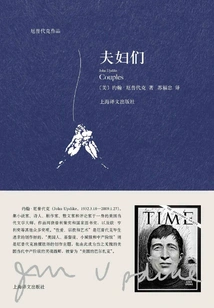
"The Couples" was written in 1968 and is Updike's best-selling novel. The plot of the novel is extremely simple, it is just an affair story of 10 couples. But "The Couples" is not the American version of "The Plum in the Golden Vase"; it is still a serious work of realism. Of course, there are many positive or sideways descriptions of adultery, wife-swapping, homosexuality, etc. In the book, but Updike's original intention was by no means "teaching obscenities", but objectively reflecting reality and providing a relatively comprehensive summary of the life and thoughts of the American middle class in the 1960s. The publication of this book caused a great sensation, and Updike appeared on the cover of Time for the first time, with the cover title "The Adulterous Society."

The Rabbit Takes a Rest (rabbit Quartet)
General Fiction兔子歇了(兔子四部曲)
(us) John Updike
The final chapter of the "Rabbit Tetralogy", the story takes place from the first Tuesday after Christmas in 1988 to October 1989. The protagonist Harry has retired, but finds that his business has been disrupted by his drug-addicted son, and he is unable to save the situation. After enjoying the fun of racing on the basketball court for the last time, he suffered a heart attack and died at the age of 56.

入木三分(厄普代克艺术随笔集)
(us) John Updike
This book is one of Updike's three famous collections of art essays ("Glimpse of Light", "Unblinking Eyes" and "Three Points in the Wood"). It was first published in 2012 and contains a total of 15 art criticism essays. Through more than 20 years of exhibition viewing experience since the 1990s, the author leads readers infinitely closer to the works of art masters. From an "American perspective", the author comprehensively reviews Western master art works in the past two hundred years, from classical to modern, from Impressionism to Pop culture, and appreciates the works of more than ten artists including Monet, Degas, Miro, Vuillard, Beckmann, Magritte, and Lichtenstein. There is a separate commentary on the Clark Brothers, the great collectors, explaining the special relationship between art and humanities, that is, how art, as an accessory to civilized life, can become a spiritual gamble or an investment in the future. As a literary painter of the human soul, Updike tried to use his own philosophical concepts and aesthetics as the unlocking code of art to summon a hint, a poem, or even a devil hidden in the painting; he extended visual embrace to spiritual thinking, achieving a leap from "look" to "see". The book is accompanied by nearly 200 pictures of artworks.