Library
Browse and search books
1 novel found
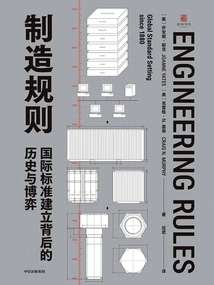
Manufacturing Rules: the History and Game Behind the Establishment of International Standards
History制造规则:国际标准建立背后的历史与博弈
(us) Joanne Yates (us) Craig N. Murphy
From threads to shipping containers to e-readers, nearly everything we use has been affected by the standards-setting process. This book traces the global history of standardization, where such standards have been linked to every major change in the world economy for more than a century, from manufacturing to the Internet. The two authors believe that there have been three waves of technological standardization from the 1880s to the present. In the first wave, engineers developed useful standards that could be widely adopted by manufacturers while meeting the needs of the company's customers, spawning a standardization movement that cut across political and ethnic boundaries. One of the results of the second wave is the standardization of containers, which has greatly promoted the development of global trade and the integration of global markets; the core of the third wave is the standardization of information technology, with a new generation of standard setters providing support for the Internet and networks, while using standard-setting procedures to control social and environmental hazards that may arise in an increasingly globalized economy. Drawing on archival material from three continents, the authors explore the positive ideas that gave rise to standardization movements, the attempts to realize them, and the challenges that standardization movements face today. Standards are infrastructure that is almost invisible in today's economy, but has an equally important status as the country and the global market. In today's international situation and the context of global governance, the formulation and promotion of standards, and the battle for standards are closely related to competition and cooperation between countries. This book helps readers understand the history of the past century and the importance of standardization from the perspective of technical rules, and understand the relationship between business, technology and politics.
From threads to shipping containers to e-readers, nearly everything we use has been affected by the standards-setting process. This book traces the global history of standardization, where such standards have been linked to every major change in the world economy for more than a century, from manufacturing to the Internet. The two authors believe that there have been three waves of technological standardization from the 1880s to the present. In the first wave, engineers developed useful standards that could be widely adopted by manufacturers while meeting the needs of the company's customers, spawning a standardization movement that cut across political and ethnic boundaries. One of the results of the second wave is the standardization of containers, which has greatly promoted the development of global trade and the integration of global markets; the core of the third wave is the standardization of information technology, with a new generation of standard setters providing support for the Internet and networks, while using standard-setting procedures to control social and environmental hazards that may arise in an increasingly globalized economy. Drawing on archival material from three continents, the authors explore the positive ideas that gave rise to standardization movements, the attempts to realize them, and the challenges that standardization movements face today. Standards are infrastructure that is almost invisible in today's economy, but has an equally important status as the country and the global market. In today's international situation and the context of global governance, the formulation and promotion of standards, and the battle for standards are closely related to competition and cooperation between countries. This book helps readers understand the history of the past century and the importance of standardization from the perspective of technical rules, and understand the relationship between business, technology and politics.