Library
Browse and search books
1 novel found
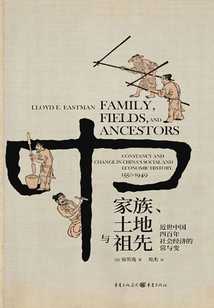
Family, Land and Ancestors
History家族、土地与祖先
(us) Easy To Work And Rest
This book breaks through the previous research paradigm of Western academic circles that emphasized political history and intellectual history. From the perspective of global history, this book examines the great changes in the economic foundation, social form, and spiritual beliefs of Chinese society in the past four centuries from 1550 to 1949. It presents new research results in this field. It is a work that understands the social changes in China since the 16th century. Since the Ming and Qing Dynasties, China's society and economy have undergone tremendous changes, and these changes have in turn shaped China's modern political history. The author uses a large amount of historical materials to clearly explain the complex and profound changes in Chinese society, and explores many issues such as population change trends, changes in class structure, the relationship between small-scale peasant economy, commodity trade and manufacturing, and faith and culture. Regarding the long-debated issue of why the scientific and industrial revolution did not occur in modern China, the author puts forward his own views, forming a meaningful dialogue with Joseph Needham's thinking on China's technological stagnation and Max Weber's "Protestant Ethic and the Spirit of Capitalism". In addition, the author also describes his understanding of the Chinese people - friendliness and indifference, hard work and laziness, aggressiveness and conservatism, generosity and selfishness. These contradictory national characters form an effective dialogue with the "differential order pattern" proposed by Fei Xiaotong in "Country China".
This book breaks through the previous research paradigm of Western academic circles that emphasized political history and intellectual history. From the perspective of global history, this book examines the great changes in the economic foundation, social form, and spiritual beliefs of Chinese society in the past four centuries from 1550 to 1949. It presents new research results in this field. It is a work that understands the social changes in China since the 16th century. Since the Ming and Qing Dynasties, China's society and economy have undergone tremendous changes, and these changes have in turn shaped China's modern political history. The author uses a large amount of historical materials to clearly explain the complex and profound changes in Chinese society, and explores many issues such as population change trends, changes in class structure, the relationship between small-scale peasant economy, commodity trade and manufacturing, and faith and culture. Regarding the long-debated issue of why the scientific and industrial revolution did not occur in modern China, the author puts forward his own views, forming a meaningful dialogue with Joseph Needham's thinking on China's technological stagnation and Max Weber's "Protestant Ethic and the Spirit of Capitalism". In addition, the author also describes his understanding of the Chinese people - friendliness and indifference, hard work and laziness, aggressiveness and conservatism, generosity and selfishness. These contradictory national characters form an effective dialogue with the "differential order pattern" proposed by Fei Xiaotong in "Country China".