Library
Browse and search books
1 novel found
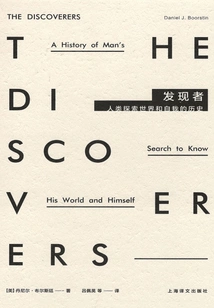
文明的历史:发现者
(us) Daniel Boorstin
★The epic masterpiece of the famous literary historian Daniel Boorstin, a far-reaching trilogy of world history; ★It caused a sensation after being published in the United States, has been best-selling for more than 30 years, and has been translated into more than 20 languages; ★The perfect combination of history and popular science, with detailed and interesting content; "The History of Civilization: Discoverers" is a masterpiece describing the history of civilization as humans explore the world and themselves in the long course of history. The book is divided into four volumes: "Time", "Land and Sea", "Nature" and "Society". In the first and second volumes, the author Daniel Boorstin eloquently narrates various great discoveries of mankind through historical informative and interesting stories: Was the first great discovery of mankind time? Are there 7 days in a week? How was the clock invented? How were land and sea discovered? Why didn't the Chinese "discover" Europe and America? Why did it take so long for people to learn that the Earth orbits the Sun? Etc. In the third volume, the author describes in detail the new inventions that have broadened human vision, from glasses to telescopes and microscopes, and how humans use these new inventions to navigate the vast sea, explore the vast expanse of the sky, and observe the mysteries of microbial organisms that are beyond the reach of the naked eye. This has opened up new prospects in the fields of knowledge such as navigation, astronomy, microbiology, and embryology. The author also vividly describes the discoverers who braved all kinds of difficulties and dangers to find new and rare species, and established a taxonomy of animals and plants on this basis, which further revealed the mysteries of nature for people.
★The epic masterpiece of the famous literary historian Daniel Boorstin, a far-reaching trilogy of world history; ★It caused a sensation after being published in the United States, has been best-selling for more than 30 years, and has been translated into more than 20 languages; ★The perfect combination of history and popular science, with detailed and interesting content; "The History of Civilization: Discoverers" is a masterpiece describing the history of civilization as humans explore the world and themselves in the long course of history. The book is divided into four volumes: "Time", "Land and Sea", "Nature" and "Society". In the first and second volumes, the author Daniel Boorstin eloquently narrates various great discoveries of mankind through historical informative and interesting stories: Was the first great discovery of mankind time? Are there 7 days in a week? How was the clock invented? How were land and sea discovered? Why didn't the Chinese "discover" Europe and America? Why did it take so long for people to learn that the Earth orbits the Sun? Etc. In the third volume, the author describes in detail the new inventions that have broadened human vision, from glasses to telescopes and microscopes, and how humans use these new inventions to navigate the vast sea, explore the vast expanse of the sky, and observe the mysteries of microbial organisms that are beyond the reach of the naked eye. This has opened up new prospects in the fields of knowledge such as navigation, astronomy, microbiology, and embryology. The author also vividly describes the discoverers who braved all kinds of difficulties and dangers to find new and rare species, and established a taxonomy of animals and plants on this basis, which further revealed the mysteries of nature for people.