Library
Browse and search novels
3 novels found
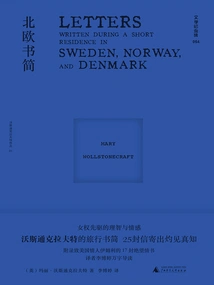
Nordic Tablets
Literature北欧书简
(uk)mary Wollstonecraft
This book is an epistolary travelogue by Mary Wollstonecraft. In the summer of 1795, in order to save the relationship with her lover Imlay, Voucher embarked on a business trip. She took her newborn daughter to Sweden, Norway and Denmark, and kept in correspondence with Imlay. In these 42 letters (including appendices), Waugh shows his rich feelings and independent views on Nordic culture, nature and customs.
This book is an epistolary travelogue by Mary Wollstonecraft. In the summer of 1795, in order to save the relationship with her lover Imlay, Voucher embarked on a business trip. She took her newborn daughter to Sweden, Norway and Denmark, and kept in correspondence with Imlay. In these 42 letters (including appendices), Waugh shows his rich feelings and independent views on Nordic culture, nature and customs.
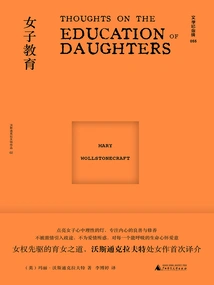
Women's Education
Literature女子教育
(uk)mary Wollstonecraft
The book includes Walter's "Daughter's Education", "True Stories" and the appendix "Last Words to Goddaughters". The author inherited and developed John Locke's basic educational philosophy. On the one hand, he criticized the long-standing shortcomings of female education at that time and firmly believed that education is the key to the full development of personal rationality. On the other hand, it also provided the emerging British middle class with a practical guide to educating daughters, which can still be used as a useful reference for parents. The book mainly focuses on moral, character, intellectual and etiquette education. It can be called an early version of the popular self-help guide manual, and its language draws on the nourishment of British literary tradition.
The book includes Walter's "Daughter's Education", "True Stories" and the appendix "Last Words to Goddaughters". The author inherited and developed John Locke's basic educational philosophy. On the one hand, he criticized the long-standing shortcomings of female education at that time and firmly believed that education is the key to the full development of personal rationality. On the other hand, it also provided the emerging British middle class with a practical guide to educating daughters, which can still be used as a useful reference for parents. The book mainly focuses on moral, character, intellectual and etiquette education. It can be called an early version of the popular self-help guide manual, and its language draws on the nourishment of British literary tradition.
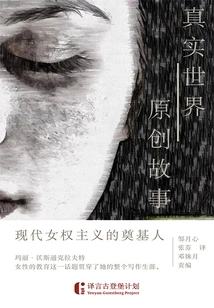
Real Life Original Stories
General Fiction真实生活的原创故事
(uk)mary Wollstonecraft
In "An Original Story of True Life" (1788), she advocated education to equip children with the traits of the emerging middle class: self-discipline, honesty, thrift, and contentment. Influenced by the ideas of John Locke, an important educational philosopher in the 17th century, Wollstonecraft also specifically emphasized the importance of children receiving rational education in two books. However, the emphasis on religious belief and innate sensibility distinguishes their work and connects her work to discussions of sensibility that were popular at the end of the 18th century. The book also promoted women's education - a controversial topic at the time: a topic that would continue throughout her writing career and culminated in A Vindication of the Rights of Woman. Wollstonecraft believed that well-educated women would be able to make good wives and mothers and ultimately contribute to their country. Mary Wollstonecraft (1759-1797), the founder of modern feminism. Mary was born at a time when the Enlightenment was shining, the Romantic movement followed, and the American Revolution and the French Revolution echoed each other. This is an era of turmoil, active thinking, the spirit of humanism continues to flourish, individual rights are increasingly respected, and the consciousness of the subject is increasingly awakened. These ideas that were compatible with the rise of capitalism were widely spread in European and American societies, and the concepts of "liberty, equality, and fraternity" became everyone's common pursuit, at least in words. It was under the influence and influence of the atmosphere of this era that Mary gradually grew into a feminist.
In "An Original Story of True Life" (1788), she advocated education to equip children with the traits of the emerging middle class: self-discipline, honesty, thrift, and contentment. Influenced by the ideas of John Locke, an important educational philosopher in the 17th century, Wollstonecraft also specifically emphasized the importance of children receiving rational education in two books. However, the emphasis on religious belief and innate sensibility distinguishes their work and connects her work to discussions of sensibility that were popular at the end of the 18th century. The book also promoted women's education - a controversial topic at the time: a topic that would continue throughout her writing career and culminated in A Vindication of the Rights of Woman. Wollstonecraft believed that well-educated women would be able to make good wives and mothers and ultimately contribute to their country. Mary Wollstonecraft (1759-1797), the founder of modern feminism. Mary was born at a time when the Enlightenment was shining, the Romantic movement followed, and the American Revolution and the French Revolution echoed each other. This is an era of turmoil, active thinking, the spirit of humanism continues to flourish, individual rights are increasingly respected, and the consciousness of the subject is increasingly awakened. These ideas that were compatible with the rise of capitalism were widely spread in European and American societies, and the concepts of "liberty, equality, and fraternity" became everyone's common pursuit, at least in words. It was under the influence and influence of the atmosphere of this era that Mary gradually grew into a feminist.