Library
Browse and search books
1 novel found
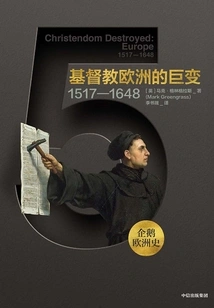
企鹅欧洲史·基督教欧洲的巨变:1517—1648
(uk)mark Greengrass
In the Middle Ages, people living in Western Europe generally believed that they lived in a Christian world. It was a community of faith and a great plan for European unity that developed over a thousand years. However, in just over a century, it disappeared, leaving only a bit of a dream, replaced by the newly born geographical entity "Europe". In 1517, Martin Luther declared war on the Roman Catholic Church, and the unrest under the appearance of unity erupted, turning Europe upside down. Doctrinal conflicts replaced shared beliefs, Christian republics fought to the death, and dynastic wars and military changes fundamentally changed the relationship between rulers and the ruled. Driven by curiosity, people discovered new science, discovered new worlds, and rediscovered Europe. After 1648, the idea of a unified Christendom had crumbled, and Europe became a geographical shape, a map that showed the fissures, a way of dividing political, economic and social fragments. Amidst disorder, chaos and reconstruction, modern Europe gradually took shape.
In the Middle Ages, people living in Western Europe generally believed that they lived in a Christian world. It was a community of faith and a great plan for European unity that developed over a thousand years. However, in just over a century, it disappeared, leaving only a bit of a dream, replaced by the newly born geographical entity "Europe". In 1517, Martin Luther declared war on the Roman Catholic Church, and the unrest under the appearance of unity erupted, turning Europe upside down. Doctrinal conflicts replaced shared beliefs, Christian republics fought to the death, and dynastic wars and military changes fundamentally changed the relationship between rulers and the ruled. Driven by curiosity, people discovered new science, discovered new worlds, and rediscovered Europe. After 1648, the idea of a unified Christendom had crumbled, and Europe became a geographical shape, a map that showed the fissures, a way of dividing political, economic and social fragments. Amidst disorder, chaos and reconstruction, modern Europe gradually took shape.