Library
Browse and search books
1 novel found
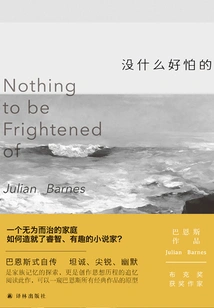
Nothing to Be Afraid Of
Literature没什么好怕的
(uk)julian Barnes
How did a family governed by inaction create a wise and interesting novelist? A Barnes-esque autobiography, candid, poignant and humorous. "Nothing to Fear" is an exploration of family memories and a recollection of the creative and ideological process. Reading this work, you can get a glimpse of the prototype of all of Barnes' classic works. "My brother questions the fundamental authenticity of memory, and I question the way we render memory." "Nothing to Fear" is Barnes's family memoir. It not only contains the conceptual confrontation between him and his brother, who is a professor of philosophy, but also an exploration of the family's past. It is not only a sorting and recollection of his thoughts on death and immortality, God and self, time and memory, but also a collective tribute to the writers and artists he admires. Although Barnes solemnly warns readers that "this is not my autobiography," this work still presents us with the ideological context of the author's creative career, from which we can clearly identify the shadows of all classic works such as "Flaubert's Parrot", "The Sense of the End", and "The Noise of Time".
How did a family governed by inaction create a wise and interesting novelist? A Barnes-esque autobiography, candid, poignant and humorous. "Nothing to Fear" is an exploration of family memories and a recollection of the creative and ideological process. Reading this work, you can get a glimpse of the prototype of all of Barnes' classic works. "My brother questions the fundamental authenticity of memory, and I question the way we render memory." "Nothing to Fear" is Barnes's family memoir. It not only contains the conceptual confrontation between him and his brother, who is a professor of philosophy, but also an exploration of the family's past. It is not only a sorting and recollection of his thoughts on death and immortality, God and self, time and memory, but also a collective tribute to the writers and artists he admires. Although Barnes solemnly warns readers that "this is not my autobiography," this work still presents us with the ideological context of the author's creative career, from which we can clearly identify the shadows of all classic works such as "Flaubert's Parrot", "The Sense of the End", and "The Noise of Time".