Library
Browse and search books
1 novel found
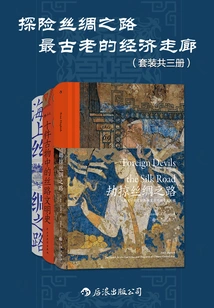
探险丝绸之路:最古老的经济走廊(套装共三册)
(uk) Peter Hopkirk Wei Hong Et Al.
"Plundering the Silk Road: China's Treasure Hunt from Sven Hedin to Stein" tells the story of the Swedish Sven Hedin, the British Oriel Stein, and the German Albany in the quarter century starting from the end of the 19th century to the beginning of the 20th century. Albert von Lecoq, Paul Pelliot of France, Langdon Warner of the United States, Mitsui Otani and Mizucho Tachibana of Japan, etc., Swept away tons of various murals, manuscripts, scriptures, sculptures, etc. From the ruins of lost cities on the Silk Road. They looted China's precious cultural relics and launched a fierce international battle for antiquities from the Western Regions. The author brings together the historical stories of these adventurous raiders to explore the motivations for their actions. "The History of Silk Road Civilization in Ten Antiquities": The historical Silk Road spanned the three continents of Europe, Asia and Africa, passing through deserts, grasslands, mountains, rivers and lakes, where countless materials and cultures were born, forming the splendid Silk Road civilization. The author selected ten ancient objects and narrated their stories, which not only showed the craftsmanship and shape, theme and decoration of the material, but also told the intricate connection between people and objects: Who created the material? Who carries them across mountains and rivers? Who regards them as treasures and sacred objects? Who abandoned them, and who unearthed them from the layers of loess... Materials and the people and society behind them interact with each other, different cultures collide and blend with each other, and economies, systems, technologies, and ideas continue to develop and evolve in the process of communication. All of this is integrated into a vivid and tangible history of Silk Road civilization. "Maritime Silk Road": In the early 15th century, China's giant ships sailed in Southeast Asia and the Indian Ocean, with voyages as far away as Hormuz, the Gulf of Aden and the coast of East Africa. All routes between East Asia and West Asia are in the hands of Asians. This book reveals the routes known as the "Maritime Silk Road" by later generations during this period, as well as the development history of civilizations along the routes. For a long time, the "Maritime Silk Road" running through Southeast Asia and the Indian Ocean has been overshadowed in people's minds by the Western-dominated Mediterranean and Atlantic routes. And because records are sparse and confusing, people today know very little about the specific locations of various countries along this route in history. Despite this, the understanding and research of this route still has far-reaching significance. This book rigorously analyzes the various factors that affected the changes of ancient sea routes, the reasons for the rise and fall of civilizations along the "Maritime Silk Road", and the connections between them. In addition, the author of this book also introduces in detail the various ancient navigation technologies along the coasts of the Indian and Pacific Oceans as well as the various trade goods circulating on the trade routes. Many contents are intertwined, painting a clear and specific picture for readers.
"Plundering the Silk Road: China's Treasure Hunt from Sven Hedin to Stein" tells the story of the Swedish Sven Hedin, the British Oriel Stein, and the German Albany in the quarter century starting from the end of the 19th century to the beginning of the 20th century. Albert von Lecoq, Paul Pelliot of France, Langdon Warner of the United States, Mitsui Otani and Mizucho Tachibana of Japan, etc., Swept away tons of various murals, manuscripts, scriptures, sculptures, etc. From the ruins of lost cities on the Silk Road. They looted China's precious cultural relics and launched a fierce international battle for antiquities from the Western Regions. The author brings together the historical stories of these adventurous raiders to explore the motivations for their actions. "The History of Silk Road Civilization in Ten Antiquities": The historical Silk Road spanned the three continents of Europe, Asia and Africa, passing through deserts, grasslands, mountains, rivers and lakes, where countless materials and cultures were born, forming the splendid Silk Road civilization. The author selected ten ancient objects and narrated their stories, which not only showed the craftsmanship and shape, theme and decoration of the material, but also told the intricate connection between people and objects: Who created the material? Who carries them across mountains and rivers? Who regards them as treasures and sacred objects? Who abandoned them, and who unearthed them from the layers of loess... Materials and the people and society behind them interact with each other, different cultures collide and blend with each other, and economies, systems, technologies, and ideas continue to develop and evolve in the process of communication. All of this is integrated into a vivid and tangible history of Silk Road civilization. "Maritime Silk Road": In the early 15th century, China's giant ships sailed in Southeast Asia and the Indian Ocean, with voyages as far away as Hormuz, the Gulf of Aden and the coast of East Africa. All routes between East Asia and West Asia are in the hands of Asians. This book reveals the routes known as the "Maritime Silk Road" by later generations during this period, as well as the development history of civilizations along the routes. For a long time, the "Maritime Silk Road" running through Southeast Asia and the Indian Ocean has been overshadowed in people's minds by the Western-dominated Mediterranean and Atlantic routes. And because records are sparse and confusing, people today know very little about the specific locations of various countries along this route in history. Despite this, the understanding and research of this route still has far-reaching significance. This book rigorously analyzes the various factors that affected the changes of ancient sea routes, the reasons for the rise and fall of civilizations along the "Maritime Silk Road", and the connections between them. In addition, the author of this book also introduces in detail the various ancient navigation technologies along the coasts of the Indian and Pacific Oceans as well as the various trade goods circulating on the trade routes. Many contents are intertwined, painting a clear and specific picture for readers.