Library
Browse and search books
2 novels found
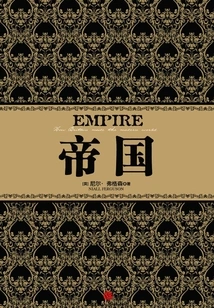
Empire
History帝国
(uk) Niall Ferguson
How did the British Empire rise and shape the modern world in just 400 years? In Britain today, has its dominance ended? In a new book, Niall Ferguson, one of Britain's foremost financial historians, delves into the rise of the British Empire and its important role in politics, economics and world trade. How can this rainy archipelago country overlooking the northwestern coast of the European continent achieve global dominance? This is not only a concern of British history, but also a fundamental issue that needs to be explained in world history. The author does not intend to describe the general history of the British Empire in detail in this book, but only wants to record the development of globalization driven by the British Empire and its colonies. "Empire" is generally based on a chronological framework, mainly focusing on the six major themes of commodity market globalization, labor market globalization, cultural globalization, political system globalization, capital market globalization, and war globalization to record the reasons for the rise of an empire and its profound impact on other countries. Reading this book will definitely help you understand the rise of the empire and the subtle process of the transfer of imperial power. At the same time, from a historical perspective, you will understand the role of the rise of the British Empire in the process of world history.
How did the British Empire rise and shape the modern world in just 400 years? In Britain today, has its dominance ended? In a new book, Niall Ferguson, one of Britain's foremost financial historians, delves into the rise of the British Empire and its important role in politics, economics and world trade. How can this rainy archipelago country overlooking the northwestern coast of the European continent achieve global dominance? This is not only a concern of British history, but also a fundamental issue that needs to be explained in world history. The author does not intend to describe the general history of the British Empire in detail in this book, but only wants to record the development of globalization driven by the British Empire and its colonies. "Empire" is generally based on a chronological framework, mainly focusing on the six major themes of commodity market globalization, labor market globalization, cultural globalization, political system globalization, capital market globalization, and war globalization to record the reasons for the rise of an empire and its profound impact on other countries. Reading this book will definitely help you understand the rise of the empire and the subtle process of the transfer of imperial power. At the same time, from a historical perspective, you will understand the role of the rise of the British Empire in the process of world history.
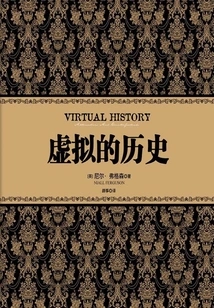
Virtual History
History虚拟的历史
(uk) Niall Ferguson
"Virtual History" uses novel counterfactual assumptions to delve into the human process for the first time, leading readers to rethink historical determinism. "Virtual History" uses rigorous logic to deduce a series of turning events that mainly occurred in the 20th century. It imagines another possibility of these events and guides readers to explore: what would history be like if major events had changed. What would have happened if the American Revolution had not happened? What would have happened if the socialist camp had not collapsed? Some historical events are not inevitable. Many accidental factors such as subjective errors or limitations of the parties involved and objective conditions play an important role. The author has conceived a complete set of plots about history that has never happened in a thorough, clear and easy-to-understand way. Even readers who have no understanding of history can get new revelations in "Virtual History".
"Virtual History" uses novel counterfactual assumptions to delve into the human process for the first time, leading readers to rethink historical determinism. "Virtual History" uses rigorous logic to deduce a series of turning events that mainly occurred in the 20th century. It imagines another possibility of these events and guides readers to explore: what would history be like if major events had changed. What would have happened if the American Revolution had not happened? What would have happened if the socialist camp had not collapsed? Some historical events are not inevitable. Many accidental factors such as subjective errors or limitations of the parties involved and objective conditions play an important role. The author has conceived a complete set of plots about history that has never happened in a thorough, clear and easy-to-understand way. Even readers who have no understanding of history can get new revelations in "Virtual History".