Library
Browse and search books
5 novels found

当我们谈论科学时,我们在谈论什么(麦克尤恩双语作品)
(uk) Ian Mcewan
"What We Talk About When We Talk About Science" is a collection of essays on science and humanities by British national writer Ian McEwan, which is included in Penguin Random House's classic Vintage Minis anthropology series. The book contains five essays by McEwan: "Literature, Science and Humanity", "Species Originality", "Parallel Traditions", "Apocalyptic Blues" and "Self". The author focuses on the relationship between literature, science and human nature, expounding his incisive, unique and philosophical views, supplemented by several koans in the history of science - Was it Darwin or Wallace who first proposed the theory of evolution? Does general relativity belong to Einstein or the German mathematician Hilbert? There is also Leeuwenhoek's letter to the Royal Society... From science to literature, McEwan's writing is vivid and interesting, contains philosophical thoughts, and wanders between sensibility and rationality. It is heart-breaking to read.
"What We Talk About When We Talk About Science" is a collection of essays on science and humanities by British national writer Ian McEwan, which is included in Penguin Random House's classic Vintage Minis anthropology series. The book contains five essays by McEwan: "Literature, Science and Humanity", "Species Originality", "Parallel Traditions", "Apocalyptic Blues" and "Self". The author focuses on the relationship between literature, science and human nature, expounding his incisive, unique and philosophical views, supplemented by several koans in the history of science - Was it Darwin or Wallace who first proposed the theory of evolution? Does general relativity belong to Einstein or the German mathematician Hilbert? There is also Leeuwenhoek's letter to the Royal Society... From science to literature, McEwan's writing is vivid and interesting, contains philosophical thoughts, and wanders between sensibility and rationality. It is heart-breaking to read.
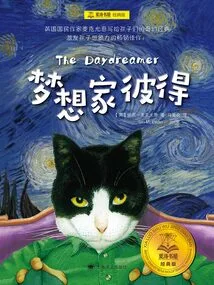
Dreamer Peter
General Fiction梦想家彼得
(uk) Ian Mcewan
"Peter the Dreamer" is a book written by McEwan for children. It tells the story of seven daydreams of a ten-year-old boy, Peter. As the author himself said in the preface, the reason why we like children's books is because our children enjoy reading these books, which has less to do with literature and more to do with love. As McEwan was writing and reading "Peter the Dreamer" aloud to his children, he began to feel that it might be better to forget about the great tradition of children's literature and write a book about children for adults, using language that children can understand. He wanted its subject-imagination itself-to be engaging for anyone who picked up a book.
"Peter the Dreamer" is a book written by McEwan for children. It tells the story of seven daydreams of a ten-year-old boy, Peter. As the author himself said in the preface, the reason why we like children's books is because our children enjoy reading these books, which has less to do with literature and more to do with love. As McEwan was writing and reading "Peter the Dreamer" aloud to his children, he began to feel that it might be better to forget about the great tradition of children's literature and write a book about children for adults, using language that children can understand. He wanted its subject-imagination itself-to be engaging for anyone who picked up a book.

First Love, Last Ceremony
General Fiction最初的爱情,最后的仪式
(uk) Ian Mcewan
The short story collection "First Love, Last Rites" is Ian McEwan's debut novel and his famous work, from which the name "Scary Ian" was born. The eight short stories are told from the perspective of teenage males, eight stories with different plots but common emotions, which may be terrifying or violent, cruel or perverted, absurd or magical, but gentle and sentimental at the same time; just like the crazy and sad adolescence that everyone will experience, it is a "cruel story of youth" in which everyone can illuminate themselves.
The short story collection "First Love, Last Rites" is Ian McEwan's debut novel and his famous work, from which the name "Scary Ian" was born. The eight short stories are told from the perspective of teenage males, eight stories with different plots but common emotions, which may be terrifying or violent, cruel or perverted, absurd or magical, but gentle and sentimental at the same time; just like the crazy and sad adolescence that everyone will experience, it is a "cruel story of youth" in which everyone can illuminate themselves.

Black Dog
General Fiction黑犬
(uk) Ian Mcewan
In this novel, McEwan describes a ferocious and mysterious "animal" that is darker than the night, with red eyes, like burning coals, coveting the remains of dying European civilization, and devouring reforms and beliefs. The bottom line of morality, grasping the Achilles heel of civilization, trying to reverse the nature of good and evil - a typical McLean black, on the stage haunted by ghost black dogs, violence, true love, evil, redemption, interpreting a thrilling fable about our times.
In this novel, McEwan describes a ferocious and mysterious "animal" that is darker than the night, with red eyes, like burning coals, coveting the remains of dying European civilization, and devouring reforms and beliefs. The bottom line of morality, grasping the Achilles heel of civilization, trying to reverse the nature of good and evil - a typical McLean black, on the stage haunted by ghost black dogs, violence, true love, evil, redemption, interpreting a thrilling fable about our times.

Chasing the Sun
General Fiction追日
(uk) Ian Mcewan
Chasing the Sun is McEwan's most ambitious and controversial novel in recent years. Theoretical physicist Michael Beard, who won the Nobel Prize in Physics when he was young but has since been gradually reduced to an academic role, encountered family changes when he entered his twilight years: his fifth wife had an affair and openly had an affair with the home decorator. Beard never expected that things would get out of hand - in a typical "McEwan moment", love turns to blood, stealing turns to murder, and the story takes a sudden turn, which is both shocking and reasonable, reviving Beard's already doomed life chess game. The long-lost ideal light of "saving the earth" actually shined into the dark room of his soul again through a conspiracy that was both accidental and despicable - thus, the good, the bad, the abysmal, the ridiculous, were all forced to be exposed in front of the readers...
Chasing the Sun is McEwan's most ambitious and controversial novel in recent years. Theoretical physicist Michael Beard, who won the Nobel Prize in Physics when he was young but has since been gradually reduced to an academic role, encountered family changes when he entered his twilight years: his fifth wife had an affair and openly had an affair with the home decorator. Beard never expected that things would get out of hand - in a typical "McEwan moment", love turns to blood, stealing turns to murder, and the story takes a sudden turn, which is both shocking and reasonable, reviving Beard's already doomed life chess game. The long-lost ideal light of "saving the earth" actually shined into the dark room of his soul again through a conspiracy that was both accidental and despicable - thus, the good, the bad, the abysmal, the ridiculous, were all forced to be exposed in front of the readers...