Library
Browse and search novels
16 novels found

Why I Write=我为什么要写作(英文版)
(uk) George Orwell
George Orwell is one of the most thought-provoking and vivid essayists of the 20th century. He is famous for his extraordinary energy and uncompromising language, using pen and paper to fight against the prejudices of his time. This book contains the author's two classic essays "Why I Want to Write" and "Hanging". For readers who are new to Orwell, this book is an excellent introductory book; for readers who are familiar with Orwell, "Why I Write" will be a valuable collection.

Politics and the English Language=政治与英语(英文版)
(uk) George Orwell
"Politics and the English Language" is a classic essay by the famous British writer George Orwell. This essay is widely regarded as Orwell's most important essay on style. For Orwell, style was never a simple aesthetic issue; it was always inseparable from politics and truth. "All problems are political problems, and politics itself is a collection of lies, avoidance, stupidity, hatred and schizophrenia." "When the overall atmosphere is not good, language is bound to suffer." Language is a political problem, and the sloppy use of language and clichés make it easier for those in power to deliberately use misleading language to hide unpleasant political facts. He believed that poor English was a vehicle for oppressive ideologies.

通往威根码头之路(译文经典)
(uk) George Orwell
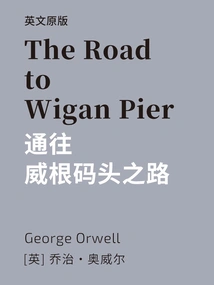
What kind of person was a prophet before he became a prophet? "He did what Engels did in the mid-19th century." A social record of a cold mind and a sincere conscience. In the 1930s, commissioned by a left-wing book club, Orwell went to the industrial areas of northern England to investigate and record the real situation of the working class. Orwell did more than just investigate; he went down to the deepest part of the mine, lived in dilapidated and dirty workers' houses, and used the tip of his pen to vividly describe every aspect of the coal miners' lives. Reading it today, 80 years later, is still shockingly real. The despair and poverty conveyed by this picture have a terrifying power that transcends time and national boundaries. At the same time, the Road to Wigan Pier is also Orwell's road to socialism as he examines his own inner self. Born in the British middle class, he recalled how he gradually began to doubt and then hated the strict class barriers that divided British society at that time. Because in his mind, socialism ultimately means only one concept: "justice and freedom."

Orwell's Classics: 1984 + Animal Farm (set of 2 Volumes)
General Fiction奥威尔经典:一九八四+动物农场(套装共2册)
(uk) George Orwell
"Orwell Classics" includes two novels, "1984" and "Animal Farm". Among them, "1984" tells the story of an "Oceania" under totalitarian rule. People's thoughts are suppressed. No matter what they are doing or where they are, they are subject to various surveillance: telescreens, thought police, patrols, and the youth team whose thoughts have been completely controlled. Life is always in fear. The protagonist Winston Smith lives in this country. His main job is to tamper with previous history every day in the "Ministry of Truth", working and surviving in lies. "Animal Farm" is known as one of "the best books ever written by mankind". In an exaggerated and absurd form, the work tells the story of animals who have been enslaved on a farm for a long time. In order to achieve freedom and liberation, the work successfully carried out a revolution and established an equal animal society. In the end, the fruits of the revolution were usurped by the animals' leader, the pig, and they returned to their previous miserable lives.

Down and Out in Paris and London
General Fiction巴黎伦敦落魄记
(uk) George Orwell
In 1927, the 24-year-old George Orwell resigned from his post as a colonial policeman in Burma and began to travel between the British mainland and the European continent, wandering around and trying various careers. He worked as a hotel dishwasher, a teacher, a bookstore clerk, and a longshoreman. Although he was poor, he was born in the middle class and experienced the life of the lower class firsthand. Orwell himself once said that "a life of poverty and a sense of failure strengthened my natural hatred of authority and made me aware of the existence of the working class for the first time." In 1933, Orwell wrote the novel "Down and Out in Paris and London" based on this experience. The book is divided into two parts. The first half describes the miserable life of a British literati living at the bottom of society by doing odd jobs in Paris. The second half describes the literati's experiences when he returned to London from Paris, where his living conditions further deteriorated, and he became a jobless vagrant and moved around. The book is interspersed with the protagonist's thoughts and comments, providing an in-depth analysis of the true meaning of poverty. But at the same time, there is still dark humor in the suffering. For example, when writing about the hard and tiring life of a dishwasher, one still never forgets to make fun of the classic line "Roughly speaking, the more you pay for a dish, the more sweat and spit you will eat."

Burmese Days Burmese Years (english Version)
General FictionBurmese Days 缅甸岁月(英文版)
(uk) George Orwell
"The Burmese Years" is Orwell's first novel, set in British Burma. It tells the story of Flory, a businessman who hates colonial rule but is unable to integrate with all parties. He commits suicide in despair amid his broken love and humiliation, and deeply criticizes the evils of the colonial system.

Animal Farm
General Fiction动物庄园
(uk) George Orwell
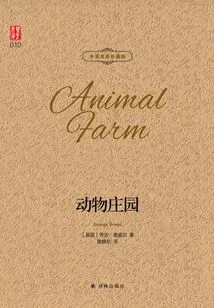
"Animal Farm" is an outstanding fable novel that tells the story of an animal revolution led by pigs that took place in Manor Manor, England. Unable to bear the oppression of the manor owner, the animals rebelled angrily and drove away the humans in the manor. Since then, the manor has been renamed "Animal Farm" and animal autonomy has been implemented. Based on the principles of animalism, Animal Farm issued seven commandments. However, the subsequent development of the manor was not as harmonious and shared freedom and equality as the animals expected. The conflict of rights and interests led to serious disagreements and even bloody conflicts among the leaders. One of the pigs was regarded as a traitor and was expelled and framed in various ways; the other pig relied on the vested power and the support of the dog to gradually concentrate power in his own hands. He ruled the animals increasingly harshly, brutally killed protesters, and eventually became a ruler and exploiter no different from humans. The Seven Commandments were abandoned, and Animal Farm was renamed to its original name.

Homage to Catalonia (translated Classic)
Literature向加泰罗尼亚致敬(译文经典)
(uk) George Orwell
When "1984" meets "For Whom the Bell Tolls," George Orwell's adventures in the Spanish Civil War, which narrowly escaped death, were selected as one of the top ten documentary works of the 20th century by the National Review magazine. In December 1936, Orwell, with the enthusiasm to fight fascism, rushed to the Catalonia region of Spain to fight for the republican government, and was immediately sent to the Aragon front. In May 1937, Orwell was shot in the throat by a sniper of the Fascist army and his life hung on a thread. Fortunately, he survived the disaster and was forced to leave the front line and return to Barcelona to recuperate. However, what Orwell didn't know was that the rear at this time was actually more dangerous than the front line where bullets were raining, because on the seemingly peaceful streets of the capital, a life-and-death internal purge was brewing. Soon, Orwell will understand a truth that he will never forget: the greatest danger is not the enemy's bullets in front, but the muzzles of "one's own people" behind...

1984
General Fiction一九八四
(uk) George Orwell
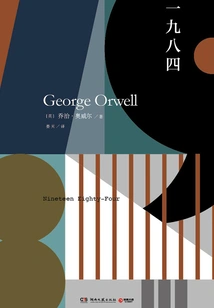
"1984" is a political novel published in 1949 by the British left-wing writer George Orwell. The novel depicts a suffocating and terrifying imaginary totalitarian society with the ultimate goal of pursuing power. This novel, together with "Brave New World" by British writer Huxley and "Us" by Russian writer Zamyatin, is called the three masterpieces of dystopia. This novel has been translated into 62 languages and has sold more than 30 million copies worldwide. It is one of the most influential English novels in the 20th century.

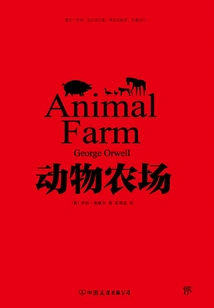
Animal Farm (english Version)
General Fiction动物农场(英文版)
(uk) George Orwell
"Animal Farm" is one of the most famous political allegorical novels written by George Orwell, the most famous 20th century British novelist. The story describes the brewing, rise and final transformation of an "animalist" revolution. The animals in a farm (Manor Farm) could not bear the oppression of their human owners. Under the leadership of the pigs, they rebelled and drove away Mr. Jones. The animals realized their wish, and the farm was renamed "Animal Farm", adhering to the principle that "all animals are equal." Afterwards, the two leading pigs competed with each other for power, and the victor declared the other a traitor and traitor. Since then, the pigs who have gained leadership have gained more and more power and become a new privileged class; if the animals are slightly dissatisfied, they will lead to bloody purges: the ideal of the farm is revised to "some animals are more equal than other animals", and the animals return to their previous miserable condition.

Animal Farm
Literature动物农场
(uk) George Orwell
This book includes George Orwell's well-known satirical novel "Animal Farm" and three essays "Why I Write", "This Is Happiness" and "Old Stories from the Bookstore". "Animal Farm" is known as one of "the best books ever written by mankind". In an exaggerated and absurd form, the work tells the story of animals living on a farm who have been enslaved for a long time. In order to achieve freedom and liberation, the work successfully carried out a revolution and established an equal animal society. However, in the end, the fruits of the revolution were usurped by the animals' leader pig, and they returned to their previous miserable life.

Shooting an Elephant 射象(英文版)
(uk) George Orwell
"Shooting the Elephant" is based on Orwell's experience as a policeman in the colony. Through the decision of being forced to shoot an elephant, it reveals the individual plight under the alienation of power. The cold writing hides a profound reflection on human nature and the colonial system.

1984
General Fiction1984
(uk) George Orwell
"1984" is an outstanding dystopian and anti-totalitarian political allegory novel. It presents a bold and brilliant analysis of authoritarian politics, horrific totalitarianism, and the future of mankind. It can be called an epoch-making masterpiece. It is like a distinctive label, warning the world not to let this predicted darkness become a reality.

Tribute to Catalonia
General Fiction致敬加泰罗尼亚
(uk) George Orwell
George Orwell is a British writer who is world-famous for "Animal Farm" and "1984". In 1936, after the Spanish Civil War broke out, Orwell joined the Republican Army led by the Spanish Communist Party as an international volunteer to support the anti-Franco Spanish Civil War. He stayed on the Aragon front for nearly six months until he was shot through the throat by an enemy sniper at Huesca and had to return home to recuperate. Later, Orwell wrote this experience into a novel to pay tribute to Catalonia. This novel can be called his "memoir of the Spanish Civil War." As a witness of the war, he exposed some of the Comintern's lies about the Spanish Civil War. This is also one of Orwell's famous works.

Animal Farm
General Fiction动物庄园
(uk) George Orwell
Before his death, "Old Major", a pig in Manna Manor, called on the animals in the manor to resist human exploitation and establish a republic where animals are the masters of their own affairs. After Old Major's death, the two pigs in the manor inherited his ideas, summarized them as "Animalism", and used this as a revolutionary program to lead an uprising, driving humans out of the manor, realizing the wish of "animals being the masters", and renamed the manor "Animal Farm", and at the same time formulated the "Seven Commandments" of a constitutional nature. But not long after the uprising was successful, the pigs, as the leading group, had an internal political struggle. One of the revolutionary leaders, "Snowball", was declared a traitor to the revolution and expelled, while another revolutionary leader, "Napoleon", gained absolute leadership of the estate. Since then, the pig leadership group has gained more and more privileges, and eventually became even more exploiters than humans...

The Road to Wigan Pier
Literature通往维根码头之路
(uk) George Orwell
Orwell is known as "the cold conscience of a generation". He always recorded the era in which he lived with keen insight and sharp writing. He was committed to safeguarding human freedom and dignity, exposing and flogging autocracy and totalitarianism, and made prophecies that transcended the times! If one more person watches Orwell, there will be an additional guarantee of freedom! The Road to Wigan Pier is a study of Orwell's "impossible to get around". In the book, the author inspects several industrial areas in northern England, summarizes his mental journey, his troubles in Myanmar and the reasons for choosing to wander. He puts forward practical suggestions for improving the conditions of workers and his understanding of British politics and class forms. It reflects the author's criticism of capitalism and fascism and his socialist tendency. After this book was first published in the United States in 1958, the New Yorker published an important review, calling it "the best sociological report".