Library
Browse and search books
1 novel found
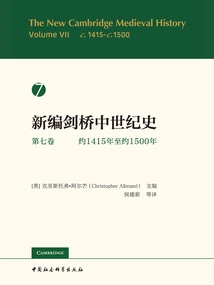
新编剑桥中世纪史(第七卷):约1415年至约1500年
(uk) Editor-in-chief Christopher Armand
"The New Cambridge History of the Middle Ages" has a total of 7 and 8 volumes. Compared with the old version of "Cambridge History of the Middle Ages", it is clearer in writing style and chapter arrangement. It breaks through the old framework of traditional political history and attempts to present a "comprehensive history", including economic, social, spiritual, cultural and other fields within the scope of discussion, and provides a more comprehensive and detailed record of the Middle Ages. It is worth noting that the new series breaks away from the past "Eurocentrism" that regarded Europe as the whole world, and opposes the mechanical piecing together or simple summing up of the histories of European countries. It strives to examine the historical development trajectories and mutual influences of European countries in the Middle Ages as a whole, reflecting the prosperity and progress of Western academic research over the past century. This book is the seventh volume of the Cambridge History of the Middle Ages, covering the period 1415-1500. 1415 Was the year when Henry V of England attacked France again and the Hundred Years War resumed. The first part, "Government," discusses political theory and practice, representative system, the history of political ideas and political institutions such as the Pope and the Curia. The second part, "Economic and Social Development," discusses issues such as nobility, countryside, cities, commerce and trade, war, exploration, and discovery. The third part, "Spiritual, Cultural and Artistic Life", deals with such topics as religious beliefs and practices, schools and universities, humanism, manuscripts and books, printing, architecture and painting, music. The fourth part, "The Development of European Countries," narrates the history of traditional countries and emerging countries in various regions of Europe, and also lists the Latins and Ottoman Turks in Eastern Europe as special chapters. Among these four parts, the first three parts are special studies, and the fourth part is the development history of each country.
"The New Cambridge History of the Middle Ages" has a total of 7 and 8 volumes. Compared with the old version of "Cambridge History of the Middle Ages", it is clearer in writing style and chapter arrangement. It breaks through the old framework of traditional political history and attempts to present a "comprehensive history", including economic, social, spiritual, cultural and other fields within the scope of discussion, and provides a more comprehensive and detailed record of the Middle Ages. It is worth noting that the new series breaks away from the past "Eurocentrism" that regarded Europe as the whole world, and opposes the mechanical piecing together or simple summing up of the histories of European countries. It strives to examine the historical development trajectories and mutual influences of European countries in the Middle Ages as a whole, reflecting the prosperity and progress of Western academic research over the past century. This book is the seventh volume of the Cambridge History of the Middle Ages, covering the period 1415-1500. 1415 Was the year when Henry V of England attacked France again and the Hundred Years War resumed. The first part, "Government," discusses political theory and practice, representative system, the history of political ideas and political institutions such as the Pope and the Curia. The second part, "Economic and Social Development," discusses issues such as nobility, countryside, cities, commerce and trade, war, exploration, and discovery. The third part, "Spiritual, Cultural and Artistic Life", deals with such topics as religious beliefs and practices, schools and universities, humanism, manuscripts and books, printing, architecture and painting, music. The fourth part, "The Development of European Countries," narrates the history of traditional countries and emerging countries in various regions of Europe, and also lists the Latins and Ottoman Turks in Eastern Europe as special chapters. Among these four parts, the first three parts are special studies, and the fourth part is the development history of each country.