Library
Browse and search books
1 novel found
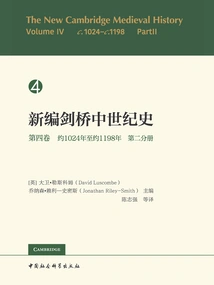
新编剑桥中世纪史(第四卷·第二分册):约1024年至约1198年
(uk) David Luscombe And Other Editors
"The New Cambridge History of the Middle Ages" has a total of 7 and 8 volumes. Compared with the old version of "Cambridge History of the Middle Ages", it is clearer in writing style and chapter arrangement. It breaks through the old framework of traditional political history and attempts to present a "comprehensive history", including economic, social, spiritual, cultural and other fields within the scope of discussion, and provides a more comprehensive and detailed record of the Middle Ages. It is worth noting that the new series breaks away from the past "Eurocentrism" that regarded Europe as the whole world, and opposes the mechanical piecing together or simple summing up of the histories of European countries. It strives to examine the historical development trajectories and mutual influences of European countries in the Middle Ages as a whole, reflecting the prosperity and progress of Western academic research over the past century. This fourth volume is divided into two parts. The second part focuses on the radical reform of the church, the transformation of the papacy, the transformation in the process driven by the decline of the Western and Eastern empires, the rise of the Western Kingdom and the Italian elite, the development of governmental structures, the beginning of Spain's recovery from the Moors, and the establishment of Western settlements in the Eastern Mediterranean after the Crusades.
"The New Cambridge History of the Middle Ages" has a total of 7 and 8 volumes. Compared with the old version of "Cambridge History of the Middle Ages", it is clearer in writing style and chapter arrangement. It breaks through the old framework of traditional political history and attempts to present a "comprehensive history", including economic, social, spiritual, cultural and other fields within the scope of discussion, and provides a more comprehensive and detailed record of the Middle Ages. It is worth noting that the new series breaks away from the past "Eurocentrism" that regarded Europe as the whole world, and opposes the mechanical piecing together or simple summing up of the histories of European countries. It strives to examine the historical development trajectories and mutual influences of European countries in the Middle Ages as a whole, reflecting the prosperity and progress of Western academic research over the past century. This fourth volume is divided into two parts. The second part focuses on the radical reform of the church, the transformation of the papacy, the transformation in the process driven by the decline of the Western and Eastern empires, the rise of the Western Kingdom and the Italian elite, the development of governmental structures, the beginning of Spain's recovery from the Moors, and the establishment of Western settlements in the Eastern Mediterranean after the Crusades.