Library
Browse and search novels
7 novels found

The Art of Fiction
Literature小说的艺术
(uk) David Lodge
This book is an appreciation of the art of novels written by the British novelist and literary theorist David Lodge. It provides general readers with a way to appreciate the art of novels. It can also be used as an introduction to academic theory and a guide to writing techniques. This book is divided into fifty chapters, giving an in-depth and simple explanation of the art of fiction from fifty aspects. Each article quotes one or two novel fragments, and based on a close reading and analysis of the text, demonstrates all aspects of novel techniques, including the opening remarks in traditional novels, delicate characterization techniques, and the unique theories of stream of consciousness and metafiction in modern and post-modern novels. Most of the chapters in the book have been published as columns in the Sunday Independent and the Washington Post. The content covers a wide range of topics, including almost every major classical and modern writer in the history of English fiction, such as Fielding, Thackeray, Austen, Henry James, Joyce, Hemingway, Beckett, Milan Kundera, etc. The writing is both easy to understand and professional and accurate, and can be used as a textbook and reference book for novel learning and writing. The author's humorous and interesting writing style also makes it suitable for the tastes of public readers. When "The Art of Fiction" was published in the 1990s, it was on the British non-fiction bestseller list. The Financial Times commented: "It is the most outstanding novel study for the general public since Forster's "Aspects of the Novel"."

Small World
General Fiction小世界
(uk) David Lodge
"Small World" was introduced to China more than ten years ago. This time, Shanghai Translation Publishing House invited senior translator Professor Wang Jiaxiang to re-translate it. David Lodge is famous in the UK and is known as the representative of "academic novels". Almost all of his most famous novels have intellectuals as the main characters and radiate to society through events in the cultural world. "Small World" has been praised as the "Besieged City" of the West. It describes professors in Western academic circles flying around the world, ostensibly for academic exchanges, but actually pursuing fame, wealth and fun.

Author, Author
General Fiction作者,作者
(uk) David Lodge
The entire novel is about the novelist Henry James in the last few years of his life. He is very famous and laid the foundation of psychological realism in the history of world literature. In his later years, he refused to be lonely and tried drama writing. As a result, on the night of the performance of his play, he was humiliated by the public and he never recovered. The writing form of "Author, Author" is very novel. If it is a novel, it contains very detailed historical facts, but it is completely different from a biography in the general sense. The author consciously arranges the facts according to artistic needs.

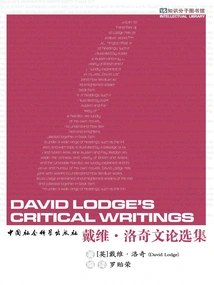
Selected Literary Essays of David Lodge
Literature戴维·洛奇文论选集
(uk) David Lodge
This book is the first comprehensive and systematic translation of David Lodge's literary theory in China. It includes Lodge's famous works that are widely cited by academic circles, covering the theoretical essence of various development periods of his literary theory and criticism over the past forty years (including "New Criticism", "Structuralism", "Bakhtin's Theory", "New Century" and other periods), and tries its best to reflect the logic and integrity of its evolution. This book contains the following aspects of Lodge's literary theory: 1. Exploration of the poetics of novels, including "the language of novels", typology of novel discourse, the relationship between novels and consciousness, characteristics of biographical novels, etc.; 2. Sorting out and researching the development history of novels; 3. Modern literature, especially modern British literature. The history of literary development and the classification and classic analysis of various genres (such as the "pendulum" theory); 4. Research on the practice of novel creation, including the relationship between writers and readers and their reception, the relationship between writers and their creation and publishing, and the literary market; 5. Research on the relationship between novels and other media; etc. Lodge's wise language, illuminating arguments, simple explanations, incisive analysis and unique insights are all reflected in the selected papers in this book.


Treat
General Fiction治疗
(uk) David Lodge
The novel unfolds from the perspective of the protagonist in the form of a diary: Lawrence Passmore is a successful TV drama writer with a good life, a perfect wife, and two children... However, he "feels unhappy most of the time," lacks self-confidence, feels hopeless, and is also troubled by an inexplicable knee pain. He tried almost every treatment, but to no avail. At the same time, his wife suddenly proposed breaking up with him simply because she "couldn't stand living with him." His life fell into an unprecedented crisis, and he made many reality sitcoms happen in his unwillingness. By chance, he began to understand the Danish philosopher Kierkegaard, and gradually became obsessed with finding resonance in Kierkegaard's works and life, and traveled thousands of miles to find his first love who was on a pilgrimage...

The British Museum is Collapsing
General Fiction大英博物馆在倒塌
(uk) David Lodge
David Lodge became famous for his witty comedy school novel, an absurd literary parody that dissolves sexual desire and moral taboos, and a perverse narrative that combines Joyce and Kafka. This book is the first humorous novel by British academic writer David Lodge. Graduate student Adam and his wife Barbara were typical devout Catholics in the early 1960s. They were unable to use contraceptives due to restrictions in church teachings and had been distressed for many years. When Adam woke up one day and discovered that Barbara might be pregnant for the fourth time, he could no longer go to the British Museum to do research in peace as usual. The author recounts all kinds of funny things that happened on this day one by one, and uses a lot of literary parody and collage techniques to make unexpected reflections on the common theme of marriage and family in the form of comedy. It is full of wit and every word is exquisite. Although modern families no longer have such troubles, the author's theme of the hardships men and women go through in understanding, arranging, and satisfying their sexual desires will still arouse readers' interest and resonance.

Ginger Head, You're Crazy
General Fiction生姜头,你疯了
(uk) David Lodge
This is the second novel by David Lodge, a representative writer of academic novels. It was published in 1962. It is a black humor work with military themes from the same period as "Catch-22". This book tells the story of the dull and vulgar military life during the British military service system after World War II: rounds of equipment demonstrations, endless queue training, monotonous labor, and only occasional breaks when listening to lectures on firearms or sexually transmitted diseases. In the two years since they lost their freedom, the reckless and impulsive "Ginger Head" Mike and the pragmatic Jonathan have adopted completely different attitudes, and their destinies have also been very different.