Library
Browse and search books
1 novel found
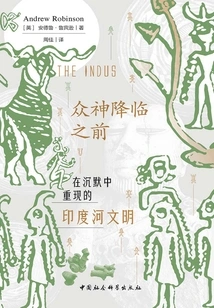
众神降临之前:在沉默中重现的印度河文明
(uk) Andrew Robinson
When Alexander the Great's Greek armies invaded the Indus Valley in the 4th century BC, they were completely unaware that this region in northwestern India had once been a center of civilization comparable to that of ancient Egypt and Mesopotamia. From 2600 BC to 1900 BC, the Indus Valley Civilization flourished for half a century, but then mysteriously declined and disappeared from people's sight, remaining unknown for nearly 4,000 years. It was not until the 1920s that British and Indian archaeologists discovered its remains. Today, after nearly a century of excavations, it is recognized as the beginning of Indian civilization and possibly the origin of Hinduism. More than a thousand Indus settlements excavated by archeology cover an area of 800,000 square kilometers. This area is now Pakistan and India: it once had the most prosperous urban culture, with active maritime export trade with cities such as the Persian Gulf and Ur, and the two largest Indian cities: Harappa and Morocco. Henzo Darrow (selected as a World Cultural Heritage by UNESCO) has advanced street planning and drainage design, the world's first toilet, a fine diamond gem necklace, and a semi-pictographic writing system that inspired people to constantly try to interpret. These are still of great inspiration to 20th century society.
When Alexander the Great's Greek armies invaded the Indus Valley in the 4th century BC, they were completely unaware that this region in northwestern India had once been a center of civilization comparable to that of ancient Egypt and Mesopotamia. From 2600 BC to 1900 BC, the Indus Valley Civilization flourished for half a century, but then mysteriously declined and disappeared from people's sight, remaining unknown for nearly 4,000 years. It was not until the 1920s that British and Indian archaeologists discovered its remains. Today, after nearly a century of excavations, it is recognized as the beginning of Indian civilization and possibly the origin of Hinduism. More than a thousand Indus settlements excavated by archeology cover an area of 800,000 square kilometers. This area is now Pakistan and India: it once had the most prosperous urban culture, with active maritime export trade with cities such as the Persian Gulf and Ur, and the two largest Indian cities: Harappa and Morocco. Henzo Darrow (selected as a World Cultural Heritage by UNESCO) has advanced street planning and drainage design, the world's first toilet, a fine diamond gem necklace, and a semi-pictographic writing system that inspired people to constantly try to interpret. These are still of great inspiration to 20th century society.