Library
Browse and search books
2 novels found
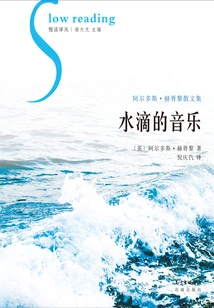
Water Drop Music
Literature水滴的音乐
(uk) Aldous Huxley
The author of this book is world-famous for his "dystopian" masterpiece "Brave New World", which people have read and discussed intensely. Due to his family background and close sexual relationship, he has a profound understanding of science, medicine, psychology, etc., And is familiar with all aspects of astronomy and geography. It is natural for him to turn this knowledge into a part of his literary works. Among the essays included in this book, the topics are extremely broad, the perspectives are novel, and the ideas are broad. He is good at expressing profound thoughts in light and casual themes, and some of his political essays and discussions about literary and artistic works and characters are full of unique insights. From time to time, you can see whimsical ideas, humorous remarks, profound knowledge freely interspersed, and extraordinary ability to foresee the future world; he is a typical pessimistic skeptic and an angry idealist. His prose essays have outstanding speculative colors and keen intuition. They severely criticize the civilization brought about by Western industrial society, the supremacy of technology and centralized rule, and the supremacy of entertainment to death. They continue the novel's style of seamless integration of humanities and natural sciences, and organically combine poetry and science. Therefore, many of them are famous works that can be recorded in the history of prose, and have a profound impact.
The author of this book is world-famous for his "dystopian" masterpiece "Brave New World", which people have read and discussed intensely. Due to his family background and close sexual relationship, he has a profound understanding of science, medicine, psychology, etc., And is familiar with all aspects of astronomy and geography. It is natural for him to turn this knowledge into a part of his literary works. Among the essays included in this book, the topics are extremely broad, the perspectives are novel, and the ideas are broad. He is good at expressing profound thoughts in light and casual themes, and some of his political essays and discussions about literary and artistic works and characters are full of unique insights. From time to time, you can see whimsical ideas, humorous remarks, profound knowledge freely interspersed, and extraordinary ability to foresee the future world; he is a typical pessimistic skeptic and an angry idealist. His prose essays have outstanding speculative colors and keen intuition. They severely criticize the civilization brought about by Western industrial society, the supremacy of technology and centralized rule, and the supremacy of entertainment to death. They continue the novel's style of seamless integration of humanities and natural sciences, and organically combine poetry and science. Therefore, many of them are famous works that can be recorded in the history of prose, and have a profound impact.
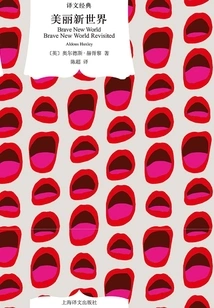
Brave New World (translation Classic)
General Fiction美丽新世界(译文经典)
(uk) Aldous Huxley
"Brave New World", published in 1932, is Aldous Huxley's most outstanding masterpiece and one of the most famous anti-utopian literary classics of the 20th century. Together with Orwell's "1984" and Zamyatin's "Us", it is known as the "dystopian" trilogy and has a profound influence on domestic and foreign literary and ideological circles. This is an allegorical work that shows the future picture of human society in Huxley's eyes: through the most effective scientific and psychological engineering, human beings have been genetically and genetically designed to be members of various levels of society, completely reduced to docile machines, individuality and freedom have been stifled, and literature and art are on the verge of destruction. Following the masterpiece of allegorical novel "Brave New World", Huxley published the treatise "Return to Brave New World" in 1958. In this eloquent work, the author used his rich sociological and anthropological knowledge to compare modern society with all aspects of the allegorical picture he conceived in "Brave New World", such as overpopulation, propaganda and brainwashing, and chemical persuasion, and believed that his early pessimistic predictions were becoming a reality. This book contains all two of Huxley's most classic works.
"Brave New World", published in 1932, is Aldous Huxley's most outstanding masterpiece and one of the most famous anti-utopian literary classics of the 20th century. Together with Orwell's "1984" and Zamyatin's "Us", it is known as the "dystopian" trilogy and has a profound influence on domestic and foreign literary and ideological circles. This is an allegorical work that shows the future picture of human society in Huxley's eyes: through the most effective scientific and psychological engineering, human beings have been genetically and genetically designed to be members of various levels of society, completely reduced to docile machines, individuality and freedom have been stifled, and literature and art are on the verge of destruction. Following the masterpiece of allegorical novel "Brave New World", Huxley published the treatise "Return to Brave New World" in 1958. In this eloquent work, the author used his rich sociological and anthropological knowledge to compare modern society with all aspects of the allegorical picture he conceived in "Brave New World", such as overpopulation, propaganda and brainwashing, and chemical persuasion, and believed that his early pessimistic predictions were becoming a reality. This book contains all two of Huxley's most classic works.