Library
Browse and search books
1 novel found
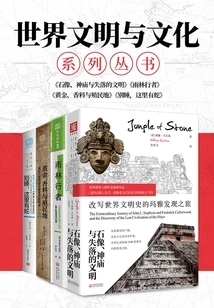
“世界文明与文化”系列:看尽世界文明的起源、发展与未来!(套装共4册)
(u. S.) William Carlson Lawrence Berglin Daniel Everett (australia) Tim Flannery
"Stone Statues, Temples and Lost Civilizations: The Mayan Discovery Journey that Rewrote the History of World Civilization" War, dense forests and malaria, stone tablets, reliefs and pyramids, a panoramic description of the Mayan discovery journey in the pre-Columbian era! This is an extraordinary and true story about the rediscovery of the Mayan civilization: following "The Lost City of Z" and "Frozen Empire", we usher in another forgotten adventure history. In 1839, John Stephens, the U. S. Envoy to Central America, and Frederick Catherwood, the renowned British architect and draughtsman, set out for the untouched jungles of Yucatan. At that time, the Bible was the template for history, and many people still believed that world civilization had only existed for 6,000 years. Traveling deep into the jungle, Stephens and Catherwood overcame disease, war, nature, and the difficulties of the terrain to uncover and meticulously document the remains of an astonishing civilization. This American civilization, which flourished at the same time as ancient Greece and Rome, established artistic, architectural achievements and influence that rivaled the former two. This discovery also changed Westerners' understanding of human history. In Stones, Temples, and Lost Civilizations, Pulitzer Prize finalist William Carlson follows Stephens and Catherwood as they revisit present-day Guatemala, Honduras, and Mexico to uncover the rich history of Mayan ruins. Drawing on a wealth of primary sources, including Stephens's diaries, letters, and Catherwood's masterful illustrations, Carlson deftly tells the fascinating story of these two great travelers and their discovery of the Maya. "Gold, Spice and Colonies: The History of Magellan's Voyage that Turned Human History" is a book that tells the story of Magellan's greatness and madness, peak and destruction, as well as the background of Magellan's global voyage where hegemony and money are intertwined! In 1519, Magellan led five sailing ships and more than 200 people to set sail from Spain in search of a sea route to the Spice Islands. Along the way, they suffered from hunger, disease, mental and physical torture, and even faced the threat of death. Finally, they discovered a sea passage now known as the Strait of Megellan. This was an arduous journey that lasted three years. Award-winning best-selling author (biographer and journalist) Lawrence Berglin used first-hand information to objectively restore this human feat and vividly tell a grand adventure story. In the book, Bergerin takes readers on a fascinating journey through first-person narration, some of which is revealed here for the first time. This expedition not only changed the way that later explorers sailed, but also changed history itself. "Rainforest Walker: Tree Kangaroos, Birds of Paradise, and My Days with the "Cannibals"" A "cockroach dinner", "swarms of concubines" of bats, tree kangaroos that often move on the ground, penis sheaths used as storage bags, "cannibals" who killed and ate their daughters, the ecological environment destroyed by mining and logging... Papua New Guinea is one of the regions with the richest biodiversity in the world. Not only are there a variety of flora and fauna you won't see anywhere else, but there's also amazing Aboriginal culture. Tim Flannery, a famous Australian zoologist and paleontologist, went to Papua New Guinea fifteen times to conduct zoological, paleontological and ecological research, and condensed what he saw and heard there into "Rainforest Walker". In "Rainforest Walker", Flannery will take you to appreciate the graceful dance of birds of paradise, rediscover giant bats that were previously thought to be extinct, and witness the encroachment and destruction of the ecological environment by industrial civilization. Let us follow this "Indiana Jones of science" on an adventure in the tropical jungle. The book "Don't Sleep, There Are Snakes: A Linguist and Anthropologist Deep in the Amazon Jungle" is a record of Everett's life in the jungle for more than 30 years. During these more than 30 years, Everett's wife and children almost died of malaria in a foreign land. Everett was also attacked by groups for violating the freedom of the Pirahã people. But more, Everett shared all kinds of happy moments when he lived with the Pirahã people, such as fishing, hunting, building houses, teaching them arithmetic and making canoes... Everett gave up modern civilized life in exchange for the anecdotes about living with the Pirahã people in the book. At the same time, this book is also a questioning and exploration of modern language and culture. The Pirahã makes Everett reflect on modern civilization and tries to make us think about what possibilities there are for life besides the way we understand it.
"Stone Statues, Temples and Lost Civilizations: The Mayan Discovery Journey that Rewrote the History of World Civilization" War, dense forests and malaria, stone tablets, reliefs and pyramids, a panoramic description of the Mayan discovery journey in the pre-Columbian era! This is an extraordinary and true story about the rediscovery of the Mayan civilization: following "The Lost City of Z" and "Frozen Empire", we usher in another forgotten adventure history. In 1839, John Stephens, the U. S. Envoy to Central America, and Frederick Catherwood, the renowned British architect and draughtsman, set out for the untouched jungles of Yucatan. At that time, the Bible was the template for history, and many people still believed that world civilization had only existed for 6,000 years. Traveling deep into the jungle, Stephens and Catherwood overcame disease, war, nature, and the difficulties of the terrain to uncover and meticulously document the remains of an astonishing civilization. This American civilization, which flourished at the same time as ancient Greece and Rome, established artistic, architectural achievements and influence that rivaled the former two. This discovery also changed Westerners' understanding of human history. In Stones, Temples, and Lost Civilizations, Pulitzer Prize finalist William Carlson follows Stephens and Catherwood as they revisit present-day Guatemala, Honduras, and Mexico to uncover the rich history of Mayan ruins. Drawing on a wealth of primary sources, including Stephens's diaries, letters, and Catherwood's masterful illustrations, Carlson deftly tells the fascinating story of these two great travelers and their discovery of the Maya. "Gold, Spice and Colonies: The History of Magellan's Voyage that Turned Human History" is a book that tells the story of Magellan's greatness and madness, peak and destruction, as well as the background of Magellan's global voyage where hegemony and money are intertwined! In 1519, Magellan led five sailing ships and more than 200 people to set sail from Spain in search of a sea route to the Spice Islands. Along the way, they suffered from hunger, disease, mental and physical torture, and even faced the threat of death. Finally, they discovered a sea passage now known as the Strait of Megellan. This was an arduous journey that lasted three years. Award-winning best-selling author (biographer and journalist) Lawrence Berglin used first-hand information to objectively restore this human feat and vividly tell a grand adventure story. In the book, Bergerin takes readers on a fascinating journey through first-person narration, some of which is revealed here for the first time. This expedition not only changed the way that later explorers sailed, but also changed history itself. "Rainforest Walker: Tree Kangaroos, Birds of Paradise, and My Days with the "Cannibals"" A "cockroach dinner", "swarms of concubines" of bats, tree kangaroos that often move on the ground, penis sheaths used as storage bags, "cannibals" who killed and ate their daughters, the ecological environment destroyed by mining and logging... Papua New Guinea is one of the regions with the richest biodiversity in the world. Not only are there a variety of flora and fauna you won't see anywhere else, but there's also amazing Aboriginal culture. Tim Flannery, a famous Australian zoologist and paleontologist, went to Papua New Guinea fifteen times to conduct zoological, paleontological and ecological research, and condensed what he saw and heard there into "Rainforest Walker". In "Rainforest Walker", Flannery will take you to appreciate the graceful dance of birds of paradise, rediscover giant bats that were previously thought to be extinct, and witness the encroachment and destruction of the ecological environment by industrial civilization. Let us follow this "Indiana Jones of science" on an adventure in the tropical jungle. The book "Don't Sleep, There Are Snakes: A Linguist and Anthropologist Deep in the Amazon Jungle" is a record of Everett's life in the jungle for more than 30 years. During these more than 30 years, Everett's wife and children almost died of malaria in a foreign land. Everett was also attacked by groups for violating the freedom of the Pirahã people. But more, Everett shared all kinds of happy moments when he lived with the Pirahã people, such as fishing, hunting, building houses, teaching them arithmetic and making canoes... Everett gave up modern civilized life in exchange for the anecdotes about living with the Pirahã people in the book. At the same time, this book is also a questioning and exploration of modern language and culture. The Pirahã makes Everett reflect on modern civilization and tries to make us think about what possibilities there are for life besides the way we understand it.