Library
Browse and search books
1 novel found
Fatal Legacy
Literature致命的遗产
(u. S.) Lawrence Ingracia
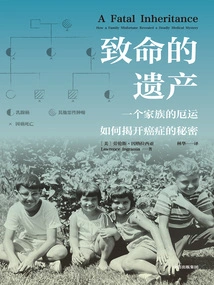
In the 1960s, the mainstream view in academic circles always believed that cancer was caused by viruses or environmental factors and was not hereditary. Until an ill-fated family and two epidemiologists showed up. In this large family called Kilius-Stansbury, 24 out of 48 members in 7 generations suffered from cancer. This clustering of cancers caught the attention of epidemiologist Pei Li and his colleague Joseph Fraumeny Jr. Over the next two decades, through follow-up studies of this family and other similar cancer-prone families, they confirmed that cancer has a genetic component and can even be inherited. This hereditary cancer familial syndrome was later named Li-Fraumeni syndrome after them. From the 1960s to the 1980s, based on the discoveries of Li Pei and Fraumeny, further research by researchers represented by scientists Zhang Huiping and Stephen Friend found that p53 is a tumor suppressor gene, and its mutations are associated with nearly 400 types of cancer. These findings push p53 to the center stage of cancer research. Generations of researchers have focused on this gene to explore ways to prevent and treat cancer, and have made remarkable progress. The author of this book, Lawrence Ingracia: He also comes from a family with Li-Fraumeni syndrome. Cancer claimed the lives of five of his closest relatives, including his mother, brother, and sister. In the intertwined narrative of this book, the author uses delicate and emotional writing to show the optimism, courage and dignity of these relatives who have been cursed by fate in the face of cancer and death.
In the 1960s, the mainstream view in academic circles always believed that cancer was caused by viruses or environmental factors and was not hereditary. Until an ill-fated family and two epidemiologists showed up. In this large family called Kilius-Stansbury, 24 out of 48 members in 7 generations suffered from cancer. This clustering of cancers caught the attention of epidemiologist Pei Li and his colleague Joseph Fraumeny Jr. Over the next two decades, through follow-up studies of this family and other similar cancer-prone families, they confirmed that cancer has a genetic component and can even be inherited. This hereditary cancer familial syndrome was later named Li-Fraumeni syndrome after them. From the 1960s to the 1980s, based on the discoveries of Li Pei and Fraumeny, further research by researchers represented by scientists Zhang Huiping and Stephen Friend found that p53 is a tumor suppressor gene, and its mutations are associated with nearly 400 types of cancer. These findings push p53 to the center stage of cancer research. Generations of researchers have focused on this gene to explore ways to prevent and treat cancer, and have made remarkable progress. The author of this book, Lawrence Ingracia: He also comes from a family with Li-Fraumeni syndrome. Cancer claimed the lives of five of his closest relatives, including his mother, brother, and sister. In the intertwined narrative of this book, the author uses delicate and emotional writing to show the optimism, courage and dignity of these relatives who have been cursed by fate in the face of cancer and death.