Library
Browse and search books
1 novel found
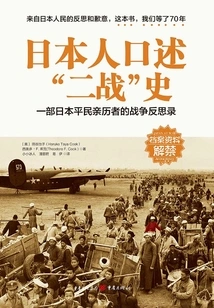
日本人口述“二战”史
(u. S.) Haruko Tagani Theodore F. Cook
Facing the darkness and speaking out for the true history, hundreds of Japanese war witnesses revealed their hearts for the first time and disclosed their bloody and cruel wartime experiences. During World War II, Japan caused serious disasters to the Asia-Pacific region, and the trauma continues to this day. However, Japanese officials have never conducted a thorough reflection on the war. On the contrary, when the Japanese civilians who were dragged into the abyss of the war looked back on the war decades later, they often used the words "unspeakable" and "unbearable to face directly"... This book can be called a groundbreaking oral history. The famous Western historians Theodore Cook and his wife tried to reconstruct the full picture of the war by interviewing hundreds of Japanese war witnesses and referring to many unpublished letters, wills, diaries, military notes, government archives, etc. There are many interviewees in this book, from diplomats to kamikaze members, 731 unit medics, prisoner of war supervisors, war criminals, soldiers who invaded China, from nuclear bomb victims to reporters, students, "comfort women", traders in China, painters, etc. They all told the secret and desperate story from their own perspectives. Nightmare: The truth about Unit 731's in vivo experiments in China; the specific details of the poison gas war in China; the details of the Nanjing Massacre; the humiliation suffered by Japanese and Korean "comfort women"; the mentality of kamikaze members in committing suicide; the details of the Allied forces approaching and the authorities inciting the people to kill each other. These living individual experiences intuitively show how the war conflicts that began with the war of aggression against China brought serious disasters to people around the world, including Japanese civilians. This oral history also reflects the huge gap between Japan's official views and popular memory.
Facing the darkness and speaking out for the true history, hundreds of Japanese war witnesses revealed their hearts for the first time and disclosed their bloody and cruel wartime experiences. During World War II, Japan caused serious disasters to the Asia-Pacific region, and the trauma continues to this day. However, Japanese officials have never conducted a thorough reflection on the war. On the contrary, when the Japanese civilians who were dragged into the abyss of the war looked back on the war decades later, they often used the words "unspeakable" and "unbearable to face directly"... This book can be called a groundbreaking oral history. The famous Western historians Theodore Cook and his wife tried to reconstruct the full picture of the war by interviewing hundreds of Japanese war witnesses and referring to many unpublished letters, wills, diaries, military notes, government archives, etc. There are many interviewees in this book, from diplomats to kamikaze members, 731 unit medics, prisoner of war supervisors, war criminals, soldiers who invaded China, from nuclear bomb victims to reporters, students, "comfort women", traders in China, painters, etc. They all told the secret and desperate story from their own perspectives. Nightmare: The truth about Unit 731's in vivo experiments in China; the specific details of the poison gas war in China; the details of the Nanjing Massacre; the humiliation suffered by Japanese and Korean "comfort women"; the mentality of kamikaze members in committing suicide; the details of the Allied forces approaching and the authorities inciting the people to kill each other. These living individual experiences intuitively show how the war conflicts that began with the war of aggression against China brought serious disasters to people around the world, including Japanese civilians. This oral history also reflects the huge gap between Japan's official views and popular memory.