Library
Browse and search books
1 novel found
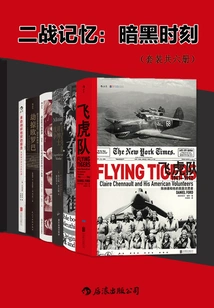
二战记忆:暗黑时刻(套装共六册)
(u. S.) Daniel Ford, Etc.
"Flying Tigers: Chennault and His American Volunteers (1941-1942)" is a gripping adventure, a story of courage and daring, a fully revised and updated classic history of the Flying Tigers. The author made extensive reference to the historical archives of the United States and Japan, and used a large number of memoirs and interview materials of the parties involved to clear away the layers of historical fog surrounding the Flying Tigers and strive to restore the true historical scenes and the true colors of historical figures. "East-West Street: The Origins of Genocide and Crimes against Humanity" In the city today known as Lviv, Hirsch Lauterpacht and Raphael Lemkin, two strangers to each other, studied law with the same law professor at the same university. Based on what they saw, heard, personal experiences, and family changes, Lauterpacht Lemkin paid special attention to the protection of individuals and proposed crimes against humanity, introducing it into the Nuremberg Charter, which was ultimately used to convict Nazi leader Hans Frank; Lemkin focused on the protection of groups and proposed the crime of genocide. Both of them and their legal ideas have a great influence on the international judicial system and play a positive role to this day. While telling them, the author also traces the mysterious story of his grandfather, Leon Buchholz, as he traveled through Europe in the face of Nazi atrocities. "Churchill's Ungentlemanly War" Facing the powerful Nazi war machine, Britain had to find ways to weaken the enemy's power. The author of this book, Giles Milton, uses vivid descriptions to describe several wonderful sneak attacks and assassinations carried out by the British army outside the main battlefields of World War II. With the support of Churchill, several typical British gentlemen planned and led these completely ungentlemanly actions, despite the opposition of the old-fashioned people in the army and government who insisted on tradition. They invented new weapons, established schools for training guerrillas, and transported explosives to the resistance organizations in the occupied areas... These secret fighters who did not belong to the conventional army made a huge contribution to the final victory of the war. Ian Kershaw, author of "Decisions of Fate: Ten Decisions That Changed the World from 1940 to 1941," uses ten chapters to examine ten interrelated political decisions with huge military implications made by six major countries including the United Kingdom, the United States, the Soviet Union, Germany, Italy, and Japan during World War II between May 1940 and December 1941. From Britain's decision to persist in fighting Germany, to Germany's decision to declare war on the United States after Pearl Harbor, to Hitler's decision to exterminate the Jews on the European continent, these decisions transformed two separate wars on the Eurasian continent into a truly global conflict. Although at the end of 1941, the war was still in progress for more than three years, the outcome of World War II was already determined at this time. The author of "The Plunder of Europe: The Fate of Western Art Treasures in World War II" uses a large number of interviews and rich archival materials to explain in detail the Nazi looters' plundering of European art treasures before and after World War II, and also shows readers the details of the Allies' efforts to rescue these works of art. This book uses a compact plot to describe the Nazis' purge of "degenerate art", the high-ranking Nazi officials' art buying sprees in occupied countries, and the Nazis' ruthless seizure of Jewish-owned artworks; it also tells the story of museum staff in various European countries when faced with the threat of looting and bombing. The story goes through every possible means to transfer and protect artworks and the preservation of artworks by monuments rescue officers; it tells the process of recovery and return of public and private collections by all parties after the war; it depicts the art competition between Hitler, Goering, and art dealers, as well as the game between Allied rescue officers and people from all parties. "Report from Nazi Hell: Narrative of a Jewish Doctor at Auschwitz" In 1944, Nazi Germany occupied Hungary, and Miklos Nisli's family was deported to Auschwitz concentration camp. Nisli studied medicine in Germany and later became a forensic doctor. During the "screening" in the concentration camp, Nisli was forced to serve as a medical assistant to the "Angel of Death" Mengele and participated in notorious human experiments. Men like Nisli who were forced to cooperate with the Nazis were called "Söderkommando." Although they temporarily escaped the hands of death, they could only survive for three or four months. In "Nazi Hell", Nisli witnessed the persecution of Jews and other innocent people, and also recorded the psychological journey of the victim group that was difficult for outsiders to understand. Reports from Nazi Hell stares into the darkest moments in human history. Since its first publication in 1946, critics and scholars of different eras and nationalities have interpreted the book with varying views, and some of the controversies have even triggered people to rethink the universal dilemma of survival. This account has become the most controversial work of its kind.
"Flying Tigers: Chennault and His American Volunteers (1941-1942)" is a gripping adventure, a story of courage and daring, a fully revised and updated classic history of the Flying Tigers. The author made extensive reference to the historical archives of the United States and Japan, and used a large number of memoirs and interview materials of the parties involved to clear away the layers of historical fog surrounding the Flying Tigers and strive to restore the true historical scenes and the true colors of historical figures. "East-West Street: The Origins of Genocide and Crimes against Humanity" In the city today known as Lviv, Hirsch Lauterpacht and Raphael Lemkin, two strangers to each other, studied law with the same law professor at the same university. Based on what they saw, heard, personal experiences, and family changes, Lauterpacht Lemkin paid special attention to the protection of individuals and proposed crimes against humanity, introducing it into the Nuremberg Charter, which was ultimately used to convict Nazi leader Hans Frank; Lemkin focused on the protection of groups and proposed the crime of genocide. Both of them and their legal ideas have a great influence on the international judicial system and play a positive role to this day. While telling them, the author also traces the mysterious story of his grandfather, Leon Buchholz, as he traveled through Europe in the face of Nazi atrocities. "Churchill's Ungentlemanly War" Facing the powerful Nazi war machine, Britain had to find ways to weaken the enemy's power. The author of this book, Giles Milton, uses vivid descriptions to describe several wonderful sneak attacks and assassinations carried out by the British army outside the main battlefields of World War II. With the support of Churchill, several typical British gentlemen planned and led these completely ungentlemanly actions, despite the opposition of the old-fashioned people in the army and government who insisted on tradition. They invented new weapons, established schools for training guerrillas, and transported explosives to the resistance organizations in the occupied areas... These secret fighters who did not belong to the conventional army made a huge contribution to the final victory of the war. Ian Kershaw, author of "Decisions of Fate: Ten Decisions That Changed the World from 1940 to 1941," uses ten chapters to examine ten interrelated political decisions with huge military implications made by six major countries including the United Kingdom, the United States, the Soviet Union, Germany, Italy, and Japan during World War II between May 1940 and December 1941. From Britain's decision to persist in fighting Germany, to Germany's decision to declare war on the United States after Pearl Harbor, to Hitler's decision to exterminate the Jews on the European continent, these decisions transformed two separate wars on the Eurasian continent into a truly global conflict. Although at the end of 1941, the war was still in progress for more than three years, the outcome of World War II was already determined at this time. The author of "The Plunder of Europe: The Fate of Western Art Treasures in World War II" uses a large number of interviews and rich archival materials to explain in detail the Nazi looters' plundering of European art treasures before and after World War II, and also shows readers the details of the Allies' efforts to rescue these works of art. This book uses a compact plot to describe the Nazis' purge of "degenerate art", the high-ranking Nazi officials' art buying sprees in occupied countries, and the Nazis' ruthless seizure of Jewish-owned artworks; it also tells the story of museum staff in various European countries when faced with the threat of looting and bombing. The story goes through every possible means to transfer and protect artworks and the preservation of artworks by monuments rescue officers; it tells the process of recovery and return of public and private collections by all parties after the war; it depicts the art competition between Hitler, Goering, and art dealers, as well as the game between Allied rescue officers and people from all parties. "Report from Nazi Hell: Narrative of a Jewish Doctor at Auschwitz" In 1944, Nazi Germany occupied Hungary, and Miklos Nisli's family was deported to Auschwitz concentration camp. Nisli studied medicine in Germany and later became a forensic doctor. During the "screening" in the concentration camp, Nisli was forced to serve as a medical assistant to the "Angel of Death" Mengele and participated in notorious human experiments. Men like Nisli who were forced to cooperate with the Nazis were called "Söderkommando." Although they temporarily escaped the hands of death, they could only survive for three or four months. In "Nazi Hell", Nisli witnessed the persecution of Jews and other innocent people, and also recorded the psychological journey of the victim group that was difficult for outsiders to understand. Reports from Nazi Hell stares into the darkest moments in human history. Since its first publication in 1946, critics and scholars of different eras and nationalities have interpreted the book with varying views, and some of the controversies have even triggered people to rethink the universal dilemma of survival. This account has become the most controversial work of its kind.