Library
Browse and search books
2 novels found
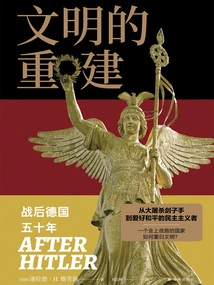
文明的重建:战后德国五十年(译林思想史)
(u. S.) Conrad H. Yarausch
In the spring of 1945, the German army was defeated, and the world was immersed in the unspeakable crime of the Holocaust. Few people expected that just half a century later, the Germans would transform and stand at the forefront of European integration as a prosperous nation. How did the Germans recover from the devastation of World War II and stand up again from the shame of the Holocaust? In this book, Jarausch describes the detailed process of Germany rebuilding civilization and civil society destroyed by the Nazi regime, thereby achieving national rejuvenation. Unlike other scholarly works that explore Germany's response to its Nazi past, The Reconstruction of Civilization focuses primarily on how a disoriented people learned practical lessons from the mistakes of the past and their struggle to create a new society focused on human rights. This perspective provides a challenging analysis of the gradually formed national and character traits of the Germans, and provides new possibilities for the study of world history.
In the spring of 1945, the German army was defeated, and the world was immersed in the unspeakable crime of the Holocaust. Few people expected that just half a century later, the Germans would transform and stand at the forefront of European integration as a prosperous nation. How did the Germans recover from the devastation of World War II and stand up again from the shame of the Holocaust? In this book, Jarausch describes the detailed process of Germany rebuilding civilization and civil society destroyed by the Nazi regime, thereby achieving national rejuvenation. Unlike other scholarly works that explore Germany's response to its Nazi past, The Reconstruction of Civilization focuses primarily on how a disoriented people learned practical lessons from the mistakes of the past and their struggle to create a new society focused on human rights. This perspective provides a challenging analysis of the gradually formed national and character traits of the Germans, and provides new possibilities for the study of world history.
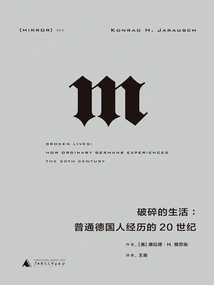
破碎的生活:普通德国人经历的20世纪
(u. S.) Conrad H. Yarausch
The "Weimar Generation" Germans born in the 1920s experienced almost all the important events of the 20th century: the Third Reich, World War II, the Holocaust, post-war reconstruction, Cold War divisions, and reunification and recovery after the fall of the Berlin Wall. Private life and the historical process are rarely closely intertwined. When they looked back on their life experiences, their former enthusiasm was disillusioned by seeing the truth about the dictatorship. Some repented, some used ignorance and being deceived as excuses, and some claimed that Germans were also victims to gain sympathy. Based on first-hand accounts from more than seventy autobiographies and memoirs, "Shattered Lives" describes 20th-century Germany from the perspective of ordinary people. Among them are soldiers who participated in the war on the front line, as well as women who endured the depression years on the home front; there are perpetrators of ethnic cleansing and victims of Nazi atrocities. By re-examining the German national identity, this book attempts to answer: why so many people supported Hitler's war and the brutality of the Nazis, and how they finally cut themselves off from racism and authoritarian regimes and re-embraced human rights, transforming from military aggressors into pillars of democracy in Europe.
The "Weimar Generation" Germans born in the 1920s experienced almost all the important events of the 20th century: the Third Reich, World War II, the Holocaust, post-war reconstruction, Cold War divisions, and reunification and recovery after the fall of the Berlin Wall. Private life and the historical process are rarely closely intertwined. When they looked back on their life experiences, their former enthusiasm was disillusioned by seeing the truth about the dictatorship. Some repented, some used ignorance and being deceived as excuses, and some claimed that Germans were also victims to gain sympathy. Based on first-hand accounts from more than seventy autobiographies and memoirs, "Shattered Lives" describes 20th-century Germany from the perspective of ordinary people. Among them are soldiers who participated in the war on the front line, as well as women who endured the depression years on the home front; there are perpetrators of ethnic cleansing and victims of Nazi atrocities. By re-examining the German national identity, this book attempts to answer: why so many people supported Hitler's war and the brutality of the Nazis, and how they finally cut themselves off from racism and authoritarian regimes and re-embraced human rights, transforming from military aggressors into pillars of democracy in Europe.