Library
Browse and search novels
3 novels found
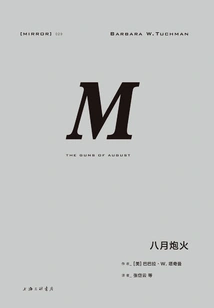
August Artillery Fire
History八月炮火
(u. S.) Barbara W. Tuchman
In this Pulitzer Prize-winning classic, Barbara Tuchman brilliantly illustrates the formation and outbreak of the crisis in August 1914 and the early battles of the war through vivid historical scene restoration, rich details and solid historical data support. Shortly after the publication of this book, the "Cuban Missile Crisis" occurred, which almost triggered a nuclear war. It was from this book that the then US President Kennedy learned historical lessons, which enabled the United States and the Soviet Union to resolve the crisis peacefully. These historical lessons are still of profound instructive significance to today's world.
In this Pulitzer Prize-winning classic, Barbara Tuchman brilliantly illustrates the formation and outbreak of the crisis in August 1914 and the early battles of the war through vivid historical scene restoration, rich details and solid historical data support. Shortly after the publication of this book, the "Cuban Missile Crisis" occurred, which almost triggered a nuclear war. It was from this book that the then US President Kennedy learned historical lessons, which enabled the United States and the Soviet Union to resolve the crisis peacefully. These historical lessons are still of profound instructive significance to today's world.
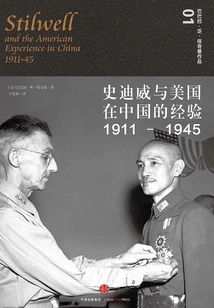
史迪威与美国在中国的经验(1911—1945)
(u. S.) Barbara W. Tuchman
In the first half of the 20th century, China and the United States were at an intersection. This was an encounter between an ancient but weak ancient country and another young but powerful emerging country. In this book, we follow Stilwell, an eccentric but true hero and one of America's greatest theater commanders, as we witness the historic encounter that represented America's attempt to make China more like itself. Beyond these quixotic efforts, which have repeatedly failed, modern China reveals its backbone.
In the first half of the 20th century, China and the United States were at an intersection. This was an encounter between an ancient but weak ancient country and another young but powerful emerging country. In this book, we follow Stilwell, an eccentric but true hero and one of America's greatest theater commanders, as we witness the historic encounter that represented America's attempt to make China more like itself. Beyond these quixotic efforts, which have repeatedly failed, modern China reveals its backbone.
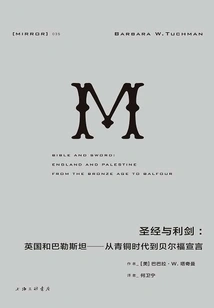
The Bible and the Sword: Britain and Palestine-from the Bronze Age to the Balfour Declaration
History圣经与利剑:英国和巴勒斯坦—从青铜时代到贝尔福宣言
(u. S.) Barbara W. Tuchman
This book is the debut novel of Barbara Tuchman, who is known as the "artist among historians". Through vivid details, literary style, and solid historical data support, the author traces the gradual formation of Britain's national spirit in Christian enlightenment, the Crusades, Near East trade, and imperial struggle for hegemony. During this process, Palestine, as the spiritual home of the British people, became an important cultural reason for Britain's support for the restoration of Israel, while the need for imperial strategy was Britain's political motivation. This book describes how in the long history from the origin of Britain to the Balfour Declaration, cultural motivations and political motivations-that is, the Bible and the "sword"-shaped Britain's Near East policy and profoundly affected the historical process of the modern Middle East.
This book is the debut novel of Barbara Tuchman, who is known as the "artist among historians". Through vivid details, literary style, and solid historical data support, the author traces the gradual formation of Britain's national spirit in Christian enlightenment, the Crusades, Near East trade, and imperial struggle for hegemony. During this process, Palestine, as the spiritual home of the British people, became an important cultural reason for Britain's support for the restoration of Israel, while the need for imperial strategy was Britain's political motivation. This book describes how in the long history from the origin of Britain to the Balfour Declaration, cultural motivations and political motivations-that is, the Bible and the "sword"-shaped Britain's Near East policy and profoundly affected the historical process of the modern Middle East.