Library
Browse and search books
1 novel found
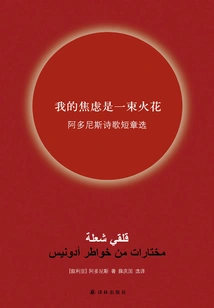
我的焦虑是一束火花:阿多尼斯诗歌短章选
(syria) Adonis
"My Anxiety is a Spark" is a short poem written by Adonis, a Syrian poet living in France, who wrote it in different periods. He always takes human freedom, dignity and liberation as his starting point and reference. He feels the world like a child, loves the world like a youth, and examines the world like an old man. Adonis's short chapters establish imaginative and beautiful connections between things and their metaphors, and infuse the poet's own emotions and ideas into them, making them full of interest, endless evocative, and impressive. Criticisms of backward and authoritarian Arab politics can be found everywhere in the book, lashings of corrupt and ugly social phenomena, accusations of long-standing ills in traditional Arab culture, and exposure of Western hegemony and colonialism that seek personal gain under various guises. The modernity manifested in his poems is separated from the conservative ideas that have always dominated the Arab world, and it is also connected with the spirit of change that has been obscured in the Arab cultural heritage. He advocates rationalism and enlightenment ideas, promotes human value and will, and strives to explore the mysterious unknown behind the tangible world in the practice of poetry, and reveal the mysteries that accompany people, body, mind, instinct, intuition, and dreams.
"My Anxiety is a Spark" is a short poem written by Adonis, a Syrian poet living in France, who wrote it in different periods. He always takes human freedom, dignity and liberation as his starting point and reference. He feels the world like a child, loves the world like a youth, and examines the world like an old man. Adonis's short chapters establish imaginative and beautiful connections between things and their metaphors, and infuse the poet's own emotions and ideas into them, making them full of interest, endless evocative, and impressive. Criticisms of backward and authoritarian Arab politics can be found everywhere in the book, lashings of corrupt and ugly social phenomena, accusations of long-standing ills in traditional Arab culture, and exposure of Western hegemony and colonialism that seek personal gain under various guises. The modernity manifested in his poems is separated from the conservative ideas that have always dominated the Arab world, and it is also connected with the spirit of change that has been obscured in the Arab cultural heritage. He advocates rationalism and enlightenment ideas, promotes human value and will, and strives to explore the mysterious unknown behind the tangible world in the practice of poetry, and reveal the mysteries that accompany people, body, mind, instinct, intuition, and dreams.