Library
Browse and search novels
12 novels found

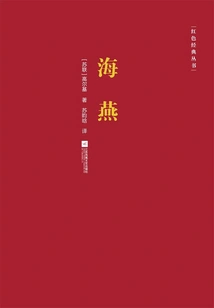
Haiyan
Literature海燕
(soviet) Gorky
This book is a collection of selected essays by the famous Soviet writer Gorky. It contains dozens of classic prose masterpieces such as "Petrel", "People", "Melody of Spring", "Song of the Eagle", "Book", "Clock", and "Untimely Thoughts", which fully demonstrates Gorky's revolutionary enthusiasm and optimism. It has positive cultural value for contemporary Chinese society to promote patriotic education and inherit the red gene and revolutionary spirit.
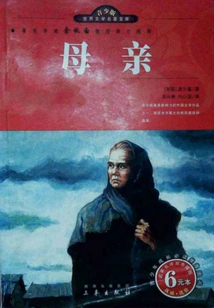

Mother
General Fiction母亲
(soviet) Gorky
The novel describes the development of the Russian proletarian revolutionary movement and the awakening process of the masses. The novel is divided into two parts. The first part focuses on the growth process of the Marxist workers' group led by the young worker Pavel under the leadership of the Social Democratic Labor Party; the second part focuses on describing the role of the Marxist workers' group among the masses and the awakening of the people. It eulogizes the revolutionary spirit and heroism of the proletariat represented by the great mother Nilovna.

Mother
General Fiction母亲
(soviet) Gorky
This book marks a new peak for Gorky in exploring positive characters. Since the 1890s, Gorky has been actively exploring the creation of positive characters in his creations. Since the beginning of the 20th century, the booming workers' movement has greatly inspired his creative passion. The 1905 revolution had a decisive impact on Gorky's political thought and literary and artistic creation. He stood at the height of proletarian thought, boldly innovated, and finally created the typical image of Pavel, a plump proletarian hero, and brought the worker and peasant heroes into the field of literature. This book shows Gorky's high artistic talent in portraying proletarian heroes. In this book, Gorky used the creative method of socialist realism for the first time, that is, to describe reality truly, historically and concretely from the actual revolutionary development. This book is the first new literary work written using this creative method. This book creates a new era of proletarian literature with its true description of the new revolutionary reality, its profound summary of the nature of the times, its heroic figures with high ideological and artistic qualities, and its new creative methods.

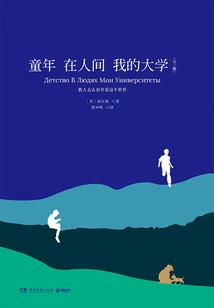
Childhood·in the World·my University
General Fiction童年·在人间·我的大学
(soviet) Gorky
This book is three famous autobiographical novels by Soviet writer Gorky. Through the description of his life and destiny in childhood, boyhood and youth, the author shows the growth process of a progressive young man before the Russian October Revolution. After the death of his father, the young protagonist Alyosha came to his grandfather's house and spent his childhood there. With the death of his mother and the decline of his grandfather's family, Alyosha had to go into society and make a living by being an apprentice and working for others. It was during this time that Alyosha came into contact with books and became immersed in the world of books. The knowledge in the book broadened Alyosha's horizons. With the pursuit of ideals, Alyosha came to Kazan to study alone. In the torrent of the Russian Revolution, under the influence of a group of progressive people, his ideological realm was improved.

一生必读的世界十大名著:童年·在人间·我的大学(青少年版)
(soviet) Gorky
"Childhood", "In the World", and "My University" are the famous autobiographical trilogy of novels by Soviet writer Gorky. Through the description of his life and destiny in childhood, adolescence and youth, the author shows the growth process of a progressive young man before the Russian October Revolution. Alyosha, this world classic literary image, has remained in people's hearts for a long time and always inspired people to strive for a better tomorrow!

Childhood
General Fiction童年
(soviet) Gorky
"Childhood" is the first of Gorky's autobiographical novel trilogy, which truly reproduces Gorky's difficult childhood experience. The protagonist of the novel, Alyosha, lost his father when he was three years old. With a beautiful vision for the future, he was fostered by his mother in his grandmother's house. Alyosha's grandfather was selfish, greedy, bad-tempered, and often abused his workers. Alyosha's uncles often fought in order to earn more profits. Fortunately, he had a kind and loving grandmother who was good at singing and dancing, and spent countless cold and lonely nights with Alyosha. Later, Alyosha made some friends, and their friendship brought joy to Alyosha's life. However, the departure of his friends made Alyosha fall into pain and loneliness. Later, the death of his mother and the bankruptcy of his grandfather completely pushed Alyosha into a hopeless life. At the age of ten, Alyosha embarked on the arduous road of making a living alone.

Childhood
General Fiction童年
(soviet) Gorky
"Childhood" is the first of a trilogy of Gorky's autobiographical novels. It tells the story of Gorky's childhood experience when his father lost his father when he was young, his mother remarried, and he lived with his grandfather and grandmother, the owner of Xiaoranfang, who were increasingly dilapidated. Through the innocent eyes of a child, the novel vividly shows readers the living conditions of the people at the bottom of Russian society in the mid-19th century, and depicts Russian religion, funerals and other folk customs at that time. The book not only has a rigorous artistic structure, but also has excellent character creation.

童年 在人间 我的大学(译文名著精选)
(soviet) Gorky
Gorky (1868-1936), a famous Russian writer, "Childhood", "In the World", and "My University" are his autobiographical trilogy. "Childhood" recalls the difficult childhood that the protagonist Alyosha spent at his grandfather's house. "In the Human World" describes the rough experience of young Alyosha who was expelled from his home by his grandfather and went to the "human world" to make a living on his own. "My University" tells the story of Alyosha, who has just entered his youth and came to Kazan with the desire to go to university. However, he learned knowledge in the "social university" that could not be learned in a walled university. He broadened his horizons and raised his awareness. After painful ideological exploration, he finally grew into a revolutionary intellectual. The trilogy shows the social life of Russia at the end of the 19th century. It is an excellent work with profound educational significance and great artistic charm.

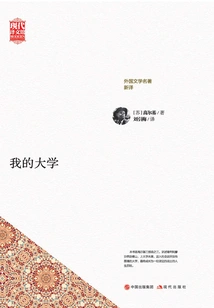
我的大学(俄苏文学经典译著)
(soviet) Gorky
"My University" is the third part of Gorky's famous autobiographical novel trilogy and one of Gorky's "Life Trilogy". The remaining two are "Childhood" and "In the World". The author describes his life experiences in his youth. From this truly recorded tutorial, we can see that as a teenager, Gorky had a deep hatred for the habits of the petty bourgeoisie, a passionate pursuit of freedom, a strong yearning for a better life, direct contact with the working people at the bottom of life, going deep into society, accepting the influence of revolutionaries' ideas, and eagerly absorbing knowledge and nourishment from books. These were important conditions for him to grow up and climb to the peak of culture from the bottom of life.

Childhood (gorky's Growth Trilogy)
General Fiction童年(高尔基成长三部曲)
(soviet) Gorky
"Childhood" is the first book in Gorky's autobiographical trilogy. It tells the story of the protagonist Alyosha's painful life experience in childhood. After the death of his father, Alyosha came to his grandfather's house with his mother and began his childhood living under the shelter of others. The greed and selfishness of his grandfather and two uncles made the young Alyosha witness the darkness and ugliness of the world. Grandma's kindness and hard work planted the seeds of truth, goodness and beauty in Alyosha's heart. Even in the depressing and cruel environment, he still had hope. "Childhood" vividly reproduces the living conditions of the lower class people in Russia in the 1870s and 1980s. Gorky not only wrote about his understanding of suffering and his unique views on life, but there was also an endless desire and strength flowing between the lines.

The Life of Kerry Samkin
General Fiction克里·萨木金的一生
(soviet) Gorky
Gorky's last masterpiece. "The Life of Kri Samkin" contains many characters, rich atmosphere of the times, and broad social scenes. It is called an encyclopedia of Russian social life before the revolution. At the same time, the novel's artistic conception is grand and its expression techniques are diverse. Realism and non-realism techniques are used alternately, which reflects Gorky's creative style in his later years.

童年(中小学生必读丛书)
(soviet) Gorky
"Childhood" tells the story of the growth of a lonely child "I". The novel examines the entire society and life from a child's unique perspective. The grandfather's house where "I" stayed was a family full of hatred and shrouded in strong philistine habits. It was a suffocating family. In addition, the novel also shows the corruption, decline and destruction of the entire society at that time.