Library
Browse and search novels
1 novel found
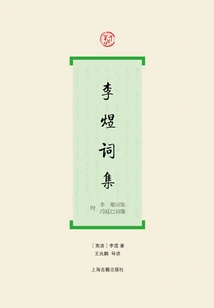
李煜词集 附:李璟词集 冯延巳词集
(southern Tang Dynasty) Written By Li Yu Introduction By Wang Zhaopeng
Li Yu, the sixth son of the Southern Tang Dynasty. He ascended the throne in Jinling in the second year of Jianlong of the Song Dynasty (961). He reigned for fifteen years and was known as Empress Li in the world. The style of Li Yu's early poetry is gorgeous and soft, and it is hard to escape the "Flower Room" style. After his country was destroyed and he was captured, during his life of house arrest where he "washed his face with tears day and night", he wept his blood with one swan song after another, making the king of the country the "King of the South" in the world of poetry through the ages (Qing Shenxiong's "Ancient and Modern Ci Hua" said). The desolate, tragic and far-reaching artistic conception of his later Ci poems laid the foundation for the "bold and unrestrained" schools of Su and Xin in the future, and he became a master in the history of Ci. Wang Guowei's "Human Ci Hua" says: "When Ci came to Master Li, his vision began to expand and his emotions became deeper." This book contains all Li Yu's Ci works and comments from later generations. At the back of the book is a collection of poems by two other poets of the Southern Tang Dynasty, Li Jing and Feng Yansi.
Li Yu, the sixth son of the Southern Tang Dynasty. He ascended the throne in Jinling in the second year of Jianlong of the Song Dynasty (961). He reigned for fifteen years and was known as Empress Li in the world. The style of Li Yu's early poetry is gorgeous and soft, and it is hard to escape the "Flower Room" style. After his country was destroyed and he was captured, during his life of house arrest where he "washed his face with tears day and night", he wept his blood with one swan song after another, making the king of the country the "King of the South" in the world of poetry through the ages (Qing Shenxiong's "Ancient and Modern Ci Hua" said). The desolate, tragic and far-reaching artistic conception of his later Ci poems laid the foundation for the "bold and unrestrained" schools of Su and Xin in the future, and he became a master in the history of Ci. Wang Guowei's "Human Ci Hua" says: "When Ci came to Master Li, his vision began to expand and his emotions became deeper." This book contains all Li Yu's Ci works and comments from later generations. At the back of the book is a collection of poems by two other poets of the Southern Tang Dynasty, Li Jing and Feng Yansi.