Library
Browse and search books
6 novels found
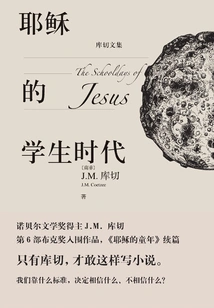
Jesus' School Days
Literature耶稣的学生时代
(south Africa) J. M. Coetzee
This book is the sequel to Coetzee's "The Childhood of Jesus". David is a little boy who loves to ask questions. Simon and Ines take him to a new town to raise him. David learned a new language, made new friends, and started school. He joined the dance academy, where he learned to summon numbers from the sky and learned the meaning of growth. In this book, Coetzee explores what it means to grow up, what it means to be a parent, the conflict between emotion and reason, and how we choose our own path in life.
This book is the sequel to Coetzee's "The Childhood of Jesus". David is a little boy who loves to ask questions. Simon and Ines take him to a new town to raise him. David learned a new language, made new friends, and started school. He joined the dance academy, where he learned to summon numbers from the sky and learned the meaning of growth. In this book, Coetzee explores what it means to grow up, what it means to be a parent, the conflict between emotion and reason, and how we choose our own path in life.
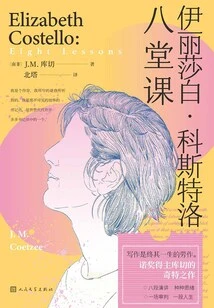
Elizabeth Costello: Eight Lessons
General Fiction伊丽莎白·科斯特洛:八堂课
(south Africa) J. M. Coetzee
"Elizabeth Costello: Eight Lessons" takes the fictional Australian writer and elderly Elizabeth Costello as the protagonist. In the form of "Eight Lessons", it records the speeches she gave when she gave speeches, participated in conferences, accepted interviews, and visited relatives and friends around the world, as well as the conversations and debates she had with others. The book not only discusses serious issues such as realism, humanities, and animal rights, but also intersperses Costello's life memories and interactions with others, vividly portraying the image of such a writer with a withdrawn personality, harsh words, and clear opinions. This novel adopts an experimental writing method. Faced with such a novel text, readers may wish to follow Coetzee's characters to experience the desolate state of mind - when the protagonist is dealing with the world, you can almost discover the spiritual trap of current life.
"Elizabeth Costello: Eight Lessons" takes the fictional Australian writer and elderly Elizabeth Costello as the protagonist. In the form of "Eight Lessons", it records the speeches she gave when she gave speeches, participated in conferences, accepted interviews, and visited relatives and friends around the world, as well as the conversations and debates she had with others. The book not only discusses serious issues such as realism, humanities, and animal rights, but also intersperses Costello's life memories and interactions with others, vividly portraying the image of such a writer with a withdrawn personality, harsh words, and clear opinions. This novel adopts an experimental writing method. Faced with such a novel text, readers may wish to follow Coetzee's characters to experience the desolate state of mind - when the protagonist is dealing with the world, you can almost discover the spiritual trap of current life.

Waiting for the Barbarians (collected Works of Coetzee)
General Fiction等待野蛮人(库切文集)
(south Africa) J. M. Coetzee
For decades, the Sheriff has been a loyal servant of the Empire, running the affairs of a small frontier fortress and turning a blind eye to the coming war with the barbarians. However, when the interrogation expert arrived, he witnessed the cruel and unfair treatment of prisoners of war by the empire. He developed sympathy for the victims, so he committed an incredible act of rebellion, and even more unexpectedly, it made him an enemy of the country and changed his destiny. ... "Waiting for the Barbarians" is one of Coetzee's masterpieces and has been adapted into movies, stage plays and even operas. This book was selected into the "20th Century Literature Excellence" book series by Penguin Books.
For decades, the Sheriff has been a loyal servant of the Empire, running the affairs of a small frontier fortress and turning a blind eye to the coming war with the barbarians. However, when the interrogation expert arrived, he witnessed the cruel and unfair treatment of prisoners of war by the empire. He developed sympathy for the victims, so he committed an incredible act of rebellion, and even more unexpectedly, it made him an enemy of the country and changed his destiny. ... "Waiting for the Barbarians" is one of Coetzee's masterpieces and has been adapted into movies, stage plays and even operas. This book was selected into the "20th Century Literature Excellence" book series by Penguin Books.

Summer (collected Works of Coetzee)
General Fiction夏日(库切文集)
(south Africa) J. M. Coetzee
"Summer" is a novel by the famous South African writer and Nobel Prize winner J. M. Coetzee. It is the third part of the "Trilogy of Scenes from Provincial Life". Together with "Boy" and "Youth", it forms a complete autobiographical trilogy. In "Summer", Coetzee takes the subtle and confusing memoir style of alternate reality and fiction a step further: the famous writer Coetzee is dead; in order to write a biography of the late writer, a young British writer searches for Coetzee's ghostly middle age like a detective and talks to the important figures in Coetzee's life one by one. This is a unique work, an "autobiography" from the perspective of others, and also an extremely poignant and profound self-exploration and self-expression of the writer.
"Summer" is a novel by the famous South African writer and Nobel Prize winner J. M. Coetzee. It is the third part of the "Trilogy of Scenes from Provincial Life". Together with "Boy" and "Youth", it forms a complete autobiographical trilogy. In "Summer", Coetzee takes the subtle and confusing memoir style of alternate reality and fiction a step further: the famous writer Coetzee is dead; in order to write a biography of the late writer, a young British writer searches for Coetzee's ghostly middle age like a detective and talks to the important figures in Coetzee's life one by one. This is a unique work, an "autobiography" from the perspective of others, and also an extremely poignant and profound self-exploration and self-expression of the writer.

Youth (collected Works of Coetzee)
General Fiction青春(库切文集)
(south Africa) J. M. Coetzee
"Youth" is an autobiographical novel by Coetzee. It tells the life of a young man named John after arriving in London from South Africa. This young man "he" worked as a programmer at IBM and an international computer company. Materially, he lived a relatively comfortable life, but mentally he fell into an extremely depressed state. He longs to get rid of the influence of South Africa and truly live a life like a Londoner, but he is unable to truly integrate into the local area, nor can he completely cut off the connection with his mother; he longs for emotional comfort, but cannot resonate emotionally with other girls; he is introverted and lacks enthusiasm, but he yearns for a vigorous life like a poet. In this novel, Coetzee re-examines his youth path from "his" perspective.
"Youth" is an autobiographical novel by Coetzee. It tells the life of a young man named John after arriving in London from South Africa. This young man "he" worked as a programmer at IBM and an international computer company. Materially, he lived a relatively comfortable life, but mentally he fell into an extremely depressed state. He longs to get rid of the influence of South Africa and truly live a life like a Londoner, but he is unable to truly integrate into the local area, nor can he completely cut off the connection with his mother; he longs for emotional comfort, but cannot resonate emotionally with other girls; he is introverted and lacks enthusiasm, but he yearns for a vigorous life like a poet. In this novel, Coetzee re-examines his youth path from "his" perspective.
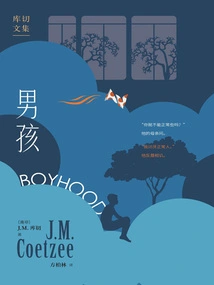
Boy (collected Works of Coetzee)
General Fiction男孩(库切文集)
(south Africa) J. M. Coetzee
"The Boy" is one of Coetzee's trilogy of autobiographical novels. It describes the protagonist's childhood life in South Africa when he was ten to thirteen years old. All the plots are innocent and gloomy, and full of strange fantasies unique to teenage boys. However, behind all these detailed narratives, a more grand narrative intention can be seen. Through a little boy and an ordinary middle-class family, readers can witness the cultural imperialism of the colonizers that sowed the seeds of conflict between different ethnic groups and races in South African society. Coetzee uses this to lay out the tragic context of the book. Through the inner confusion of the protagonist, the cliché of difficult times unexpectedly interprets a new set of discourse.
"The Boy" is one of Coetzee's trilogy of autobiographical novels. It describes the protagonist's childhood life in South Africa when he was ten to thirteen years old. All the plots are innocent and gloomy, and full of strange fantasies unique to teenage boys. However, behind all these detailed narratives, a more grand narrative intention can be seen. Through a little boy and an ordinary middle-class family, readers can witness the cultural imperialism of the colonizers that sowed the seeds of conflict between different ethnic groups and races in South African society. Coetzee uses this to lay out the tragic context of the book. Through the inner confusion of the protagonist, the cliché of difficult times unexpectedly interprets a new set of discourse.