Library
Browse and search books
1 novel found
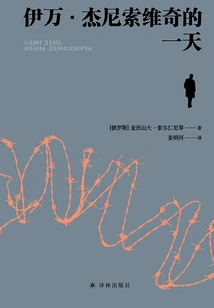
A Day in the Life of Ivan Denisovich
General Fiction伊万·杰尼索维奇的一天
(russia) Alexander Solzhenitsyn
Ivan Denisovich Shukhov was originally a member of a collective farm. He fought on the front line during the German-Soviet War and was unfortunately captured by the German army. However, he took the opportunity to escape back to the army, but was arrested and interrogated. Under the torture of the Soviet counterintelligence agency, he was forced to admit that he was a German spy in order to survive. He was sentenced to ten years in prison for treason and sent to a special labor camp. The author uses simple and unpretentious line drawings to focus on the long and arduous day spent by Shukhov in the labor camp. Through a large number of details, he paints a shocking and gloomy picture in the ordinary narrative and memories, showing the rough life of the protagonist. This novel is Solzhenitsyn's first published work and one of his masterpieces. It was the first novel in the history of Soviet literature to describe life in a labor camp. It undoubtedly became a sensational event in the Soviet literary world at that time, and also attracted great attention in the West, and the author became famous.
Ivan Denisovich Shukhov was originally a member of a collective farm. He fought on the front line during the German-Soviet War and was unfortunately captured by the German army. However, he took the opportunity to escape back to the army, but was arrested and interrogated. Under the torture of the Soviet counterintelligence agency, he was forced to admit that he was a German spy in order to survive. He was sentenced to ten years in prison for treason and sent to a special labor camp. The author uses simple and unpretentious line drawings to focus on the long and arduous day spent by Shukhov in the labor camp. Through a large number of details, he paints a shocking and gloomy picture in the ordinary narrative and memories, showing the rough life of the protagonist. This novel is Solzhenitsyn's first published work and one of his masterpieces. It was the first novel in the history of Soviet literature to describe life in a labor camp. It undoubtedly became a sensational event in the Soviet literary world at that time, and also attracted great attention in the West, and the author became famous.