Library
Browse and search books
7 novels found

Nest
General Fiction巢
(romania) Norman Manea
"The Nest" describes the life of Romanian intellectuals represented by Parade, Peter and Gora in the "free world" America. Parade is murdered, Peter mysteriously disappears after receiving a threatening letter, and Gora suffers from illness. In the new world of the United States, they feel freedom of thought and opportunities for competition, but they also face language confusion and existential crises. More importantly, they are completely unable to escape the profound influence of their past lives and the culture of their homeland. Through the experiences of these characters, the author's thoughts on the fate of human beings, nations, and individuals are demonstrated, as well as his exploration of the meaning of survival in the past, present, and future, and his ultimate experience of birth, old age, illness, and death.
"The Nest" describes the life of Romanian intellectuals represented by Parade, Peter and Gora in the "free world" America. Parade is murdered, Peter mysteriously disappears after receiving a threatening letter, and Gora suffers from illness. In the new world of the United States, they feel freedom of thought and opportunities for competition, but they also face language confusion and existential crises. More importantly, they are completely unable to escape the profound influence of their past lives and the culture of their homeland. Through the experiences of these characters, the author's thoughts on the fate of human beings, nations, and individuals are demonstrated, as well as his exploration of the meaning of survival in the past, present, and future, and his ultimate experience of birth, old age, illness, and death.

Selections of Norman Manea's Famous Works (all 6 Volumes)
General Fiction诺曼·马内阿知名作品精选集(全6册)
(romania) Norman Manea
The conscience of Eastern European literature is about the troubled life in exile in the United States. It is a literal translation from Romanian, which is closer to the author's original intention. The profound traumatic shadow of the Jewish Holocaust | the heavy spiritual shackles of a closed society | the layers of spiritual confusion in the free world, describe all the living beings in Romania in the 20th century! Guggenheim Award, MacArthur Genius Grant, American National Jewish Book Award, Nonino International Literary Award, Medici Foreign Fiction Award award-winning writer. Philip Roth, Saul Bellow, Günter Grass, Orhan Pamuk, high praise!
The conscience of Eastern European literature is about the troubled life in exile in the United States. It is a literal translation from Romanian, which is closer to the author's original intention. The profound traumatic shadow of the Jewish Holocaust | the heavy spiritual shackles of a closed society | the layers of spiritual confusion in the free world, describe all the living beings in Romania in the 20th century! Guggenheim Award, MacArthur Genius Grant, American National Jewish Book Award, Nonino International Literary Award, Medici Foreign Fiction Award award-winning writer. Philip Roth, Saul Bellow, Günter Grass, Orhan Pamuk, high praise!

Selections of Norman Manea's Famous Works (all 4 Volumes)
General Fiction诺曼·马内阿知名作品精选集(全4册)
(romania) Norman Manea
This set contains four works by Norman Manea: "Legal Happiness", "The Black Envelope", "Prisoners" and "The Nest". "Legal Happiness" contains four novellas, which show the lives and psychological states of various different groups of people including intellectuals, officials, and the working class in Romania in a special era, reflecting the hopes and fears, struggles and confusions of an era. "Black Envelope": In the eyes of "mental patient" Tolea, this spring in Bucharest is brilliant and crazy, filled with restlessness, poison and perversity. A story narrated by an "abnormal person", the whole book is composed of paradoxical scenes. Confusion, metaphors, and sleep talk form a shocking picture of the Romanian intellectuals in the 1980s. "Prisoners" is the author's first published work, which has special literary value and significance. The novel creates three main characters: a depressed teacher, a sensitive and lonely daughter of a suspected war criminal who committed suicide, and a young engineer. The novel presents the lives of people who experienced the Nazi Holocaust and fell into the totalitarian rule of Ceausescu. The manuscript combines reality and dreams, and the writing style is both true and imaginary, like a monologue or a babble. "The Nest" is a literal translation of Eastern European literature about the troubled life of a conscience in exile in the United States, which is closer to the author's original intention. The profound trauma of the Jewish Holocaust, the heavy spiritual shackles of a closed society, and the layers of spiritual confusion in the free world. This book describes the life of Romanian intellectuals represented by Parade, Peter, and Gora in the "free world" America.
This set contains four works by Norman Manea: "Legal Happiness", "The Black Envelope", "Prisoners" and "The Nest". "Legal Happiness" contains four novellas, which show the lives and psychological states of various different groups of people including intellectuals, officials, and the working class in Romania in a special era, reflecting the hopes and fears, struggles and confusions of an era. "Black Envelope": In the eyes of "mental patient" Tolea, this spring in Bucharest is brilliant and crazy, filled with restlessness, poison and perversity. A story narrated by an "abnormal person", the whole book is composed of paradoxical scenes. Confusion, metaphors, and sleep talk form a shocking picture of the Romanian intellectuals in the 1980s. "Prisoners" is the author's first published work, which has special literary value and significance. The novel creates three main characters: a depressed teacher, a sensitive and lonely daughter of a suspected war criminal who committed suicide, and a young engineer. The novel presents the lives of people who experienced the Nazi Holocaust and fell into the totalitarian rule of Ceausescu. The manuscript combines reality and dreams, and the writing style is both true and imaginary, like a monologue or a babble. "The Nest" is a literal translation of Eastern European literature about the troubled life of a conscience in exile in the United States, which is closer to the author's original intention. The profound trauma of the Jewish Holocaust, the heavy spiritual shackles of a closed society, and the layers of spiritual confusion in the free world. This book describes the life of Romanian intellectuals represented by Parade, Peter, and Gora in the "free world" America.
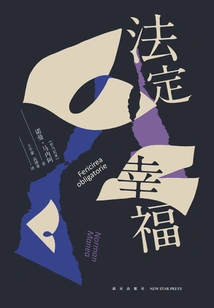
Legal Happiness
General Fiction法定幸福
(romania) Norman Manea
"Legal Happiness" contains four novellas, which show the lives and psychological states of various different groups of people including intellectuals, officials, and the working class in Romania in a special era, reflecting the hopes and fears, struggles and confusions of an era. Four stories of ordinary people present the scars and memories of an era.
"Legal Happiness" contains four novellas, which show the lives and psychological states of various different groups of people including intellectuals, officials, and the working class in Romania in a special era, reflecting the hopes and fears, struggles and confusions of an era. Four stories of ordinary people present the scars and memories of an era.
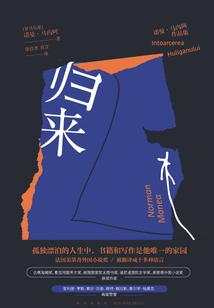
Return
General Fiction归来
(romania) Norman Manea
"The Return" won the French Medici Novel Prize in 2006 and is an autobiographical novel. Due to the social environment, the protagonist fled from Romania to the United States, and returned after teaching and writing in the United States for 10 years. The book is divided into three parts: the first part is about life in the United States after running away. The second part is about the years of life before leaving, and it is also Manea's personal and family history. The third part is what I did in the 10 days after returning. This is a rough summary, but in fact this book does not have a clear clue of time and space. It always jumps between the past, present and future time, and switches between the spaces of Romania and the United States. The narrative is suddenly interrupted and repeated again and again, which is the writing characteristic of this book.
"The Return" won the French Medici Novel Prize in 2006 and is an autobiographical novel. Due to the social environment, the protagonist fled from Romania to the United States, and returned after teaching and writing in the United States for 10 years. The book is divided into three parts: the first part is about life in the United States after running away. The second part is about the years of life before leaving, and it is also Manea's personal and family history. The third part is what I did in the 10 days after returning. This is a rough summary, but in fact this book does not have a clear clue of time and space. It always jumps between the past, present and future time, and switches between the spaces of Romania and the United States. The narrative is suddenly interrupted and repeated again and again, which is the writing characteristic of this book.
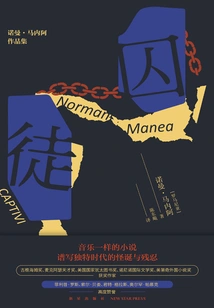
Prisoner
General Fiction囚徒
(romania) Norman Manea
"Prisoners" is the author's first published work, which has special literary value and significance. The novel creates three main characters: a depressed teacher, a sensitive and lonely daughter of a suspected war criminal who committed suicide, and a young engineer. The novel presents the lives of people who experienced the Nazi Holocaust and fell into the totalitarian rule of Ceausescu. They were suppressed, doubted and distorted by the power of the underworld, and became injured, weak and failed. The characteristic of the language of the manuscript is that it combines reality with dreams, and the writing style of both reality and fantasy is like a monologue or raving. As Manea's first work, this book basically has the prototype of his literary language to become a world-class writer.
"Prisoners" is the author's first published work, which has special literary value and significance. The novel creates three main characters: a depressed teacher, a sensitive and lonely daughter of a suspected war criminal who committed suicide, and a young engineer. The novel presents the lives of people who experienced the Nazi Holocaust and fell into the totalitarian rule of Ceausescu. They were suppressed, doubted and distorted by the power of the underworld, and became injured, weak and failed. The characteristic of the language of the manuscript is that it combines reality with dreams, and the writing style of both reality and fantasy is like a monologue or raving. As Manea's first work, this book basically has the prototype of his literary language to become a world-class writer.
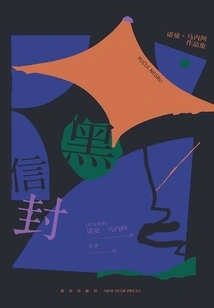
Black Envelope
General Fiction黑信封
(romania) Norman Manea
In the eyes of "mental patient" Tolea, this spring in Bucharest is brilliant and crazy, filled with restlessness, poison and perversity. This intellectual from a noble background was involved in a murder in a traffic accident in his youth, which left him with psychological trauma. In his youth, he was so talented that he was forced to leave his teaching position due to "moral issues". He was once thrown into prison and then released under mysterious circumstances. His fate was ups and downs, and he was incompatible with the world. In order to unravel the mystery of the death of the philosopher's father, Marku Vancha Sr., 40 Years ago, as well as the numerous doubts surrounding the sudden decline of the Vancha family overnight, Tolea, who behaves strangely and arrogantly, struggles to deal with this material-poor and spiritually pale society under totalitarian rule. He tears apart the masks with unparalleled insight, but finds himself hopelessly trapped in a web of suspense...
In the eyes of "mental patient" Tolea, this spring in Bucharest is brilliant and crazy, filled with restlessness, poison and perversity. This intellectual from a noble background was involved in a murder in a traffic accident in his youth, which left him with psychological trauma. In his youth, he was so talented that he was forced to leave his teaching position due to "moral issues". He was once thrown into prison and then released under mysterious circumstances. His fate was ups and downs, and he was incompatible with the world. In order to unravel the mystery of the death of the philosopher's father, Marku Vancha Sr., 40 Years ago, as well as the numerous doubts surrounding the sudden decline of the Vancha family overnight, Tolea, who behaves strangely and arrogantly, struggles to deal with this material-poor and spiritually pale society under totalitarian rule. He tears apart the masks with unparalleled insight, but finds himself hopelessly trapped in a web of suspense...