Library
Browse and search novels
17 novels found

吴趼人古典小说选:恨海+近世社会龌龊史+九命奇冤+二十年目睹之怪现状(套装9册)
(qing Dynasty) Wu Jianren
This set of books selects ancient classic literary works, such as "The Sea of Hate" and "The History of Sordid Society in Modern Times", etc., And is suitable for literature lovers to read. Especially lovers of classical literature will be in for a treat. "The Strange Situation I Witnessed for Twenty Years" is a novel with an autobiographical nature. Through nearly 200 short stories about the protagonist's "narrow escape" from his father's funeral to his failure in business, it outlines various strange current situations in late Qing society in the more than 20 years after the Sino-French War to the beginning of the 20th century. The social life it reflects is broader than "The Appearance of Officialdom". In addition to the officialdom, it also involves shopping malls, foreign markets, medical schools, and medical and divination. "Nine Lives" was originally published in "New Novel" sponsored by Liang Qichao, and tells the story of a major murder that occurred in Guangdong during the Yongzheng period. The work borrows from the past to present the present to attack corrupt officials at that time, but affirms the supreme ruler and shows a reformist tendency. The novel uses flashback techniques and is heavily influenced by foreign literature. The novel prominently reflects the writer's artistic style: sharp writing, solemn and humorous, spicy and interesting. Ru Goucai made his first appearance, and his words, like water from a bottle, and his demeanor as if there were no one around him, appeared on the page with just a few strokes. The novel uses first-person limited narrative, which is unique in the history of novels. At the same time, it also uses flashbacks, interludes and other methods in structure, providing a model for the creation of Chinese novels. The work runs through the joys and sorrows, what has been seen and heard during the 20 years of a near-death experience, and the structure is a knotty ending, making readers feel cordial and credible.

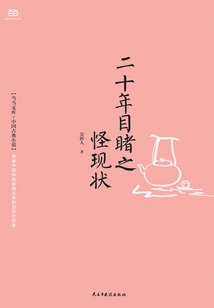
The Strange Current Situation Witnessed in Twenty Years (the Most Classic Chinese Classical Novel)
Literature二十年目睹之怪现状(中国古典小说最经典)
(qing Dynasty) Wu Jianren
"The Strange Current Situation Witnessed in Twenty Years" by Wu Jianren of the Qing Dynasty is one of the four major condemnation novels in the late Qing Dynasty. Through the protagonist's experiences and experiences in the 20 years from his "narrow escape" from attending the funeral of his father to his failure in business, it reveals countless strange current situations in China's officialdom, shopping malls, and foreign affairs from the Sino-French War to the early 20th century. Wu Jianren satirized the "strange current situation" in the intellectual world, especially the literati and famous celebrities in the foreign market, which was extremely successful. He rationally realizes that "business is the foundation of financial management", but still cannot forgive the intrigues in shopping malls; he describes many scandals of fratricide and tragic changes in human relations within the family, revealing the destruction of ethics and morality; in particular, he successfully creates a negative example throughout the book - Gou Cai (Gou Cai). By describing his extremely shameless history of fortune, he portrays the dirty soul of a corrupt official. In short, in one hundred and eight chapters, Wu Jian showed readers a historical picture of the imminent collapse of the feudal society at the end of the world.

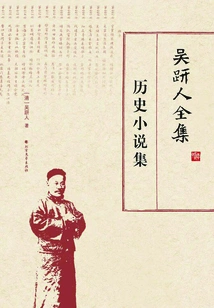
The Complete Works of Wu Jianren: the Strange Current Situation Witnessed in Twenty Years
General Fiction吴趼人全集:二十年目睹之怪现状
(qing Dynasty) Wu Jianren
This book is an autobiographical novel written by Wu Jianren, a writer in the late Qing Dynasty. It is one of the four major condemnation novels in the late Qing Dynasty. The book takes the protagonist's "narrow escape" experience as the main clue, starting from his funeral for his father and ending with his failure in business. Through his "narrow escape" for twenty years, he describes the political situation, moral outlook, social customs and world affairs of China's increasingly colonized feudal society, and reveals the irreparable historical destiny of the late Qing Dynasty society and the feudal system. The whole book uses the first person to narrate the story, which is the first in the history of Chinese novels. The structure uses flashbacks, interludes and other methods, which provides a model for the creation of Chinese novels.

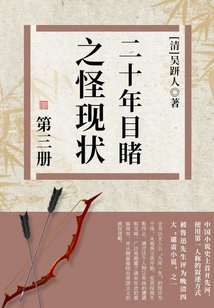
The Strange Current Situation Witnessed in Twenty Years·1
General Fiction二十年目睹之怪现状·一
(qing Dynasty) Wu Jianren
The whole book is based on the protagonist's "narrow escape" experience, starting from his father's funeral to the end of his business failure. Through this character's encounters and knowledge over the past 20 years, it extensively reveals the dark reality of the late Qing Dynasty from around the Sino-French War in the tenth year of Guangxu (1884) to around the thirty-first year of Guangxu (1905), and depicts the crazy aggression of imperialism from the side. The work contains more than 200 "strange situations" and outlines a ghostly world filled with "snakes, rats", "jackals" and "ghosts". Among the novels of the late Qing Dynasty, they reflected a wide range of life, including not only the officialdom, but also shopping malls and foreign markets, as well as medicine, horoscopes, and the three religions and nine streams. They revealed the political situation, social fashion, moral outlook, and world conditions at the time, so they were labeled "social novels" when they were published.
The Complete Works of Wu Jianren: Social Novels (part 1)
General Fiction吴趼人全集:社会小说集(上)
(qing Dynasty) Wu Jianren
This book contains three works including "The New Story of Stone", "The Vernacular West Chamber" and "The Four King Kong's Wonderful Books of Famous Courtesans on the Sea". It is based on serialization in Shanghai's "Nanfang Daily", "Xinbao" and other publications, retaining the original illustrations and deleting other appendix texts. "New Story of the Stone" continues the story of "A Dream of Red Mansions" and inherits the psychedelic time and space framework of "The Story of the Stone". In the novel, Jia Baoyu was resurrected in 1901 and witnessed a large number of new electrified things such as trains, ships, and electric lights. He was shocked by the highly developed Western technological civilization and believed that China would one day be able to manufacture these things. "The Romance of the West Chamber" is Wu Jianren's adaptation of Wang Shifu's "The Romance of the West Chamber" into a vernacular novel, and "The Four King Kong's Wonderful Books of the Prostitutes on the Sea" is Wu Jianren's first chapter-length novel.

吴趼人全集:写情小说集
(qing Dynasty) Wu Jianren
This book collects four romantic novels, including "The Sea of Hate", "The Ashes of the Catastrophe", "Change of Love" and "The Strange Story of Electric Skills", based on serializations in magazines such as "Yueyue Novel" in old Shanghai. "The Sea of Hate" places the love tragedy of two young men and women in the context of the Gengzi Incident. While describing their tumultuous experiences when their work was separated, it also shows people a series of thrilling and desolate historical scenes, thus giving their personal tragedies a distinct mark of the times. "Ashes" is a family ethics tragedy, set against the backdrop of the anti-Chinese labor ban movement in the United States. It describes the tragic experiences of a young couple and is a blood-and-tear indictment of a sinful society. The plot of the work is tortuous, the story is vivid, and it is vivid and realistic in the use of spoken language and the description of customs and human feelings. "Change of Love" is Wu Jianren's final work. It describes the love tragedy of a pair of young children in the old era, and reveals the profound conflict between human nature and ethics. "Strange Stories of Electrical Skills" was originally a Japanese narration of a strange case in England, described in detail by Fang Qingzhou, and Wu Jianren "derived meaning" based on it. Although the plot of this book is based on it, it is actually Wu Jianren's re-creation.

吴趼人全集·点评集
(qing Dynasty) Wu Jianren
This book contains the works reviewed and edited by Wu Jianren. Considering that the works reviewed by Wu Jianren are difficult to see, and in order to help interpret Wu Jianren's comments, this book retains all the original texts, revised them from "New Novels" and "Yueyue Novels", and adds new punctuation. These works include the detective novel "Snake Circle", twenty-three chapters; "Xin'an Translations" with 90 titles and 94 translations; the tanci novel "Jia Fu's Western Drum Ci"; the romantic novel "Love in Love", five chapters, unfinished; "Xin'an Harmonious Translations" Volumes 1 and 2. The first volume contains two articles "One Thousand and One Nights" and "The Fisherman", and the second volume contains 15 articles including "The Marriage of Cat and Mouse" and "The Revenge of the Wolf and Sheep".

吴趼人全集:诗·戏曲·杂文
(qing Dynasty) Wu Jianren
This book collects "Xian Kuaibian", poems, operas and scattered articles scattered here and there. Wu Jianren served as the chief writer of seven newspapers. His works during this period were very scattered, and it was extremely difficult to collect and proofread them. However, this book fills the gaps left by Wu Jianren in his early period to a certain extent. "Juanwaibian" is a collection of Wu Jianren's political essays, including "Protecting the People", "System", "Shuo Xing" and many other articles. He starts from the social system and believes that through top-down reforms, China can embark on the road to prosperity. The poems include eighty-four poems with thirty-seven titles in "The Deleted and Remaining Poems of Xianjuan" and other poems in "The Deleted and Remaining Poems of Xianjuan". The operas include three parts of "The Four Legends of Zeng Fang", which are not finished; and two parts of "Martyr Wu's Martyrdom", which are not finished.

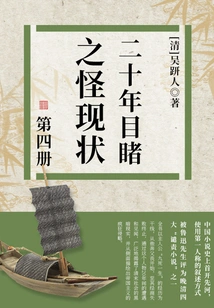
The Strange Current Situation Witnessed in Twenty Years·5
General Fiction二十年目睹之怪现状·五
(qing Dynasty) Wu Jianren
The whole book is based on the protagonist's "narrow escape" experience, starting from his father's funeral to the end of his business failure. Through this character's encounters and knowledge over the past 20 years, it extensively reveals the dark reality of the late Qing Dynasty from around the Sino-French War in the tenth year of Guangxu (1884) to around the thirty-first year of Guangxu (1905), and depicts the crazy aggression of imperialism from the side. The work contains more than 200 "strange situations" and outlines a ghostly world filled with "snakes, rats", "jackals" and "ghosts". Among the novels of the late Qing Dynasty, they reflected a wide range of life, including not only the officialdom, but also shopping malls and foreign markets, as well as medicine, horoscopes, and the three religions and nine streams. They revealed the political situation, social fashion, moral outlook, and world conditions at the time, so they were labeled "social novels" when they were published.

二十年目睹之怪现状·四
(qing Dynasty) Wu Jianren
The whole book is based on the protagonist's "narrow escape" experience, starting from his father's funeral to the end of his business failure. Through this character's encounters and knowledge over the past 20 years, it extensively reveals the dark reality of the late Qing Dynasty from around the Sino-French War in the tenth year of Guangxu (1884) to around the thirty-first year of Guangxu (1905), and depicts the crazy aggression of imperialism from the side. The work contains more than 200 "strange situations" and outlines a ghostly world filled with "snakes, rats", "jackals" and "ghosts". Among the novels of the late Qing Dynasty, they reflected a wide range of life, including not only the officialdom, but also shopping malls and foreign markets, as well as medicine, horoscopes, and the three religions and nine streams. They revealed the political situation, social fashion, moral outlook, and world conditions at the time, so they were labeled "social novels" when they were published.

The Confused World (part 1)
General Fiction胡涂世界(上)
(qing Dynasty) Wu Jianren
"The Blind World" is a satirical novel written in the late Qing Dynasty and one of China's top ten classical social condemnation novels. Most of this book adopts a bead-like narrative method. There is no deliberately represented protagonist, and there is no specially exaggerated story. When you meet a character, you will write about an incident, and when you see an incident, you will describe a person. There is no necessary connection between the previous and later chapters. Almost every chapter can be an independent chapter. The story is mainly written around corruption in the officialdom. The clowns who buy and sell officials may work through the needle, jump up and down to profit from it, or exploit the people and deceive the superiors and the inferiors to get promoted and make a fortune. All the actions of officials are devoted to the calculation of input and output. Every one of them The positions are clearly marked with price tags, and each position is worth a huge profit. The barber who picks out ears, and the queens who work as matchmakers all do their best to make huge profits from buying and selling positions. Everyone has the talent of "Master" Wang Lin, but everyone is a clown...

The Confused World (part 2)
General Fiction胡涂世界(下)
(qing Dynasty) Wu Jianren
"The Blind World" is a satirical novel written in the late Qing Dynasty and one of China's top ten classical social condemnation novels. Most of this book adopts a bead-like narrative method. There is no deliberately represented protagonist, and there is no specially exaggerated story. When you meet a character, you will write about an incident, and when you see an incident, you will describe a person. There is no necessary connection between the previous and later chapters. Almost every chapter can be an independent chapter. The story is mainly written around corruption in the officialdom. The clowns who buy and sell officials may work through the needle, jump up and down to profit from it, or exploit the people and deceive the superiors and the inferiors to get promoted and make a fortune. All the actions of officials are devoted to the calculation of input and output. Every one of them The positions are clearly marked with price tags, and each position is worth a huge profit. The barber who picks out ears, and the queens who work as matchmakers all do their best to make huge profits from buying and selling positions. Everyone has the talent of "Master" Wang Lin, but everyone is a clown...

The Strange Situation Witnessed over the Past Twenty Years
General Fiction二十年目睹之怪现状
(qing Dynasty) Wu Jianren
This book is a full-length novel with an autobiographical flavor. It begins with the protagonist narrowly escaping death to attend the funeral of his father, and then follows his friend Wu Jizhi to dominate officialdom and shopping malls until he fails in business. He used diary form to record nearly 200 stories he had heard and witnessed in the past twenty years. The content was extensive, covering not only officialdom, but also shopping malls, foreign markets, and academic institutions. He thoroughly and clearly analyzed the intricate relationship between Chinese traditional officials and businessmen. It is a rare masterpiece that studies world affairs and culture.

New Story of Stone (3)
General Fiction新石头记(三)
(qing Dynasty) Wu Jianren
"The New Story of the Stone" is a continuation of the story of "A Dream of Red Mansions". "The New Stone" is a long science fiction novel in the late Qing Dynasty that was originally labeled as a "social novel" and later relabeled as an "ideal novel". The novel inherits the psychedelic time and space framework of "The Story of the Stone" and tells the story of Jia Baoyu who was resurrected in 1901 and traveled to Shanghai, Nanjing, Beijing, Wuhan and other places. He witnessed a large number of new electrified things such as trains, ships, electric lights, and even took a submarine from the Pacific to the Atlantic and from Antarctica to the North Pole to circle the earth. He was shocked by the highly developed Western scientific and technological civilization and believed that China would one day be able to manufacture these things. For this novel, which occupies a place in literary history, the usual evaluation is that it reflects the author's yearning for a utopian social and national system model.

二十年目睹之怪现状(古典文库)
(qing Dynasty) Wu Jianren
"The Strange Current Situation Witnessed in Twenty Years" is one of the four major condemnation novels of the late Qing Dynasty. The work observes the world from the eyes of a fledgling simple scholar, understands real life from his interactions with the world, and peels off the truth hidden under the disguise layer by layer. The author focuses on moral criticism and attacks the shortcomings of officialdom. His purpose is to touch people's souls and analyze the root causes of mental breakdown and its morbid status.

The Strange Situation Witnessed over the Past Twenty Years
General Fiction二十年目睹之怪现状
(qing Dynasty) Wu Jianren
This book is a full-length novel with an autobiographical flavor. It begins with the protagonist narrowly escaping death to attend the funeral of his father, and then follows his friend Wu Jizhi to dominate officialdom and shopping malls until he fails in business. He used diary form to record nearly 200 stories he had heard and witnessed in the past twenty years. The content was extensive, covering not only officialdom, but also shopping malls, foreign markets, and academic institutions. He thoroughly and clearly analyzed the intricate relationship between Chinese traditional officials and businessmen. It is a rare masterpiece that studies world affairs and culture.

New Story of Stone (2)
General Fiction新石头记(二)
(qing Dynasty) Wu Jianren
"The New Story of the Stone" is a continuation of the story of "A Dream of Red Mansions". "The New Stone" is a long science fiction novel in the late Qing Dynasty that was originally labeled as a "social novel" and later relabeled as an "ideal novel". The novel inherits the psychedelic time and space framework of "The Story of the Stone" and tells the story of Jia Baoyu who was resurrected in 1901 and traveled to Shanghai, Nanjing, Beijing, Wuhan and other places. He witnessed a large number of new electrified things such as trains, ships, electric lights, and even took a submarine from the Pacific to the Atlantic and from Antarctica to the North Pole to circle the earth. He was shocked by the highly developed Western scientific and technological civilization and believed that China would one day be able to manufacture these things. For this novel, which occupies a place in literary history, the usual evaluation is that it reflects the author's yearning for a utopian social and national system model.