Library
Browse and search books
6 novels found
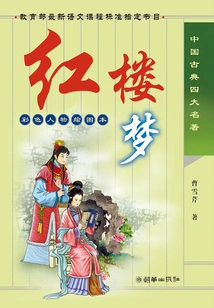
Dream of Red Mansions
General Fiction红楼梦
(qing Dynasty) Cao Xueqin
"A Dream of Red Mansions" was originally called "The Story of the Stone". The first 80 chapters of the book were written by Cao Xueqin, and the last 40 chapters were compiled by Gao E. This book centers on the daily life of Rongguo Mansion, takes the love and marriage tragedies of Baoyu, Daiyu, and Baochai as well as the trivial matters in the Grand View Garden as the main line, and uses the history of the four famous aristocratic families of Jinling, Jia, Shi, Wang, and Xue, from their peak to decline as a hidden line, showing the inevitable trend of feudal society's demise. This novel has reached the peak of our country's classical novels. "Dream of Red Mansions (set of 2 volumes)" is a great work with high ideological and artistic qualities. Judging from the ideological tendencies reflected in "Dream of Red Mansions", the author has preliminary democratic thoughts. He has a deep understanding of the real society, including the darkness of the palace and official circles, the feudal aristocracy and their families. Decay, the feudal imperial examination system, the marriage system, the slave system, the hierarchical system, as well as the corresponding social governance ideas, namely the Tao of Confucius and Mencius, Cheng-Zhu Neo-Confucianism, social moral concepts, etc., Have been deeply criticized and vague ideals and propositions of a preliminary democratic nature have been put forward. These ideals and propositions were a tortuous reflection of the budding factors of the capitalist economy that was growing at that time.
"A Dream of Red Mansions" was originally called "The Story of the Stone". The first 80 chapters of the book were written by Cao Xueqin, and the last 40 chapters were compiled by Gao E. This book centers on the daily life of Rongguo Mansion, takes the love and marriage tragedies of Baoyu, Daiyu, and Baochai as well as the trivial matters in the Grand View Garden as the main line, and uses the history of the four famous aristocratic families of Jinling, Jia, Shi, Wang, and Xue, from their peak to decline as a hidden line, showing the inevitable trend of feudal society's demise. This novel has reached the peak of our country's classical novels. "Dream of Red Mansions (set of 2 volumes)" is a great work with high ideological and artistic qualities. Judging from the ideological tendencies reflected in "Dream of Red Mansions", the author has preliminary democratic thoughts. He has a deep understanding of the real society, including the darkness of the palace and official circles, the feudal aristocracy and their families. Decay, the feudal imperial examination system, the marriage system, the slave system, the hierarchical system, as well as the corresponding social governance ideas, namely the Tao of Confucius and Mencius, Cheng-Zhu Neo-Confucianism, social moral concepts, etc., Have been deeply criticized and vague ideals and propositions of a preliminary democratic nature have been put forward. These ideals and propositions were a tortuous reflection of the budding factors of the capitalist economy that was growing at that time.
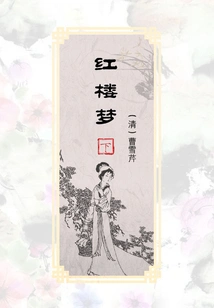
Dream of Red Mansions (part 2)
General Fiction红楼梦(下)
(qing Dynasty) Cao Xueqin
A classic that affects the entire Chinese world and an indelible chapter in the history of world literature. Hu Shi said, "The book "Dream of Red Mansions" is an autobiography of Cao Xueqin." Mao Zedong said, "I read "Dream of Red Mansions" at least three times... I read it as history." Zhang Ailing: "Someone said that the 'three major hates' are 'the first is the prickliness of anchovies, the second is the lack of fragrance in begonias.' The third one I can't remember, maybe because I subconsciously felt that it should be 'the third hate is that 'Dream of Red Mansions' is not finished."
A classic that affects the entire Chinese world and an indelible chapter in the history of world literature. Hu Shi said, "The book "Dream of Red Mansions" is an autobiography of Cao Xueqin." Mao Zedong said, "I read "Dream of Red Mansions" at least three times... I read it as history." Zhang Ailing: "Someone said that the 'three major hates' are 'the first is the prickliness of anchovies, the second is the lack of fragrance in begonias.' The third one I can't remember, maybe because I subconsciously felt that it should be 'the third hate is that 'Dream of Red Mansions' is not finished."
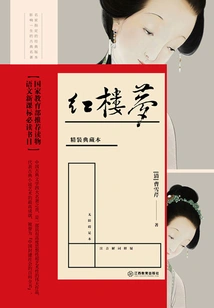
Dream of Red Mansions
General Fiction红楼梦
(qing Dynasty) Cao Xueqin
One of the "Four Great Masterpieces", it is the greatest literary masterpiece of the 18th century in China. It is based on the four major families of Jia, Shi, Wang, and Xue, and uses the love tragedy of Jia Baoyu and Lin Daiyu as the main clue. It focuses on the process of Jia Jiarong and Ning's mansion from prosperity to decline. It extensively reflects the social contradictions and class struggles at that time, and criticizes feudal ethics. It has broad and profound thoughts, exquisite art, and rich and vivid language. The book contains detailed descriptions of ancient Chinese folk customs, feudal system, worldly customs, clothing, architectural stone and other aspects. It is large in scale, rigorous in structure and all-inclusive, making it a model and pride of Chinese literature and standing in the forest of world literature.
One of the "Four Great Masterpieces", it is the greatest literary masterpiece of the 18th century in China. It is based on the four major families of Jia, Shi, Wang, and Xue, and uses the love tragedy of Jia Baoyu and Lin Daiyu as the main clue. It focuses on the process of Jia Jiarong and Ning's mansion from prosperity to decline. It extensively reflects the social contradictions and class struggles at that time, and criticizes feudal ethics. It has broad and profound thoughts, exquisite art, and rich and vivid language. The book contains detailed descriptions of ancient Chinese folk customs, feudal system, worldly customs, clothing, architectural stone and other aspects. It is large in scale, rigorous in structure and all-inclusive, making it a model and pride of Chinese literature and standing in the forest of world literature.
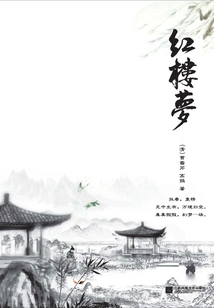
Dream of Red Mansions (two Volumes)
General Fiction红楼梦(全二册)
(qing Dynasty) Cao Xueqin
"A Dream of Red Mansions", also known as "The Story of the Stone", is revered as the first of the four classic Chinese classics. It is not only the first work of Chinese classical novels, it can be called an encyclopedia of Chinese feudal society, a master of traditional culture, and a shining pearl in the ocean of world literature. As a human novel with global influence, the book reveals the crisis of the feudal apocalypse through the tragedy of the family, the tragedy of the daughter and the tragedy of the protagonist's life. The whole book takes the rise and fall of the four major families of Jia, Shi, Wang and Xue as the background, takes the family trivial matters and boudoir leisurely affairs of the Jia family as the context, takes the love and marriage stories of Jia Baoyu, Lin Daiyu and Xue Baochai as the main line, and focuses on describing the process of the Jia Jiarong and Ning families from prosperity to decline.
"A Dream of Red Mansions", also known as "The Story of the Stone", is revered as the first of the four classic Chinese classics. It is not only the first work of Chinese classical novels, it can be called an encyclopedia of Chinese feudal society, a master of traditional culture, and a shining pearl in the ocean of world literature. As a human novel with global influence, the book reveals the crisis of the feudal apocalypse through the tragedy of the family, the tragedy of the daughter and the tragedy of the protagonist's life. The whole book takes the rise and fall of the four major families of Jia, Shi, Wang and Xue as the background, takes the family trivial matters and boudoir leisurely affairs of the Jia family as the context, takes the love and marriage stories of Jia Baoyu, Lin Daiyu and Xue Baochai as the main line, and focuses on describing the process of the Jia Jiarong and Ning families from prosperity to decline.
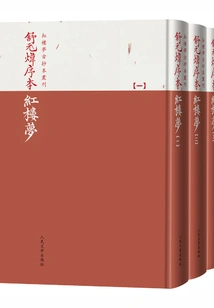
舒元炜序本红楼梦(全3册)
(qing Dynasty) Cao Xueqin
Shu Yuanwei's preface to "Dream of Red Mansions", chapters 1 to 40, originally collected by Wu Xiaoling, now in the Capital Library. Zhu Nanxian has a photocopied copy, which is stored in the National Library. Shu Xu dated the fifty-fourth year of Qianlong's reign (1789) as the "Jiyou" year, so edition researchers also called it the "Jiyou edition". It has important edition research value and can be used as a supplement to the "A Dream of Red Mansions Ancient Manuscripts Series".
Shu Yuanwei's preface to "Dream of Red Mansions", chapters 1 to 40, originally collected by Wu Xiaoling, now in the Capital Library. Zhu Nanxian has a photocopied copy, which is stored in the National Library. Shu Xu dated the fifty-fourth year of Qianlong's reign (1789) as the "Jiyou" year, so edition researchers also called it the "Jiyou edition". It has important edition research value and can be used as a supplement to the "A Dream of Red Mansions Ancient Manuscripts Series".
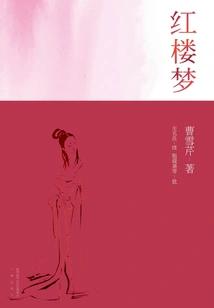
A Dream of Red Mansions (complete Collection)
General Fiction红楼梦(全集)
(qing Dynasty) Cao Xueqin
A "Dream of Red Mansions" in its original form suitable for today's readers. You no longer need to read so many versions to experience the fun of reading "Dream of Red Mansions". The editing of this edition took three years. The first 80 chapters were completely revised based on the fat version, and the last 40 chapters of Cheng Gao's version were used to complete the full text. It absorbs the important research results of red studies in recent decades and refers to several representative contemporary school textbooks. While drawing on the best of others, it also makes a large number of corrections. The author's original writing is fully restored in terms of words, text structure, and language style. It is another major breakthrough in the 226-year publishing history of "Dream of Red Mansions".
A "Dream of Red Mansions" in its original form suitable for today's readers. You no longer need to read so many versions to experience the fun of reading "Dream of Red Mansions". The editing of this edition took three years. The first 80 chapters were completely revised based on the fat version, and the last 40 chapters of Cheng Gao's version were used to complete the full text. It absorbs the important research results of red studies in recent decades and refers to several representative contemporary school textbooks. While drawing on the best of others, it also makes a large number of corrections. The author's original writing is fully restored in terms of words, text structure, and language style. It is another major breakthrough in the 226-year publishing history of "Dream of Red Mansions".