Library
Browse and search books
4 novels found
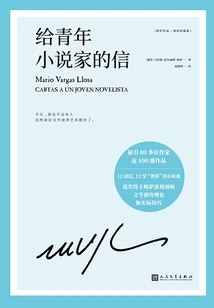
略萨作品:给青年小说家的信
(peru)mario Vargas Llosa
This is a collection of essays devoted to novel writing talents and writing skills. It consists of twelve letters written by Vargas Llosa to a young novelist who is passionate about writing. In the letter, Llosa shared his lifelong creative ideas and reading experience, and quoted nearly 100 works by more than 80 writers, including Cervantes, Flaubert, Hugo, Hemingway, Kafka, Faulkner, Borges, García Márquez, Robbe-Grillet, Virginia Woolf, Juan Rulfo... He provided penetrating analysis and insights into a series of basic issues regarding technique and form in novel creation.
This is a collection of essays devoted to novel writing talents and writing skills. It consists of twelve letters written by Vargas Llosa to a young novelist who is passionate about writing. In the letter, Llosa shared his lifelong creative ideas and reading experience, and quoted nearly 100 works by more than 80 writers, including Cervantes, Flaubert, Hugo, Hemingway, Kafka, Faulkner, Borges, García Márquez, Robbe-Grillet, Virginia Woolf, Juan Rulfo... He provided penetrating analysis and insights into a series of basic issues regarding technique and form in novel creation.
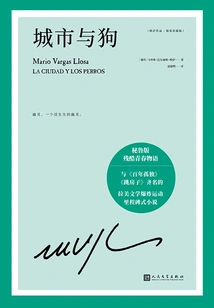
Llosa's Works: the City and the Dog
General Fiction略萨作品:城市与狗
(peru)mario Vargas Llosa
The story begins with several military academy cadets planning to steal chemistry test papers and sell test questions. The school authorities discovered the theft and ordered the thief to surrender, otherwise the entire class would be punished. Someone reported the thief, and the "boss" of the theft gang vowed to find the informer. Soon, during a live-fire exercise, a cadet nicknamed "Slave" was shot and killed... "City and Dogs" was written by Vargas Llosa based on his personal experience of studying in a military academy as a boy. It is set on the Leoncio Prado Military School in Lima, the capital of Peru, and the bustling city of Lima. It revolves around several military academy cadets and depicts the brutal lives of the cadets and their various conflicts with the school authorities. This was the first novel published by Vargas Llosa when he was 27 years old. In 1962, before the novel was published, it won the Spanish Concise Book Series Award. After its publication in 1963, it won the Spanish Critics Award, making Vargas Llosa famous in one fell swoop. The novel was banned in the author's native Peru shortly after its publication. The military government at the time burned 1,500 copies of the Peruvian edition of "Cities and Dogs" at the Leoncio Prado Military School, the author's alma mater. The City and the Dog is considered by some critics to be one of four landmark novels (the other three being Carlos Fuentes' "The Death of Artemio Cross," Julio Cortázar's "Hopscotch" and García Márquez's "One Hundred Years of Solitude") that marked the unfolding of the Latin American literary explosion. In 2001, the book was selected as one of the "100 Best Spanish Novels of the 20th Century" by Spanish newspaper El Mundo.
The story begins with several military academy cadets planning to steal chemistry test papers and sell test questions. The school authorities discovered the theft and ordered the thief to surrender, otherwise the entire class would be punished. Someone reported the thief, and the "boss" of the theft gang vowed to find the informer. Soon, during a live-fire exercise, a cadet nicknamed "Slave" was shot and killed... "City and Dogs" was written by Vargas Llosa based on his personal experience of studying in a military academy as a boy. It is set on the Leoncio Prado Military School in Lima, the capital of Peru, and the bustling city of Lima. It revolves around several military academy cadets and depicts the brutal lives of the cadets and their various conflicts with the school authorities. This was the first novel published by Vargas Llosa when he was 27 years old. In 1962, before the novel was published, it won the Spanish Concise Book Series Award. After its publication in 1963, it won the Spanish Critics Award, making Vargas Llosa famous in one fell swoop. The novel was banned in the author's native Peru shortly after its publication. The military government at the time burned 1,500 copies of the Peruvian edition of "Cities and Dogs" at the Leoncio Prado Military School, the author's alma mater. The City and the Dog is considered by some critics to be one of four landmark novels (the other three being Carlos Fuentes' "The Death of Artemio Cross," Julio Cortázar's "Hopscotch" and García Márquez's "One Hundred Years of Solitude") that marked the unfolding of the Latin American literary explosion. In 2001, the book was selected as one of the "100 Best Spanish Novels of the 20th Century" by Spanish newspaper El Mundo.
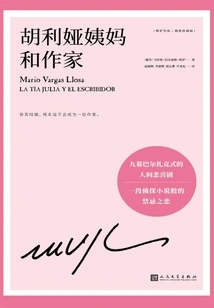
略萨作品:胡利娅姨妈和作家(精装珍藏版)
(peru)mario Vargas Llosa
There are two writers in this contemporary novel with a unique style and extraordinary structure: one is an 18-year-old college student who is in love with his aunt, and the future writer Llosa who dreams of settling in Paris; the other is a genius storyteller, an artist who draws social custom paintings, and the impoverished radio playwright Camacho. Little Llosa, a future writer, worked hard to write novels one after another based on family gossip and anecdotes, but failed again and again. The manuscripts were either thrown into the trash can, shelved, or laughed at. At the same time, radio playwright Camacho quickly created, rehearsed, and produced legendary radio dramas that were absurd, popular, and highly successful. Nine scenes of humble and tragic human tragedy and comedy run through the main line of the love story between Aunt Julia and the future writer, reflecting the gorgeous and ridiculous life of the talented writer. As the ruthless business owner of the broadcast company admired: he turned all the stories into one story. And this story may be everyone's story.
There are two writers in this contemporary novel with a unique style and extraordinary structure: one is an 18-year-old college student who is in love with his aunt, and the future writer Llosa who dreams of settling in Paris; the other is a genius storyteller, an artist who draws social custom paintings, and the impoverished radio playwright Camacho. Little Llosa, a future writer, worked hard to write novels one after another based on family gossip and anecdotes, but failed again and again. The manuscripts were either thrown into the trash can, shelved, or laughed at. At the same time, radio playwright Camacho quickly created, rehearsed, and produced legendary radio dramas that were absurd, popular, and highly successful. Nine scenes of humble and tragic human tragedy and comedy run through the main line of the love story between Aunt Julia and the future writer, reflecting the gorgeous and ridiculous life of the talented writer. As the ruthless business owner of the broadcast company admired: he turned all the stories into one story. And this story may be everyone's story.
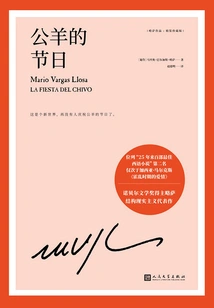
Llosa's Works: the Festival of the Ram
General Fiction略萨作品:公羊的节日
(peru)mario Vargas Llosa
Why did Urania return to the land she vowed never to set foot again after thirty-five years of absence from her motherland? Why has she been filled with fear since she was fourteen? Why did she never visit and greet her father? Facing her aunt's questioning, Urania slowly recounted the painful memories of more than thirty years ago, the intricate political conspiracies, and the secret that ruined her life... Llosa used realistic writing and a three-line narrative structure to describe Urania's recollections of the past, how Trujillo, the dictator of the Dominican Republic, started his day and a breathtaking assassination, revealing the mysterious relationship between dictatorship, power, corruption and sex. Among the "100 Best Spanish Novels from 1982 to 2007" selected in 2007, "Festival of the Rams" ranked second, second only to García Márquez's "Love in the Time of Cholera".
Why did Urania return to the land she vowed never to set foot again after thirty-five years of absence from her motherland? Why has she been filled with fear since she was fourteen? Why did she never visit and greet her father? Facing her aunt's questioning, Urania slowly recounted the painful memories of more than thirty years ago, the intricate political conspiracies, and the secret that ruined her life... Llosa used realistic writing and a three-line narrative structure to describe Urania's recollections of the past, how Trujillo, the dictator of the Dominican Republic, started his day and a breathtaking assassination, revealing the mysterious relationship between dictatorship, power, corruption and sex. Among the "100 Best Spanish Novels from 1982 to 2007" selected in 2007, "Festival of the Rams" ranked second, second only to García Márquez's "Love in the Time of Cholera".