Library
Browse and search books
1 novel found
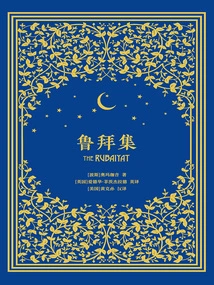
Rubaiyat
Literature鲁拜集
(persia) Omargayin
"Rubai" refers to the Persian four-line poem style. Among them, "Rubai" created by Omar Gayan, a Persian mathematician and astronomer in the 11th century, is widely circulated and has become a masterpiece in the history of world literature. In the 19th century, the British writer Edward Fitzgerald selected and translated 101 "Rubaiyat" poems by Omajia and compiled them into the "Rubaiyat". His English translation has beautiful diction and vivid artistic conception, attracting generations of readers and becoming a famous article in English literature. In China, "The Rubaiyat" has also continued to attract writers and poets to translate and create creations. Famous writers such as Guo Moruo, Hu Shi, Wen Yiduo, Xu Zhimo, and Zhu Xiang have all translated "The Rubaiyat". So far, there are about twenty translations. The Yilin Publishing House edition uses Fitzgerald's English translation and the Chinese translation by physicist and poet Huang Kesun. He translated it with seven-character quatrains, which won high praise from Mr. Qian Zhongshu.
"Rubai" refers to the Persian four-line poem style. Among them, "Rubai" created by Omar Gayan, a Persian mathematician and astronomer in the 11th century, is widely circulated and has become a masterpiece in the history of world literature. In the 19th century, the British writer Edward Fitzgerald selected and translated 101 "Rubaiyat" poems by Omajia and compiled them into the "Rubaiyat". His English translation has beautiful diction and vivid artistic conception, attracting generations of readers and becoming a famous article in English literature. In China, "The Rubaiyat" has also continued to attract writers and poets to translate and create creations. Famous writers such as Guo Moruo, Hu Shi, Wen Yiduo, Xu Zhimo, and Zhu Xiang have all translated "The Rubaiyat". So far, there are about twenty translations. The Yilin Publishing House edition uses Fitzgerald's English translation and the Chinese translation by physicist and poet Huang Kesun. He translated it with seven-character quatrains, which won high praise from Mr. Qian Zhongshu.