Library
Browse and search books
4 novels found
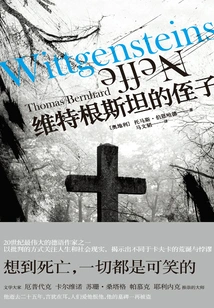
Bernhard Series: Wittgenstein's Nephew
Literature伯恩哈德作品系列:维特根斯坦的侄子
(o) Thomas Bernhard
The first volume in a series of Bernhard's works, "Wittgenstein's Nephew" contains three stories about death. "Persian Women": A story of love, revenge and death. "Wittgenstein's Nephew: A Friendship": A story of friendship, understanding and death. "The Hatter": A story about family, respect and death. Bernhard said at the Austrian National Literature Prize Award Ceremony: "If you think about death, everything is ridiculous... What we are thinking is lagging thinking, what we are feeling is chaos, and it is not clear what we are. We don't have to be ashamed, we are nothing."
The first volume in a series of Bernhard's works, "Wittgenstein's Nephew" contains three stories about death. "Persian Women": A story of love, revenge and death. "Wittgenstein's Nephew: A Friendship": A story of friendship, understanding and death. "The Hatter": A story about family, respect and death. Bernhard said at the Austrian National Literature Prize Award Ceremony: "If you think about death, everything is ridiculous... What we are thinking is lagging thinking, what we are feeling is chaos, and it is not clear what we are. We don't have to be ashamed, we are nothing."
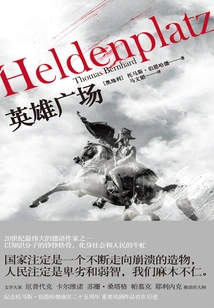
Bernhard's Works Series: Heroes' Square
General Fiction伯恩哈德作品系列:英雄广场
(o) Thomas Bernhard
Thomas Bernhard is not only one of the few great novelists in the German-speaking world after World War II, but also a unique and famous dramatist. His plays are famous for their profound thinking and sharp criticism. He created a total of 18 plays in his life, and "Heroes' Square" selected 3 of his representative plays. It is not difficult to imagine how his overwhelming and subtle language art can make the listeners resonate, or feel fear.
Thomas Bernhard is not only one of the few great novelists in the German-speaking world after World War II, but also a unique and famous dramatist. His plays are famous for their profound thinking and sharp criticism. He created a total of 18 plays in his life, and "Heroes' Square" selected 3 of his representative plays. It is not difficult to imagine how his overwhelming and subtle language art can make the listeners resonate, or feel fear.
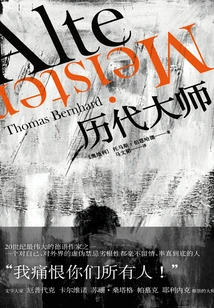
Bernhard Works Series: Masters of the Past
General Fiction伯恩哈德作品系列:历代大师
(o) Thomas Bernhard
Those who talk about art history all day long come here every day to fill the visitors' ears with their nonsense about art history. They drive more than a dozen classes of students through the museum's exhibition halls every day, and ruin the lives of these naive children with their endless nonsense. Those who study art history are actually those who destroy art. Art historians talk about art until they die. Art is talked to death by art historians. --"Masters of the Past" Music critic Reger would go to the Kunsthistorisches Museum every other day and sit in front of the same portrait of Tintoretto for more than thirty years, until one day his wife passed away. Six months later, he appeared in front of the portrait again and invited his old friend Atzbacher to meet him at the museum the next day. Through Atzbacher's eyes, we get to know Reger: the death of his wife, his thoughts about suicide, his comments about the masters, and, finally, the purpose of the meeting. At once pessimistic and elated, both hateful and hilarious, The Masters is a satirical comedy about culture, genius, nation, class, artistic merit and human pretension.
Those who talk about art history all day long come here every day to fill the visitors' ears with their nonsense about art history. They drive more than a dozen classes of students through the museum's exhibition halls every day, and ruin the lives of these naive children with their endless nonsense. Those who study art history are actually those who destroy art. Art historians talk about art until they die. Art is talked to death by art historians. --"Masters of the Past" Music critic Reger would go to the Kunsthistorisches Museum every other day and sit in front of the same portrait of Tintoretto for more than thirty years, until one day his wife passed away. Six months later, he appeared in front of the portrait again and invited his old friend Atzbacher to meet him at the museum the next day. Through Atzbacher's eyes, we get to know Reger: the death of his wife, his thoughts about suicide, his comments about the masters, and, finally, the purpose of the meeting. At once pessimistic and elated, both hateful and hilarious, The Masters is a satirical comedy about culture, genius, nation, class, artistic merit and human pretension.
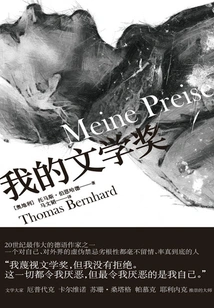
Bernhard Series: My Literary Prize
Literature伯恩哈德作品系列:我的文学奖
(o) Thomas Bernhard
"My Literary Award" is a collection of writer Bernhard's memories of several literary awards he won and the speeches he gave at the award ceremony. Bernhard is a frequent recipient of literary awards and has won dozens of important awards, including the most important Buchner Prize in German literature, the Austrian National Prize, etc. But he soon lost interest in winning awards and refused to accept any literary awards. In the mid-1970s, Bernhard was twice nominated as a candidate for the Nobel Prize. In the end, the Swedish jury decided to avoid touching this thorn in view of his attitude towards the award.
"My Literary Award" is a collection of writer Bernhard's memories of several literary awards he won and the speeches he gave at the award ceremony. Bernhard is a frequent recipient of literary awards and has won dozens of important awards, including the most important Buchner Prize in German literature, the Austrian National Prize, etc. But he soon lost interest in winning awards and refused to accept any literary awards. In the mid-1970s, Bernhard was twice nominated as a candidate for the Nobel Prize. In the end, the Swedish jury decided to avoid touching this thorn in view of his attitude towards the award.