Library
Browse and search novels
16 novels found

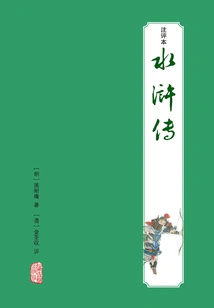
Annotated Version of Water Margin
Literature水浒传注评本
(ming Dynasty) Shi Naian
This book is based on the "Fifth Talent Book Shi Naian Water Margin" photocopied by Liu Fu collected by Zhonghua Book Company in the Ming Dynasty in the Guanhua Hall of Chongzhen of the Ming Dynasty in the 23rd year of the Republic of China. It is based on the "Fifth Talent Book Shi Naian Water Margin" reprinted by Ye Yaochi photocopied by the Zhonghua Book Company in Beijing in 1975 and the "Fifth Talent Book Shi Naian Water Margin" engraved by Wang Wangru in Qing Dynasty as a reference. Jin Shengtan's reading and criticizing of "Water Margin" is one of the characteristic comments in the history of Chinese literature. It has attracted overwhelming praise and slander. The debate about its merits and demerits is no less than that of Gao E's sequel to "Dream of Red Mansions".

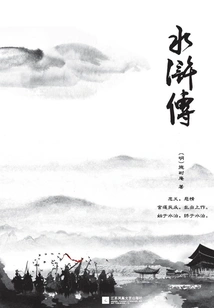
Water Margin
General Fiction水浒传
(ming Dynasty) Shi Naian
In the popular version of "Water Margin", the heroes of Liangshan did justice for heaven, but in the end they were recruited. Most of them were killed in the battle against Fang La, and the surviving heroes rarely died well. Such an ending made many readers who loved "Water Margin" feel dissatisfied and confused. That's why the young novice Huailin said that Song Jiang was a "real robber with fake Taoism", while Jin Shengtan called it "a dog's tail that continues the mink" and simply cut him in half. In fact, in the real ancient version of "Water Margin", the heroes of Liangshan carried out the uprising to the end. However, after hundreds of years of changes, it is difficult for people to have the opportunity to see this version again. In this sense, Mei's collection of "Water Margin" is a "Water Margin" that deserves more attention and more anticipation.

Ancient Version of Water Margin (2)
General Fiction古本水浒传(2)
(ming Dynasty) Shi Naian
This book is a collection of "Ancient Water Margin" written by Mr. Mei Jihe during the Republic of China, that is, the last fifty chapters are not allowed to be banned. The first 70 chapters are basically consistent with the Guanhuatang version of "Water Margin" reviewed by Jin Shengtan; while the last 50 chapters are completely different from the currently popular 120-chapter version of "Water Margin". The Liangshan heroes here were not recruited. Until Chapter 120, they were still fighting bloody battles with the government troops. The next 50 chapters were separately typed and printed by Shanghai Zhongxi Book Company in 1933. The preface by Mr. Mei Jihe recorded the details of the publication at that time. The last 50 chapters of "Ancient Water Margin" have twists and turns in the plot and distinctive characters. Some scholars believe that it is the same author as the first 70 chapters. By comparing and analyzing the last 50 chapters with the first 70 chapters, we found that the plot structures before and after are coherent and consistent, and the layout echoes back and forth, forming a tight unity; without the former, the latter cannot be established; without the latter, many plot arrangements in the first 70 chapters are difficult to understand accurately. The characteristics of the characters before and after are consistent. The main characters in the last 50 chapters can be judged by their words and deeds. None of the other sequels that can be seen now can reach this level. The world view reflected before and after is consistent; the artistic style is consistent; especially the language characteristics of the times and local characteristics are also consistent.

Water Margin (complete Works)
General Fiction水浒传(全集)
(ming Dynasty) Shi Naian
"Water Margin" is a must-read classic novel for Chinese people. It has twists and turns in the plot, intense story conflicts and superb narrative skills, creating one hundred and eight lifelike characters with different personalities. It is not only a literary classic, but also has a profound impact on Chinese culture in terms of art, philosophy, thought, etc., And is an indispensable part of Chinese traditional culture.

Water Margin (two Volumes)
General Fiction水浒传(全二册)
(ming Dynasty) Shi Naian
"Water Margin" is the first vernacular chapter novel in the history of Chinese literature, setting a precedent for Chinese vernacular novels. Together with "A Dream of Red Mansions", "The Romance of the Three Kingdoms" and "Journey to the West", it is also known as the "Four Great Masterpieces of Chinese Classical Literature". The novel is based on the story of the Song Jiang Uprising in the late Northern Song Dynasty. It takes the society during the Huizong period as the background and portrays 108 heroes including Song Jiang, Lu Zhishen, Lin Chong, and Wu Song. The tragic story of the government, Juyi Liangshan, accepting recruitment, conquering the South and the North, and finally shocking the Lord due to his outstanding achievements, but being killed by treacherous ministers, shows a chaotic society where the government forces the people to rebel, and eulogizes the social ideals of the people at the bottom who resist tyranny and yearn for freedom and justice. "In the Name of the People": A project director of a national ministry was reported to have taken tens of millions of dollars in bribes...

Ancient Version of Water Margin (3)
General Fiction古本水浒传(3)
(ming Dynasty) Shi Naian
The first 70 chapters of this book are basically consistent with the Guanhuatang version of "Water Margin" reviewed by Jin Shengtan; and the last 50 chapters are completely different from the currently popular 120-chapter version of "Water Margin". The Liangshan heroes here were not recruited. Until Chapter 120, they were still fighting bloody battles with the government troops. The next 50 chapters were separately typed and printed by Shanghai Zhongxi Book Company in 1933. The preface by Mr. Mei Jihe recorded the details of the publication at that time. The last 50 chapters of "Ancient Water Margin" have twists and turns in the plot and distinctive characters. Some scholars believe that it is the same author as the first 70 chapters. By comparing and analyzing the last 50 chapters with the first 70 chapters, we found that the plot structures before and after are coherent and consistent, and the layout echoes back and forth, forming a tight unity; without the former, the latter cannot be established; without the latter, many plot arrangements in the first 70 chapters are difficult to understand accurately. The characteristics of the characters before and after are consistent. The main characters in the last 50 chapters can be judged by their words and deeds. None of the other sequels that can be seen now can reach this level. The world view reflected before and after is consistent; the artistic style is consistent; especially the language characteristics of the times and local characteristics are also consistent.

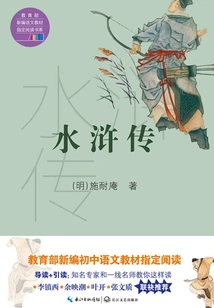
Water Margin
General Fiction水浒传
(ming Dynasty) Shi Naian
"Water Margin" is based on the heroic story of 108 heroes headed by Song Jiang in the late Northern Song Dynasty. They gathered in Liangshanpo, were recruited by the court, and then conquered the four bandits and destroyed the rebel party. In the end, they were murdered by traitors. The content of "Water Margin" can be divided into two parts. The first seventy chapters are a large part, mainly criticizing the decadent cruelty of the ruling class and praising the resistance spirit of the uprising heroes; after the seventy chapters, the other part is about the conquest of Zhao'an, the conquest of Liao, the conquest of Tianhu, the conquest of Wangqing, and the conquest of Fangla. The first part is about the people's rebellion against the government, which reflects class contradictions; the latter part is about loyal ministers rebelling against treacherous ministers, which reflects the internal contradictions of the ruling class. After Song Jiang and others were recruited, they were squeezed out and framed by traitorous officials everywhere, and were even killed in the end.

四大名著(青少版)全四册:水浒传
(ming Dynasty) Shi Naian
This series of books includes "A Dream of Red Mansions", "The Romance of the Three Kingdoms", "Water Margin" and "Journey to the West". These four works are well-known to every household and have a profound influence in our country. They are rare masterpieces in Chinese literature. The stories and scenes in it have profoundly affected Chinese people's ideas and value orientations. The four works have been praised by readers of all ages for their extremely high artistic level, detailed characterization and rich ideological connotation.

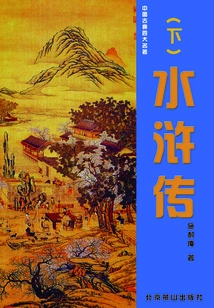
Water Margin (part 2)
General Fiction水浒传(下)
(ming Dynasty) Shi Naian
The contents of this book include "Execution of treasures and treasures, Sun Li and Sun Xin's great robbery", "Wu Xuexue used a series of tricks to attack Zhujiazhuang three times in Song Gongming and Ming Dynasties", "Hit Bai Xiuying with a winged tiger shackles and the beautiful bearded man accidentally missed Xiaoyanei", "Li Kui killed Yin Tian and Xichai Jin fell into Gaotangzhou", "Dai Zong outsmarted Gongsun and defeated Li Kui in killing Luo Zhenren with an ax", etc.

The Ancient Version of Water Margin That You Haven't Read (set of 3 Volumes in Total)
General Fiction你没看过的古本水浒传(套装共3册)
(ming Dynasty) Shi Naian
The first 70 chapters of this book are basically consistent with the Guanhuatang version of "Water Margin" reviewed by Jin Shengtan; while the last 50 chapters are completely different from the currently popular 120-chapter version of "Water Margin". The Liangshan heroes here were not recruited. Until Chapter 120, they were still fighting bloody battles with the government troops. The next 50 chapters were separately typed and printed by Shanghai Zhongxi Book Company in 1933. The preface by Mr. Mei Jihe recorded the details of the publication at that time. The last 50 chapters of "Ancient Water Margin" have twists and turns in the plot and distinctive characters. Some scholars believe that it is the same author as the first 70 chapters. By comparing and analyzing the last 50 chapters with the first 70 chapters, we found that the plot structures before and after are coherent and consistent, and the layout echoes back and forth, forming a tight unity; without the former, the latter cannot be established; without the latter, many plot arrangements in the first 70 chapters are difficult to understand accurately. The characteristics of the characters before and after are consistent. The main characters in the last 50 chapters can be judged by their words and deeds. None of the other sequels that can be seen now can reach this level. The world view reflected before and after is consistent; the artistic style is consistent; especially the language characteristics of the times and local characteristics are also consistent.

Water Margin
General Fiction水浒传
(ming Dynasty) Shi Naian
"Water Margin", also known as "The Complete Story of Water Margin of Loyalty and Righteousness", is one of China's four great classics and the first chapter-style novel written in vernacular Chinese in the history of Chinese literature. The material of this book originates from the story of the peasant uprising led by Song Jiang in the late Northern Song Dynasty. Through storytelling, opera and other performance forms in the Jin and Yuan Dynasties, and through the artistic processing of many artists, it was compiled into scripts and dramas and was widely circulated among the people. During the late Yuan and early Ming dynasties, Shi Naian artistically processed these materials and wrote this book. "Water Margin" mainly tells the story of 108 upright and kind-hearted heroes who were forced to become bandits during the Huizong period of the Northern Song Dynasty due to the emperor's stupidity and corrupt officials who framed Zhongliang. These heroes gathered in Liangshan Mountain to punish evil and promote good under the banner of "doing justice for heaven, robbing the rich and giving to the poor", which dealt a heavy blow to the arrogance of the ruling class.

Water Margin
General Fiction水浒传
(ming Dynasty) Shi Naian
"Water Margin" tells the story of a hundred and eight generals in Liangshan who were in the water, resisting the army and doing justice for heaven. The book describes in detail the process by which Liangshan heroes continued to grow and fight against the imperial court. In addition to the twists and turns of the story and the distinctive characters, it is also a hymn to a heroic legend. The excerpt from this book ends with the gathering at Liangshan.

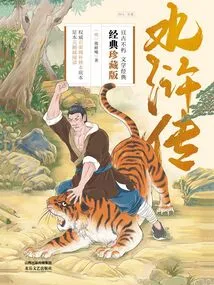
水浒传:经典插图评点本(全二册)
(ming Dynasty) Shi Naian
"Water Margin" is the first full-length novel written in vernacular Chinese in Chinese history, setting a precedent for vernacular chapter-style novels. The work tells the story of a group of green forest heroes headed by Song Jiang in Liangshanbo, Shandong Province in the Northern Song Dynasty. They were forced to kill the rich and help the poor, and gradually grew and grew until they accepted the imperial court's invitation to conquer the country. The novel has a tortuous plot, vivid language, and distinctive characters. It has a high degree of artistic achievement and is listed as one of the "Four Great Masterpieces" of Chinese classical novels.

Water Margin (part 2)
General Fiction水浒传(下)
(ming Dynasty) Shi Naian
Pearl S. Buck, a Chinese heroic romance novel highly praised by foreigners, Nobel Prize winner in Literature and American female writer: "The work "Water Margin" has always been great and full of significance for all mankind, even though centuries have passed since its publication." "Encyclopedia Britannica": "The novel "Water Margin" in the late Yuan Dynasty and early Ming Dynasty received universal acclaim because it appeared in the ranks of historical masterpieces in a popular spoken form. It is considered the most meaningful literary work."

Water Margin (Part 1)
General Fiction水浒传(上)
(ming Dynasty) Shi Naian
The Chinese heroic and legendary novels that are highly praised by foreigners, Nobel Prize winner and American female writer Pearl S. Buck: "The work "Water Margin" has always been great and full of significance for all mankind, even though it has changed since its publication. Several centuries have passed." "Encyclopedia Britannica": "The novel "Water Margin" in the late Yuan and early Ming Dynasties has received universal acclaim for its emergence in the ranks of historical masterpieces in popular spoken language. It is considered to be the most significant literary work. "

Water Margin
General Fiction水浒传
(ming Dynasty) Shi Naian
"Water Margin" is my country's first chapter-length novel with the theme of peasant uprising. It is a model work of ancient heroic romance novels. For hundreds of years, it has been deeply loved by the people of our country and even the world.