Library
Browse and search books
7 novels found
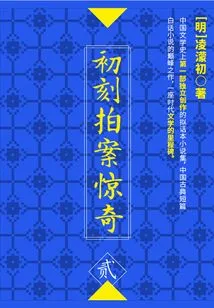
Surprise at the First Moment of Filming·2
General Fiction初刻拍案惊奇·贰
(ming Dynasty) Ling Shuchu
"The Surprise at the First Moment" is a popular book with 40 short stories in total. It describes many fascinating stories in the form of a "parallel script" that is popular among the people. One is that a businessman rises from bad luck to wealth, and a scholar rises from poverty. Become famous after being cold; honest officials are like gods in solving cases, corrupt officials are like tigers in perverting the law; villains are committing adultery and soliciting lawsuits, and swindlers are cheating on each other; such as "The man in transit met the red in Dongting by chance, the Persian finger broke the dragon's shell", "Li Gongzuo cleverly interpreted the words in the dream, Xie Xiao'e cleverly captured the thief on the ship", etc. The second is works describing love and marriage, describing how young people pursue faithful love, and how feudal ethics create marriage tragedies, such as "Zhang Liuer cleverly creates a enchantment formation, Lu Huiniang decides to fight to the death", "Drinking with wine, Zhao Ni is obsessed with flowers, and the machine is hidden, and the scholar complains", "The light of the boudoir's heart is strong, and the flag and bell of victory are reported in the jail", etc. The language is simple and concise; the plot is twists and turns, confusing, yet reasonable; the characters' inner thoughts are described in detail, and the artistic image is lifelike. It has always been highly praised.
"The Surprise at the First Moment" is a popular book with 40 short stories in total. It describes many fascinating stories in the form of a "parallel script" that is popular among the people. One is that a businessman rises from bad luck to wealth, and a scholar rises from poverty. Become famous after being cold; honest officials are like gods in solving cases, corrupt officials are like tigers in perverting the law; villains are committing adultery and soliciting lawsuits, and swindlers are cheating on each other; such as "The man in transit met the red in Dongting by chance, the Persian finger broke the dragon's shell", "Li Gongzuo cleverly interpreted the words in the dream, Xie Xiao'e cleverly captured the thief on the ship", etc. The second is works describing love and marriage, describing how young people pursue faithful love, and how feudal ethics create marriage tragedies, such as "Zhang Liuer cleverly creates a enchantment formation, Lu Huiniang decides to fight to the death", "Drinking with wine, Zhao Ni is obsessed with flowers, and the machine is hidden, and the scholar complains", "The light of the boudoir's heart is strong, and the flag and bell of victory are reported in the jail", etc. The language is simple and concise; the plot is twists and turns, confusing, yet reasonable; the characters' inner thoughts are described in detail, and the artistic image is lifelike. It has always been highly praised.
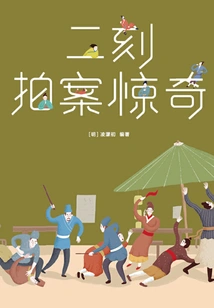
三言二拍:二刻拍案惊奇
(ming Dynasty) Ling Shuchu
"Surprise at Two Moments" is a collection of novels written in the form of a storybook. Compiled by Ling Shuchu in the late Ming Dynasty. It was published as a book in 1632 (the fifth year of Chongzhen), and together with the author's previous book "The Surprise at the First Carving of Pai Ben", it is collectively known as "Er Pai". There are forty volumes, each with one chapter, forty chapters in total. Volume twenty-three of them, "The soul of the elder sister has fulfilled her long-cherished wish, and the illness of the aunt continues the relationship" is the same as volume twenty-three of "The Surprise at the First Carving of the Case". Volume forty has been lost, and the Zaju "Song Gongming Lantern Festival Zaju" was added to make up the number. The author claims that "the puppet show is based on one or two odd situations that have been heard in ancient and modern times and can be recorded." Most of the themes are taken from the predecessors. The ideological content of the book is relatively complex, but overall, it reflects the ideological concepts of the emerging citizen class to a certain extent, and the traditional morality it advocates also has undeniable healthy elements. It has a relatively important influence in the history of Chinese literature.
"Surprise at Two Moments" is a collection of novels written in the form of a storybook. Compiled by Ling Shuchu in the late Ming Dynasty. It was published as a book in 1632 (the fifth year of Chongzhen), and together with the author's previous book "The Surprise at the First Carving of Pai Ben", it is collectively known as "Er Pai". There are forty volumes, each with one chapter, forty chapters in total. Volume twenty-three of them, "The soul of the elder sister has fulfilled her long-cherished wish, and the illness of the aunt continues the relationship" is the same as volume twenty-three of "The Surprise at the First Carving of the Case". Volume forty has been lost, and the Zaju "Song Gongming Lantern Festival Zaju" was added to make up the number. The author claims that "the puppet show is based on one or two odd situations that have been heard in ancient and modern times and can be recorded." Most of the themes are taken from the predecessors. The ideological content of the book is relatively complex, but overall, it reflects the ideological concepts of the emerging citizen class to a certain extent, and the traditional morality it advocates also has undeniable healthy elements. It has a relatively important influence in the history of Chinese literature.
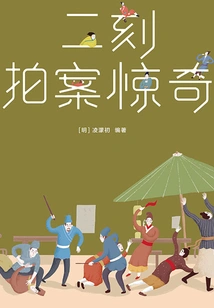
Three Words, Two Shots, Two Moments of Surprise
General Fiction三言二拍·二刻拍案惊奇
(ming Dynasty) Ling Shuchu
"Three Words and Two Pai" is a collection of short stories in ancient Chinese vernacular, including "Three Words": "Mingyan Yan", "Warning Words" and "Everlasting Words to Awaken the World" compiled by the literary master Feng Menglong of the Ming Dynasty; and "Two Pai" edited by the novel master Ling Shuchu: "Surprise at the First Carving" and "Surprise at the Second Moment". "Three Words and Two Patterns" has a total of 200 classic short stories in vernacular, which completely encompasses the essence of short stories in vernacular from the Song, Yuan and Ming dynasties. Each story in the book is independent, exciting and ups and downs, such as the White Snake who forever holds down the Leifeng Pagoda, Du Shiniang who sank his treasure chest in anger, and Yu Boya who dropped his piano to say goodbye. Classic stories that are familiar to Chinese people, such as the bosom friend, are all derived from the "three words and two beats"; "Three words and two beats" are also derived from the "three words and two beats"; "Three words and two beats" are also derived from "Three words and two beats"; "It is difficult to be a master without suffering", "It is difficult to draw a dragon or a tiger, but it is difficult to draw a skeleton, and you know people and their faces but not their hearts". Thousands of thousands of years of worldly wonders, people and events are all captured in a few words and two shots; two hundred classic short stories are written about all kinds of situations in the world! Writer Da Bing strongly recommends: "Know sentient beings in the impermanent place, and know all living beings in the sentient place."
"Three Words and Two Pai" is a collection of short stories in ancient Chinese vernacular, including "Three Words": "Mingyan Yan", "Warning Words" and "Everlasting Words to Awaken the World" compiled by the literary master Feng Menglong of the Ming Dynasty; and "Two Pai" edited by the novel master Ling Shuchu: "Surprise at the First Carving" and "Surprise at the Second Moment". "Three Words and Two Patterns" has a total of 200 classic short stories in vernacular, which completely encompasses the essence of short stories in vernacular from the Song, Yuan and Ming dynasties. Each story in the book is independent, exciting and ups and downs, such as the White Snake who forever holds down the Leifeng Pagoda, Du Shiniang who sank his treasure chest in anger, and Yu Boya who dropped his piano to say goodbye. Classic stories that are familiar to Chinese people, such as the bosom friend, are all derived from the "three words and two beats"; "Three words and two beats" are also derived from the "three words and two beats"; "Three words and two beats" are also derived from "Three words and two beats"; "It is difficult to be a master without suffering", "It is difficult to draw a dragon or a tiger, but it is difficult to draw a skeleton, and you know people and their faces but not their hearts". Thousands of thousands of years of worldly wonders, people and events are all captured in a few words and two shots; two hundred classic short stories are written about all kinds of situations in the world! Writer Da Bing strongly recommends: "Know sentient beings in the impermanent place, and know all living beings in the sentient place."
Surprised
General Fiction拍案惊奇
(ming Dynasty) Ling Shuchu
"The Surprise at the First Moment" is a popular book with 40 short stories in total. It describes many fascinating stories in the form of a "parallel script" that is popular among the people, such as a businessman becoming rich due to bad luck, Scholars rose from poverty to fame; honest officials solved cases like gods, corrupt officials bent the law like tigers; villains committed adultery and sued, and swindlers engaged in intrigues; how young people pursued faithful love, and how feudal ethics created marital tragedies. The language is simple and concise; the plot is twists and turns, confusing, yet reasonable; the characters' inner thoughts are described in detail, and the artistic image is lifelike. It has always been highly praised.
"The Surprise at the First Moment" is a popular book with 40 short stories in total. It describes many fascinating stories in the form of a "parallel script" that is popular among the people, such as a businessman becoming rich due to bad luck, Scholars rose from poverty to fame; honest officials solved cases like gods, corrupt officials bent the law like tigers; villains committed adultery and sued, and swindlers engaged in intrigues; how young people pursued faithful love, and how feudal ethics created marital tragedies. The language is simple and concise; the plot is twists and turns, confusing, yet reasonable; the characters' inner thoughts are described in detail, and the artistic image is lifelike. It has always been highly praised.
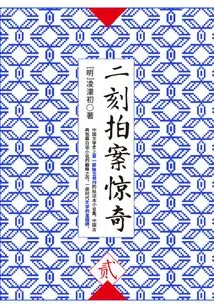
Surprise at the Second Moment of Shooting · 2
General Fiction二刻拍案惊奇·贰
(ming Dynasty) Ling Shuchu
Most of the themes of "The Surprise at the Second Moment" are taken from "Taiping Guangji", "Qidong Wild Words", "Yi Jian Zhi", "Jian Deng Xin Hua", "Jian Deng Yu Hua" and other classics. After reprocessing and re-creation by the author Ling Shuchu, it has been integrated with Ling's own ideological personality and reflected Ling's own artistic conception and style. The stories in this book reflect the broader social life of the citizen class in the late Ming Dynasty, and all themes of human ethics and morality are more or less involved. At the same time, internal and external troubles arose in the late Ming Dynasty, and social conflicts became more complex and acute. This situation is more fully demonstrated in "The Surprise at the Second Moment" than in "The Surprise at the First Moment", such as the psychological tilt caused by the disparity between the rich and the poor, the social unrest caused by bureaucratic corruption, the resistance of young men and women aroused by the feudal marriage system, the challenge of the emerging business class to the order of scholars, farmers, industry and commerce, and the rebellion of human desires against natural principles and Taoism due to the expansion of lustful world trends, etc., Which outlines a bleak picture of the declining society in the late Ming Dynasty.
Most of the themes of "The Surprise at the Second Moment" are taken from "Taiping Guangji", "Qidong Wild Words", "Yi Jian Zhi", "Jian Deng Xin Hua", "Jian Deng Yu Hua" and other classics. After reprocessing and re-creation by the author Ling Shuchu, it has been integrated with Ling's own ideological personality and reflected Ling's own artistic conception and style. The stories in this book reflect the broader social life of the citizen class in the late Ming Dynasty, and all themes of human ethics and morality are more or less involved. At the same time, internal and external troubles arose in the late Ming Dynasty, and social conflicts became more complex and acute. This situation is more fully demonstrated in "The Surprise at the Second Moment" than in "The Surprise at the First Moment", such as the psychological tilt caused by the disparity between the rich and the poor, the social unrest caused by bureaucratic corruption, the resistance of young men and women aroused by the feudal marriage system, the challenge of the emerging business class to the order of scholars, farmers, industry and commerce, and the rebellion of human desires against natural principles and Taoism due to the expansion of lustful world trends, etc., Which outlines a bleak picture of the declining society in the late Ming Dynasty.
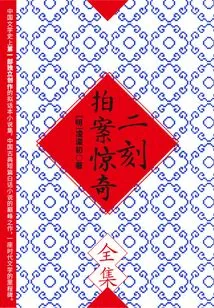
The Second Moment of Shooting is Surprising·complete Works
General Fiction二刻拍案惊奇·全集
(ming Dynasty) Ling Shuchu
Most of the themes of "The Surprise at the Second Moment" are taken from "Taiping Guangji", "Qidong Wild Words", "Yi Jian Zhi", "Jian Deng Xin Hua", "Jian Deng Yu Hua" and other classics. After reprocessing and re-creation by the author Ling Shuchu, it has been integrated with Ling's own ideological personality and reflected Ling's own artistic conception and style. The stories in this book reflect the broader social life of the citizen class in the late Ming Dynasty, and all themes of human ethics and morality are more or less involved. At the same time, internal and external troubles arose in the late Ming Dynasty, and social conflicts became more complex and acute. This situation is more fully demonstrated in "The Surprise at the Second Moment" than in "The Surprise at the First Moment", such as the psychological tilt caused by the disparity between the rich and the poor, the social unrest caused by bureaucratic corruption, the resistance of young men and women aroused by the feudal marriage system, the challenge of the emerging business class to the order of scholars, farmers, industry and commerce, and the rebellion of human desires against natural principles and Taoism due to the expansion of lustful world trends, etc., Which outlines a bleak picture of the declining society in the late Ming Dynasty.
Most of the themes of "The Surprise at the Second Moment" are taken from "Taiping Guangji", "Qidong Wild Words", "Yi Jian Zhi", "Jian Deng Xin Hua", "Jian Deng Yu Hua" and other classics. After reprocessing and re-creation by the author Ling Shuchu, it has been integrated with Ling's own ideological personality and reflected Ling's own artistic conception and style. The stories in this book reflect the broader social life of the citizen class in the late Ming Dynasty, and all themes of human ethics and morality are more or less involved. At the same time, internal and external troubles arose in the late Ming Dynasty, and social conflicts became more complex and acute. This situation is more fully demonstrated in "The Surprise at the Second Moment" than in "The Surprise at the First Moment", such as the psychological tilt caused by the disparity between the rich and the poor, the social unrest caused by bureaucratic corruption, the resistance of young men and women aroused by the feudal marriage system, the challenge of the emerging business class to the order of scholars, farmers, industry and commerce, and the rebellion of human desires against natural principles and Taoism due to the expansion of lustful world trends, etc., Which outlines a bleak picture of the declining society in the late Ming Dynasty.
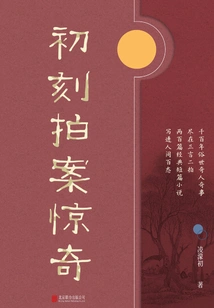
Youjian Library: Surprised at the First Moment of Filming
General Fiction有间文库:初刻拍案惊奇
(ming Dynasty) Ling Shuchu
"The Surprise at the First Moment" is a collection of Chinese novels written by Ling Shuchu in the late Ming Dynasty. The contents of the books are very complex, and their ideological tendencies are also different. They mainly include works that describe the thoughts, actions, fate of businessmen, and works that describe marriage and love. Although most of the story themes come from the writings of previous generations, after Ling's re-creation, they express the social reality and atmosphere of the times in the late Ming Dynasty, and are imbued with Ling's own ideas and cynical resentment.
"The Surprise at the First Moment" is a collection of Chinese novels written by Ling Shuchu in the late Ming Dynasty. The contents of the books are very complex, and their ideological tendencies are also different. They mainly include works that describe the thoughts, actions, fate of businessmen, and works that describe marriage and love. Although most of the story themes come from the writings of previous generations, after Ling's re-creation, they express the social reality and atmosphere of the times in the late Ming Dynasty, and are imbued with Ling's own ideas and cynical resentment.