Library
Browse and search books
1 novel found
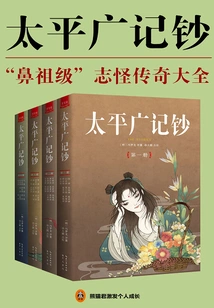
Taiping Guangji Notes (four Volumes)
General Fiction太平广记钞(全四册)
(ming Dynasty) Commentary And Compilation By Feng Menglong And Editing By Sun Dapeng
From "Liao Zhai" to "The Romance of the West Chamber", everything has been "copied" from it! Feng Menglong carefully compiled and annotated the "originator-level" legends of legends of monsters. Lu Xun bluntly said that he would never buy another book about fox ghosts again. There are 40 prototypes of stories in "Strange Stories from a Chinese Studio" recorded in this book, such as "Taoist of Mount Laoshan", "Xu Huangliang", "Huifang", "Jia Feng Pheasant", etc. "The Romance of the West Chamber" was originally a tragedy, but it was called "The Story of Yingying" when it was included in "Taiping Guangji". "The Assassin Nie Yinniang" is based on "Nie Yinniang" written by Pei Chuan of the Tang Dynasty. The original text has been lost for a long time and is only recorded in "Taiping Guangji" and has been passed down to this day. "Taiping Guangji" is so long and difficult to read that it is difficult to read. Feng Menglong combined the themes and refined the words into 80 volumes. The categories are concise, smooth and easy to read! Feng Menglong's detailed annotations and comments on 3,000 articles, explanations, explanations, and insightful insights make it truly a "holy medicine for healing the common people." This book uses the rare "Great Tomorrow Qichu Engraved Edition" as the base, and has revised 50 text errors and omissions in the old version. "Taiping Guangji" is one of the large-scale books compiled in the early Northern Song Dynasty in my country. It has 500 volumes and a ten-volume table of contents. It is based on more than 400 kinds of novels, notebooks, unofficial histories, essays, commentaries, and Taoist scriptures from the Han Dynasty to the early Song Dynasty. It can be regarded as a collection of ancient Chinese novels and the "encyclopedia" of the Song Dynasty. It is rich in content and full of interest. It is the source of ancient Chinese "spirits and legends" literature and has the greatest influence on later generations of literature.
From "Liao Zhai" to "The Romance of the West Chamber", everything has been "copied" from it! Feng Menglong carefully compiled and annotated the "originator-level" legends of legends of monsters. Lu Xun bluntly said that he would never buy another book about fox ghosts again. There are 40 prototypes of stories in "Strange Stories from a Chinese Studio" recorded in this book, such as "Taoist of Mount Laoshan", "Xu Huangliang", "Huifang", "Jia Feng Pheasant", etc. "The Romance of the West Chamber" was originally a tragedy, but it was called "The Story of Yingying" when it was included in "Taiping Guangji". "The Assassin Nie Yinniang" is based on "Nie Yinniang" written by Pei Chuan of the Tang Dynasty. The original text has been lost for a long time and is only recorded in "Taiping Guangji" and has been passed down to this day. "Taiping Guangji" is so long and difficult to read that it is difficult to read. Feng Menglong combined the themes and refined the words into 80 volumes. The categories are concise, smooth and easy to read! Feng Menglong's detailed annotations and comments on 3,000 articles, explanations, explanations, and insightful insights make it truly a "holy medicine for healing the common people." This book uses the rare "Great Tomorrow Qichu Engraved Edition" as the base, and has revised 50 text errors and omissions in the old version. "Taiping Guangji" is one of the large-scale books compiled in the early Northern Song Dynasty in my country. It has 500 volumes and a ten-volume table of contents. It is based on more than 400 kinds of novels, notebooks, unofficial histories, essays, commentaries, and Taoist scriptures from the Han Dynasty to the early Song Dynasty. It can be regarded as a collection of ancient Chinese novels and the "encyclopedia" of the Song Dynasty. It is rich in content and full of interest. It is the source of ancient Chinese "spirits and legends" literature and has the greatest influence on later generations of literature.