Library
Browse and search novels
1 novel found
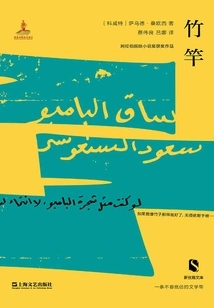
Bamboo
General Fiction竹竿
(kuwait) Saoud Sanousi
The winning work of the Arab International Novel Award describes the loneliness of people in various states. Issa, the illegitimate son of a Filipino maid and a Kuwaiti man. He grew up in his grandmother's house in the Philippines. When he grew up, he set off to Kuwait, a land full of wealth, to pursue his dream. However, he found that it was not the paradise that others said, but a stubborn, xenophobic and cold society full of prejudice... "Bamboo Pole" uses the narration of the protagonist Issa, the "other", to face the so-called "other" in Kuwait. It depicts the living conditions of foreign workers in the Gulf countries and analyzes the social problems behind them. It also describes the loneliness of people in various states, cares about the living conditions of human beings in modern society, and calls for dialogue, tolerance and understanding between different beliefs and civilizations. The language of the novel is simple and unpretentious. Although it is light, it is light but interesting, light but not too light, and contains profound meaning. The confused true feelings of an "other" are scattered between the lines. Saoud Sanousi (1981-) is one of the most outstanding new-generation novelists in the Gulf region and a leader of Kuwait's "post-80s writers group". He has published novels "Prisoners in the Mirror", "Bamboo Pole", "Mom's Celebrations", "Bathroom", short stories "Bonsai and the Old Man" and other works. "Prisoner in the Mirror" won the Leila Osman Literary Award; "Bamboo Pole" won the Arab International Novel Award (also known as the "Arab Booker Prize"), and was adapted into a TV series of the same name that was popular in Gulf countries, setting a TV series ratings record in the region. He also serves as a writer for many well-known newspapers such as Kuwait's Torch Newspaper.
The winning work of the Arab International Novel Award describes the loneliness of people in various states. Issa, the illegitimate son of a Filipino maid and a Kuwaiti man. He grew up in his grandmother's house in the Philippines. When he grew up, he set off to Kuwait, a land full of wealth, to pursue his dream. However, he found that it was not the paradise that others said, but a stubborn, xenophobic and cold society full of prejudice... "Bamboo Pole" uses the narration of the protagonist Issa, the "other", to face the so-called "other" in Kuwait. It depicts the living conditions of foreign workers in the Gulf countries and analyzes the social problems behind them. It also describes the loneliness of people in various states, cares about the living conditions of human beings in modern society, and calls for dialogue, tolerance and understanding between different beliefs and civilizations. The language of the novel is simple and unpretentious. Although it is light, it is light but interesting, light but not too light, and contains profound meaning. The confused true feelings of an "other" are scattered between the lines. Saoud Sanousi (1981-) is one of the most outstanding new-generation novelists in the Gulf region and a leader of Kuwait's "post-80s writers group". He has published novels "Prisoners in the Mirror", "Bamboo Pole", "Mom's Celebrations", "Bathroom", short stories "Bonsai and the Old Man" and other works. "Prisoner in the Mirror" won the Leila Osman Literary Award; "Bamboo Pole" won the Arab International Novel Award (also known as the "Arab Booker Prize"), and was adapted into a TV series of the same name that was popular in Gulf countries, setting a TV series ratings record in the region. He also serves as a writer for many well-known newspapers such as Kuwait's Torch Newspaper.