Library
Browse and search novels
15 novels found

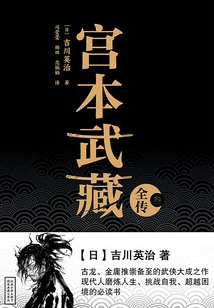
The Complete Biography of Miyamoto Musashi (3)
General Fiction宫本武藏全传(叁)
(japan) Yoshikawa Eiji
Miyamoto Musashi, a well-known legend in Japan. A Japanese swordsman, strategist, and artist from the late Warring States Period to the early Edo Period. In the hearts of the Japanese, Miyamoto Musashi is a strong man, a wise man, a philosopher, a martial artist, and the eternal winner. We have only read half of "Miyamoto Musashi" so far. "Miyamoto Musashi" by Eiji Yoshikawa is actually just a prequel to "The Complete Biography of Miyamoto Musashi", and "Miyamoto Musashi" by Koyama Katsuki is its postquel. Only by reading the complete "The Complete Biography of Miyamoto Musashi" can we understand the real Miyamoto Musashi. This book describes the complete life legend of the sword master Miyamoto Musashi, reveals the spiritual code and cultural spirit of the Japanese nation, awakens sensitive, impetuous, and weak modern people, and regains the strong mental outlook, dreams and sincere pursuit of life possessed by human beings. It is a must-read for modern people to temper their lives, challenge themselves, and overcome difficulties. There are five volumes in total. "The Complete Biography of Miyamoto Musashi III" contains the content of two volumes of the Two Heavens and the Yuanming Volume.

The Complete Biography of Miyamoto Musashi (2)
General Fiction宫本武藏全传(贰)
(japan) Yoshikawa Eiji
Miyamoto Musashi, a well-known legend in Japan. A Japanese swordsman, strategist, and artist from the late Warring States Period to the early Edo Period. In the hearts of the Japanese, Miyamoto Musashi is a strong man, a wise man, a philosopher, a martial artist, and the eternal winner. We have only read half of "Miyamoto Musashi" so far. "Miyamoto Musashi" by Eiji Yoshikawa is actually just a prequel to "The Complete Biography of Miyamoto Musashi", and "Miyamoto Musashi" by Koyama Katsuki is its postquel. Only by reading the complete "The Complete Biography of Miyamoto Musashi" can we understand the real Miyamoto Musashi. This book describes the complete life legend of the sword master Miyamoto Musashi, reveals the spiritual code and cultural spirit of the Japanese nation, awakens sensitive, impetuous, and weak modern people, and regains the strong mental outlook, dreams and sincere pursuit of life possessed by human beings. It is a must-read for modern people to temper their lives, challenge themselves, and overcome difficulties. There are five volumes in total. "The Complete Biography of Miyamoto Musashi II" contains the contents of two volumes: Wind Volume and Sky Volume.

Three Kingdoms 2: Enter the Dragon and the Tiger
General Fiction三国2:龙争虎斗
(japan) Yoshikawa Eiji
"Three Kingdoms" is the pinnacle work of Eiji Yoshikawa, and it is also the ultimate work of the blend of Chinese culture and Japanese temperament. In Japan, there are countless historians, politicians, entrepreneurs, writers and artists influenced by "Three Kingdoms". They regard "Three Kingdoms" as a historical masterpiece, a comprehensive collection of political strategies, a business war manual and an inspirational book, and learn from it history and culture, ways of success, methods of doing things, leadership theories, etc. There are five volumes in the "Three Kingdoms" series, and this is the second volume, including the Cao Mang Volume and the Chen Dao Volume among the ten volumes. The Cao Mang Volume: After Emperor Xian of the Han Dynasty was welcomed to Xudu, the regime of the Eastern Han Dynasty was nominally preserved. The relatively stable situation was full of crises. Lu Bu captured Xuzhou, Sun Ce captured Moling, Yuan Shu proclaimed himself emperor in Huainan, Liu Biao occupied Jingxiang, and Cao Cao, who "held the emperor hostage to order the princes", formed a pattern of great powers competing for hegemony.

Toyotomi Hideyoshi (1)
General Fiction丰臣秀吉(一)
(japan) Yoshikawa Eiji
With his gentle and intellectual legendary writing, Yoshikawa Eiji reproduces Toyotomi Hideyoshi's outstanding strategy, courage, arrogance, open-mindedness and sincerity, and his charming personality; he narrates his struggle from being a nobody to ending the troubled times and becoming the overlord of the world; he vividly reproduces the most passionate Toyotomi Hideyoshi who rose in troubled times and went through ups and downs to reach the highest level of power. When reading Japanese history, you cannot miss the Warring States Period; when reading the Warring States Period, you cannot miss "Toyotomi Hideyoshi" written by Yoshikawa Eiji.

Toyotomi Hideyoshi (2)
General Fiction丰臣秀吉(二)
(japan) Yoshikawa Eiji
With his gentle and intellectual legendary writing, Yoshikawa Eiji reproduces Toyotomi Hideyoshi's outstanding strategy, courage, arrogance, open-mindedness and sincerity, and his charming personality; he narrates his struggle from being a nobody to ending the troubled times and becoming the overlord of the world; he vividly reproduces the most passionate Toyotomi Hideyoshi who rose in troubled times and went through ups and downs to reach the highest level of power. When reading Japanese history, you cannot miss the Warring States Period; when reading the Warring States Period, you cannot miss "Toyotomi Hideyoshi" written by Yoshikawa Eiji.

Three Kingdoms 2: Enter the Dragon and the Tiger
General Fiction三国2:龙争虎斗
(japan) Yoshikawa Eiji
This book is the second part of "Three Kingdoms", the most dazzling pinnacle masterpiece of "Japanese Jin Yong" Yoshikawa Eiji. The author uses a unique modern approach to give a new interpretation of the Chinese classic "The Romance of the Three Kingdoms", simplifying the war scenes, cleverly adding wonderful dialogues that are not in the original work, and focusing on Liu, Guan, Zhang, Cao Cao and other classics. The subversive reshaping of classic characters and the rich changes of the storyline have greatly succeeded in reborn on the basis of being loyal to the original work, and magnificently written a human drama in which the heroes of the troubled times staged the world and competed with each other on the stage of heaven and earth. The bold and majestic pride, the sad and sad emotions, and the exaggerated and subtle humor that come across in the book make people feel endlessly moved; the planning and games, power and tricks, military use and controlling people in it make people think deeply.

Miyamoto Musashi·sword and Zen (1)
General Fiction宫本武藏·剑与禅(一)
(japan) Yoshikawa Eiji
"Miyamoto Musashi: Sword and Zen (Classic Collector's Edition) (set of 4 volumes in total)" is a martial arts novel full of Zen charm. A story of cultivation from swordsmanship to kendo, and a sentiment of treating life as a place of soul cultivation. Miyamoto Musashi emerged from the mystery, lived a legendary life, and set a milestone in the history of kendo with his "Five Rings Book". On May 19, 1645, the sixty-two-year-old Miyamoto Musashi died suddenly at his home in Chiba Castle. He was once a killer, a ronin, and a swordsman, but in his understanding of the ultimate purpose of life, he transcended himself. He spent his whole life completing his pursuit of "Tao". This book is a novel technique that Yoshikawa has practiced for twenty years. It uses a broad humanistic perspective to weave the true appearance of historical figures, showing Musashi's "sword and Zen uniformity" and true inner world, making this enigmatic historical figure eternally vivid on the page.

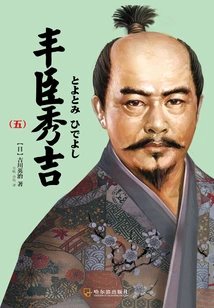
Toyotomi Hideyoshi (5)
General Fiction丰臣秀吉(五)
(japan) Yoshikawa Eiji
With his gentle and intellectual legendary writing, Yoshikawa Eiji reproduces Toyotomi Hideyoshi's outstanding strategy, courage, arrogance, open-mindedness and sincerity, and his charming personality; he narrates his struggle from being a nobody to ending the troubled times and becoming the overlord of the world; he vividly reproduces the most passionate Toyotomi Hideyoshi who rose in troubled times and went through ups and downs to reach the highest level of power. When reading Japanese history, you cannot miss the Warring States Period; when reading the Warring States Period, you cannot miss "Toyotomi Hideyoshi" written by Yoshikawa Eiji.

Three Kingdoms 5: Fall of a Star
General Fiction三国5:巨星陨落
(japan) Yoshikawa Eiji
"Three Kingdoms" is the pinnacle work of Eiji Yoshikawa, and it is also the ultimate work of the blend of Chinese culture and Japanese temperament. In Japan, there are countless historians, politicians, entrepreneurs, writers and artists influenced by "Three Kingdoms". They regard "Three Kingdoms" as a historical masterpiece, a comprehensive collection of political strategies, a business war manual and an inspirational book, and learn from it history and culture, ways of success, methods of doing things, leadership theories, etc. There are five volumes in the "Three Kingdoms" series, and this is the last one, including the Chu Shi Volume and the Wuzhang Yuan Volume among the ten volumes. Volume of Departure: After Liu Bei proclaimed himself emperor in Chengdu, he sent troops to attack Soochow, was defeated and returned to Baidi City. Later, he died of illness and was succeeded by Prince Liu Chan. Zhuge Liang wrote the "Execution of the Discipline", admonishing the young master to govern the country with all his heart, and expressed his determination to send troops to the Northern Expedition. The Volume of Wuzhangyuan: In order to complete the great cause of dominating the Central Plains and unifying the Han Dynasty, Zhuge Liang went out to Qishan to attack the Wei State six times, but all ended in failure. Later, he became seriously ill and failed to extend his life by praying for relief. He died of illness in Wuzhangyuan. At this point, a generation of talents has fallen like a superstar.

Three Kingdoms 4: Liu Bei Enters Sichuan
General Fiction三国4:刘备入川
(japan) Yoshikawa Eiji
"Three Kingdoms (Part 4): Liu Bei Enters Sichuan" is the fourth part of the long historical novel "Three Kingdoms" written by Japanese literary giant Eiji Yoshikawa. It mainly tells the historical story from the Battle of Chibi where Liu Bei's forces and Sun Quan's forces jointly resisted Cao Cao's forces, to Liu Bei's invasion of Sichuan and Shu, and then to the dispute between Sun Quan and Liu Bei over the Jingzhou issue. The author uses a unique modern approach to give a new interpretation of the Chinese classic "The Romance of the Three Kingdoms", simplifying the war scenes, cleverly adding wonderful dialogues that are not in the original work, and focusing on Liu, Guan, Zhang, Cao Cao and other classics. The subversive reshaping of classic characters and the rich changes of the storyline have greatly succeeded in reborn on the basis of being loyal to the original work, and magnificently written a human drama in which the heroes of the troubled times staged the world and competed with each other on the stage of heaven and earth.

Toyotomi Hideyoshi (set of 6 Volumes)
General Fiction丰臣秀吉(套装共6册)
(japan) Yoshikawa Eiji
With his gentle and intellectual legendary writing, Yoshikawa Eiji reproduces Toyotomi Hideyoshi's outstanding strategy, courage, arrogance, open-mindedness and sincerity, and his charming personality; he narrates his struggle from being a nobody to ending the troubled times and becoming the overlord of the world; he vividly reproduces the most passionate Toyotomi Hideyoshi who rose in troubled times and went through ups and downs to reach the highest level of power. When reading Japanese history, you cannot miss the Warring States Period; when reading the Warring States Period, you cannot miss "Toyotomi Hideyoshi" written by Yoshikawa Eiji.

全面战争·日式三国(套装共5册)
(japan) Yoshikawa Eiji
"Three Kingdoms" is the pinnacle work of Eiji Yoshikawa, and it is also the ultimate work of the blend of Chinese culture and Japanese temperament. In Japan, there are countless historians, politicians, entrepreneurs, writers and artists influenced by "Three Kingdoms". They regard "Three Kingdoms" as a historical masterpiece, a comprehensive collection of political strategies, a business war manual and an inspirational book, and learn from it history and culture, ways of success, methods of doing things, leadership theories, etc.

The Story of the Shinping Family (1)
General Fiction新平家物语(壹)
(japan) Yoshikawa Eiji
"The New Heike Monogatari" is an epic masterpiece known as Japan's "Romance of the Three Kingdoms" and one of the two masterpieces of Japanese classical literature, rewritten with modern literary techniques by the Japanese literary giant Eiji Yoshikawa. It details the entire process of the two samurai groups competing for power, the Genji and the Heike, in the middle ages of Japan. "New Heike Monogatari 1" tells the story of the rise of Taira Kiyomori, the leader of the Taira clan. "The New Tale of the Taira" comprehensively outlines the true appearance of various characters during the Genpei Controversy. The history of Japan in the 12th century is slowly revealed in front of readers through the rise and fall of the Taira clan. The author tries to reflect on the meaning of human existence from the perspective of ordinary people in the huge trajectory of history: those who prosper must decline, and prosperity is impermanent. So why must fathers and sons confront each other, and uncles and nephews kill each other to become the "winner"?

剑圣宫本武藏第一辑(全三册)
(japan) Yoshikawa Eiji
"The Sword Master Miyamoto Musashi" is Japan's first martial arts novel and is a household name in Japan. "The Sword Master Miyamoto Musashi" devotes all the sincerity and enthusiasm of Yoshikawa Eiji, and depicts Miyamoto Musashi's struggle full of troubles and struggles. On the road of spiritual practice, Musashi continued to reflect on himself. While the martial arts continued to improve, the life enlightenment born from the sword also continued to sublimate amid setbacks. "Sword Master Miyamoto Musashi" is dedicated to you who have ideals and are struggling, helping you to overcome difficulties, challenge yourself, and live a life of struggle in the ordinary world.

Miyamoto Musashi·sword and Zen (all 4 Volumes)
General Fiction宫本武藏·剑与禅(全4册)
(japan) Yoshikawa Eiji
"Miyamoto Musashi: Sword and Zen (Classic Collector's Edition) (set of 4 volumes in total)" is a martial arts novel full of Zen charm. A story of cultivation from swordsmanship to kendo, and a sentiment of treating life as a place of soul cultivation. Miyamoto Musashi emerged from the mystery, lived a legendary life, and set a milestone in the history of kendo with his "Five Rings Book". On May 19, 1645, the sixty-two-year-old Miyamoto Musashi died suddenly at his home in Chiba Castle. He was once a killer, a ronin, and a swordsman, but in his understanding of the ultimate purpose of life, he transcended himself. He spent his whole life completing his pursuit of "Tao". This book is a novel technique that Yoshikawa has practiced for twenty years. It uses a broad humanistic perspective to weave the true appearance of historical figures, showing Musashi's "sword and Zen uniformity" and true inner world, making this enigmatic historical figure eternally vivid on the page.